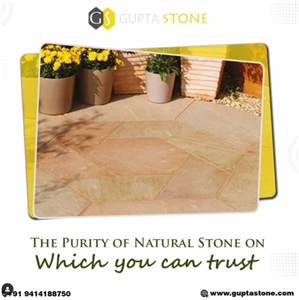
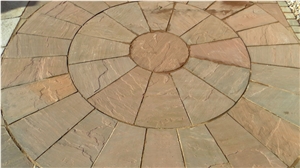
Kota Desert Sandstone

About
Item Details
- Material Type:
- Sandstone
- Origin:
India (Kota, Rajasthan) - Primary Color(s):
- Beige
- Recommended Usage:
- Monuments, building stone, ornamental stone, stairs, interior, exterior wall and floor applications, mosaic, wall panels, reliefs, window sills, balustrades, columns, wall and pool copings, pool pavers, sculptures, fireplaces, cobbles, pavers, curbstone
- Additional Names:
- Kota Desert Mint Sandstone, Desert Blonde Sandstone, Kota Desert Stone, Kota Desert, Kota Desert Sandstone
- Finished Surface:
- Bush Hammered,Tumbled,Brushed,Honed,Split,Machine Cut,Natural Surface,Sandblasted,Acid Washing,Combed,Leathered,Filled,Chiseled,Pickling
Testing
- Water Absorption:
- 1.5 - 5 % by weight
- Density:
- 2350 - 2450 Kg/m3
- Flexural Strength:
- 6.5 - 9 MPa
- Compressive Strength:
- 35 - 50 MPa
- Stone texture:
- a range of colors, including beige, light to dark brown, and yellow/golden hues, often with subtle texture variations, natural swirls, and occasional rust patches or linear quartz lines
Description
Kota Desert Sandstone is a type of sedimentary rock quarried predominantly in Kota, Rajasthan, India. It is renowned for its diverse range of colors, including beige, light to dark brown, and yellow/golden hues. The stone often exhibits subtle texture variations with natural swirls, and it may have occasional rust patches or linear quartz lines, giving it unique aesthetic appeal.
Physical and Mechanical Properties:
- Water Absorption:Typically ranges from 1.5 to 5% by weight.
- Density:Generally ranges from 2.35 to 2.45 grams per cubic centimeter.
- Flexural Strength:Ranges between 6.5 and 9 MPa .
- Compressive Strength:Commonly ranges from 35 to 50 MPa.
- Hardness:Rates 6 to 7 on the Mohs scale.
- Porosity:Typically low to moderate, ranging between 5 to 15%.
- Slip Resistance:Has good slip resistance, suitable for both indoor and outdoor applications.
Chemical and Mineral Composition (% by weight):
- Silica (SiO₂):Approximately 70-75%
- Alumina (Al₂O₃):Roughly 5-10%
- Iron Oxides (Fe₂O₃):Around 2-6%
- Calcium Carbonate (CaCO₃):Varies from 3-8%
- Other Minerals:Minor quantities of feldspar and micas.
Usage:
- Flooring:Ideal for commercial and residential spaces due to its durability.
- Wall Cladding:Offers aesthetic appeal for both interior and exterior walls.
- Paving:Suitable for outdoor pathways, gardens, and patios.
- Countertops:Used in kitchens and bathrooms for its sturdiness and visual appeal.
- Roofing Tiles:Often utilized because of its thermal properties.
- Landscaping:Used in garden features, retaining walls, and decorative elements.
Maintenance:
- It requires periodic sealing to maintain its appearance and resist staining.
- Regular cleaning with mild soap and water is recommended.
- Avoid acidic or abrasive cleaning agents to prevent surface damage.
Cutting Sizes (cm):
-
Standard Sizes:30x30, 30x60, 40x40, 40x60, and 60x60.
-
Custom Sizes:Available upon request to suit specific project requirements.
Common Surface Finish Options:
- Natural:Preserves the stone’s original texture.
- Honed:Provides a smooth, matte finish.
- Polished:Offers a glossy and reflective surface.
- Bush-Hammered:A textured finish that enhances slip resistance.
- Brushed:Gives a soft, antique look with subtle texture.
Kota Desert Sandstone is highly valued for both its aesthetic qualities and its physical properties, making it a versatile choice for a wide range of architectural and design projects.
FAQ
The coefficient of friction of Combed Indias Kota Desert Sandstone tiles can vary depending on the specific finish and surface treatment applied to the tiles. In general, sandstone is known to have a relatively high coefficient of friction, providing good slip resistance.
However, the precise value of the coefficient of friction for these specific tiles would need to be obtained from the manufacturer or supplier, as it can be influenced by factors such as surface texture, sealing, and polishing.
Can India's Kota Desert Sandstone be used in a living room?
Yes, Kota Desert Sandstone from India can be used in a living room. It is a versatile natural stone that can be utilized for various interior applications, including flooring, wall cladding, fireplace surrounds, and even as a feature wall. The unique patterns and warm earthy hues of the Kota Desert Sandstone make it well-suited for creating an elegant and distinguished look in a living room. It can be combined with other materials like wood or metal to create a beautiful and sophisticated living room design.
Can India's Kota Desert Sandstone be used exterior applications in very windy climates?
Yes, Indias Kota Desert Sandstone can be used for exterior applications in windy climates. Sandstone is a durable and weather-resistant material, and Kota Desert Sandstone specifically is known for its strength and suitability for various outdoor projects. However, it is important to properly prep and install the sandstone to ensure its longevity in windy climates. This may include using the correct adhesive, sealant, and installation techniques recommended for high-wind areas. Consulting with a professional or a supplier with expertise in sandstone applications can provide specific guidance for your project.
Can India's Kota Desert Sandstone be used in landscaping?
Yes, Indias Kota Desert Sandstone can be used in landscaping. It is a popular choice for landscaping projects due to its attractive natural color variations, durability, and ease of maintenance. Kota Desert Sandstone can be used for various landscaping elements such as paving, pathways, stepping stones, wall cladding, pool surrounds, and garden accents. Its warm earthy tones and textured surface can add a rustic and natural appeal to any outdoor space.
Can India's Kota Desert Sandstone be used outdoors?
Yes, Indias Kota Desert Sandstone can be used outdoors. It is a durable natural stone that is resistant to weathering and can withstand outdoor elements. Kota Desert Sandstone is commonly used for exterior applications such as paving, cladding, walling, and landscaping. However, it is important to note that proper installation and regular maintenance are necessary to ensure its longevity and performance in outdoor environments.
Are there color variations of India's Kota Desert Sandstone?
Yes, there are color variations of Indias Kota Desert Sandstone. The stone can come in a range of colors, including shades of beige, yellow, brown, and grey. The specific color variations depend on the mineral composition and the quarry location within the Kota region. Some Kota Desert Sandstone may have a more uniform color, while others may display natural variations and patterns.
What grade is India's Kota Desert Sandstone?
Indias Kota Desert Sandstone is typically classified as a Grade A sandstone.
How thick is India's Kota Desert Sandstone slabs?
The thickness of Indias Kota Desert Sandstone slabs can vary based on the specific supplier and customer preferences. However, commonly available slabs are typically around 20-30 millimeters (0.8-1.2 inches) thick. It is important to note that variations in thickness can exist depending on the source and any customizations made by the manufacturer or customer.
Is India's Kota Desert Sandstone an expensive stone?
I dont have the exact current pricing of Kota Desert Sandstone. However, Kota Desert Sandstone is considered relatively affordable compared to other natural stone options. Despite being affordable, it is still durable and gives a premium look to the place where it is installed. Factors such as thickness, size, finish, and shipping costs may affect the overall price of the stone.