Post Your Needs

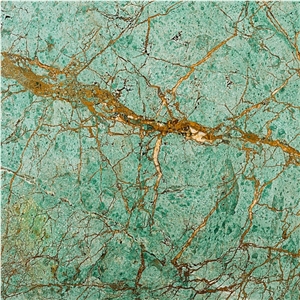
Labradorite Blue Flower Granite

Blue - Granite

Madagascar

About

Item Details

Material Type:
Granite
Origin:
Madagascar (Ihosy, Ihorombe Region, central south Madagascar)
Primary Color(s):
Blue
Recommended Usage:
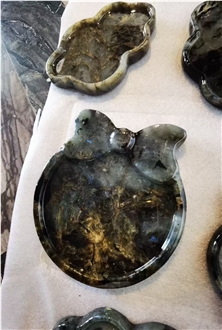
Kitchen and bathroom countertops, sinks, wash basins, monuments, building stone, ornamental stone, stairs, interior, exterior wall and floor applications, mosaic, waterjet pattern, wall panels, table tops
Additional Names:
Labradorite Blue Flower, Labradorite Blue Green Granite, Labradorite Madagaskar Granite, Labradorite Green Granite, Tsoa Pearl Granite, Labradorite Flower Granite, Labradorite Blue Granite, Lemurian Blue Granite, Sun Labradorite Blue Granite, Sunlight Blue Jade Granite, in China stone market:太阳矿蓝翡翠(Tàiyáng Kuàng Lán Fěicuì), Labradorite Blue Flower Granite
Finished Surface:
Polished,Bush Hammered,Tumbled,Brushed,Honed,Split,Machine Cut,Natural Surface,Sandblasted,Combed,Leathered,Water Jet,Filled,Chiseled,Pickling

Testing

Water Absorption:
0.1 %
Density:
2723 kg/m³
Flexural Strength:
16.3 MPa
Compressive Strength:
138.0 MPa

Description

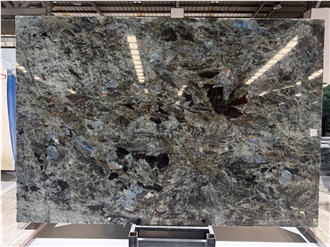
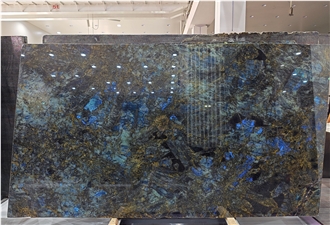
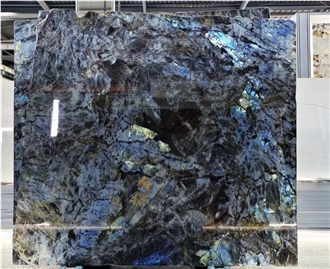
Labradorite Blue Flower Granite, also referred to as Labradorite Green Granite or Labradorite Blue Granite, is a captivating natural stone celebrated for its stunning iridescence and unique coloration. This granite variety originates from quarries in Ihosy, located in the Ihorombe Region of central south Madagascar. It is distinguished by its remarkable play of colors, including rich shades of blue, green, black, and turquoise, which stem from the presence of labradorite minerals within the stone.

The name "Labradorite Blue Flower" or "Labradorite Green" reflects the stone's mesmerizing colors and the unique labradorite crystals embedded in its matrix. This granite's predominant colors are blue and green, but it also features flashes of black and turquoise, creating an exquisite blend of shades that can vary depending on the angle of light and viewing.

The defining characteristic of Labradorite Blue Flower Granite is its labradorite mineral content. Labradorite is a feldspar mineral known for its remarkable play of colors, often referred to as "labradorescence." This phenomenon creates captivating iridescent flashes of color as the stone is viewed from different angles. These vibrant colors seem to dance across the surface of the stone, creating a dynamic and ever-changing visual effect.

The mineral crystals within Labradorite Blue Flower Granite interact with light, giving it an otherworldly and magical appearance. This granite is often used as a statement piece in design applications such as countertops, wall cladding, and decorative accents. Its unique color play and iridescence make it a favored choice for those seeking to add a touch of enchantment to their spaces.

Quarried Labradorite Blue Flower Granite undergoes processes like cutting, polishing, and finishing to showcase its natural beauty. The polishing process enhances the stone's colors and iridescence, allowing it to shine as a focal point within any space.

Due to its captivating colors and mesmerizing play of light, Labradorite Blue Flower Granite is favored by architects, interior designers, and homeowners who want to create spaces that are truly one-of-a-kind. Its ability to evoke a sense of wonder and its enchanting color play make it a sought-after material for those who appreciate the beauty and magic found in nature's creations.

FAQ

Can Labradorite Blue Flower Granite be used for flooring in places with high pedestrian traffic?

Labradorite Blue Flower Granite can be used for flooring in places with high pedestrian traffic. Granite is a durable and scratch-resistant material, making it suitable for areas that experience a lot of foot traffic. However, it is important to ensure that the granite is properly sealed and maintained to protect it from staining and wear over time. Regular cleaning and maintenance will help preserve the appearance and longevity of the Labradorite Blue Flower Granite flooring in high traffic areas.

Does placing a hot pan on a Labradorite Blue Flower Granite kitchen countertop cause any damage?

Placing a hot pan directly on a Labradorite Blue Flower Granite kitchen countertop can potentially cause damage. Labradorite is a natural stone and may be susceptible to thermal shock. Sudden changes in temperature, such as placing a hot pan on a cold surface, can cause the stone to crack or discolor. It is always recommended to use trivets or hot pads to protect the granite surface from direct contact with hot objects.

Does Labradorite Blue Flower Granite scratch or break easily?

Labradorite Blue Flower Granite is a very durable stone and is known for its hardness. It is resistant to scratches and is difficult to break. However, no stone is completely immune to damage, so it is still important to handle it with care and avoid excessive force or impact.

Does Labradorite Blue Flower Granite make a good choice for a kitchen countertop?

Labradorite Blue Flower Granite can make a stunning choice for a kitchen countertop due to its unique and eye-catching appearance. Its iridescent blue and green hues, combined with its distinctive patterns and shimmering effect, can add a touch of elegance and sophistication to any kitchen. Additionally, granite is a highly durable and heat-resistant material, making it an excellent choice for kitchen countertops that are subjected to high temperatures, heavy use, and potential spills. However, it is important to note that granite countertops require regular maintenance, including sealing, to prevent stains and ensure longevity.

What should you not use for cleaning Labradorite Blue Flower Granite countertops?

You should avoid using acidic cleaners, abrasive cleaners, or harsh chemicals on Labradorite Blue Flower Granite countertops. These can cause etching, dullness, and damage the surface of the stone. Instead, use a mild, pH-neutral cleanser specifically designed for natural stone countertops. Additionally, avoid using rough or abrasive scrub brushes that can scratch the surface of the granite.

Why is blue granite so expensive?

Blue granite is generally more expensive than other types of granite due to its rarity and unique aesthetic appeal. Here are some reasons why it is perceived as expensive: 1. Rarity: Blue granite is relatively rare compared to other granite varieties, making it more difficult to quarry and find in large quantities. Its scarcity drives up its price in the market. 2. Extraction Challenges: Blue granite often occurs in remote or difficult-to-access locations, which presents challenges in terms of extraction and transportation. The higher costs associated with accessing and quarrying the stone contribute to its overall price. 3. Natural Beauty: Blue granite is highly valued for its stunning appearance and exceptional visual qualities. The unique patterns, colors, and shades found in blue granite create a luxurious and elegant look, making it a desirable choice for high-end projects. The aesthetic appeal and exclusivity of blue granite add to its premium price. 4. Durability and Quality: Like all granite, blue granite is known for its durability, strength, and resistance to heat, scratches, and stains. Its superior quality and longevity make it a sought-after material, further justifying its higher cost. 5. Processing and Finishing: Blue granite often requires additional processing and finishing techniques to enhance its natural colors and patterns. These processes involve skilled craftsmanship and can contribute to the higher price tag associated with blue granite products. It is important to note that the specific price of blue granite can vary depending on factors such as its origin, rarity, quality, and market demand.

What is the difference between granite and labradorite?

Granite and labradorite are both popular choices for countertops and other applications in construction and design. However, there are several key differences between the two: 1. Composition: Granite is a coarse-grained igneous rock composed mainly of quartz, feldspar, and mica. Labradorite, on the other hand, is a type of feldspar mineral and belongs to the plagioclase series of minerals. 2. Appearance: While both granite and labradorite can display a range of colors and patterns, granite typically has a mottled or speckled appearance due to the presence of different minerals. Labradorite, particularly the variety known as spectrolite, is known for its iridescent play of colors called labradorescence. This effect creates a vibrant display of blues, greens, yellows, and even purples when viewed from different angles. 3. Strength and Hardness: Granite is renowned for its durability and hardness, ranking around 6-7 on the Mohs scale of mineral hardness. Labradorite is relatively softer, with a hardness ranging from 6 to 6.5. This means granite is generally more scratch and impact-resistant compared to labradorite. 4. Maintenance: Both granite and labradorite can be sealed to protect them from stains and damage, but granite typically requires less maintenance due to its higher density and lower porosity. Labradorite, being softer and more porous, may be more prone to staining and requires slightly more care. 5. Availability: Granite is widely available in various colors and patterns, making it a more common choice for countertops and other applications. Labradorite, especially high-quality specimens with striking labradorescence, is relatively rarer and may have a higher price tag. Ultimately, the choice between granite and labradorite depends on personal preferences, budget, and the desired aesthetic effect. Both materials offer unique characteristics that can enhance the beauty of any space.

What is the physical properties of Labradorite Blue Flower Granite?

Labradorite Blue Flower Granite is a type of igneous rock that is primarily composed of quartz, feldspar, and mica minerals. It is characterized by its distinctive blue-gray color with swirling patterns and iridescent flashes of blue, green, and gold when viewed from different angles. The physical properties of Labradorite Blue Flower Granite include: 1. Hardness: It is a relatively hard stone with a Mohs hardness scale rating of 6 to 7. This makes it suitable for various applications that require durability, such as countertops and flooring. 2. Density: The density of this granite can vary depending on its composition, but generally it ranges from 2.6 to 2.8 grams per cubic centimeter. Higher density signifies higher strength and durability. 3. Porosity: Labradorite Blue Flower Granite is a low-porosity stone, meaning it has a relatively low water absorption rate. This property helps to make it resistant to staining and allows for easy cleaning. 4. Resistance to heat: It has excellent heat resistance, making it well-suited for use in areas such as kitchen countertops where exposure to hot pots and pans is common. However, it is still recommended to use trivets or hot pads to protect the surface from potential thermal shock. 5. Strength: This granite is known for its strength and durability. It has good compressive strength and can withstand heavy loads without cracking or breaking. 6. Appearance: Labradorite Blue Flower Granite is highly regarded for its unique aesthetic appearance. Its interplay of colors and patterns creates a visually striking stone that adds beauty and elegance to any space where it is used. 7. Maintenance: It is a fairly low-maintenance stone, requiring minimal care and upkeep. Regular cleaning with mild soap and water is usually sufficient to maintain its shine and luster. Overall, Labradorite Blue Flower Granite is valued for its stunning appearance, durability, and resistance to heat and staining, making it a popular choice for various interior and exterior applications, including countertops, backsplashes, flooring, and decorative stone.

Products & Prices

View More

Hot Blue Granite

New Granite

Post Your Request

The request includes:
  1. surface finished, size
  2. quantity required