Post Your Needs

Mylonite Quartzite

Quartzite

Sweden

About

Item Details

Material Type:
Quartzite
Origin:
Sweden
Recommended Usage:
Kitchen and bathroom countertops, wash basins, building stone, ornamental stone, stairs, interior, exterior wall and floor applications, mosaic, waterjet pattern, wall panels, table tops, balustrades, columns, wall and pool copings, pool pavers, fireplaces
Additional Names:
Mylonite Green Quartzite
Finished Surface:
Polished,Bush Hammered,Tumbled,Brushed,Honed,Split,Machine Cut,Natural Surface,Sandblasted,Combed,Leathered,Water Jet,Filled,Chiseled,Pickling

Testing

Water Absorption:
0.1 – 0.3% by weight
Density:
2700 – 2800 kg/m³
Flexural Strength:
17 – 23 MPa
Compressive Strength:
200 – 220 MPa

Description

Mylonite Quartzite

Material:​ Natural Quartzite (Mylonite - a metamorphic rock formed by dynamic recrystallization)

Origin:​ Quarried in Sweden

Commercial Designation:​ Green Cloudy Veined Quartzite

Geological Classification:​ Mylonitic Quartzite

Visual & Aesthetic Description

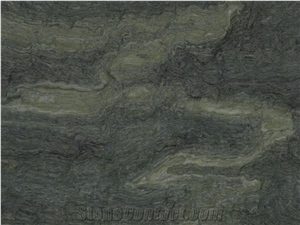
Mylonite Quartzite is characterized by a dramatic and painterly aesthetic. The stone features a deep, rich forest green to emerald green base​ that serves as a canvas for complex, flowing patterns. The most distinctive feature is its cloudy, mist-like veining​ in shades of silver-grey, charcoal, and white, which swirl and drift organically across the surface. The veining is not linear but rather forms soft, amorphous, wave-like formations that create a sense of depth and fluid movement, resembling an abstract aerial landscape or a stormy sky. The contrast between the dark green background and the luminous grey veining is pronounced, giving the stone a bold, sophisticated, and almost mystical appearance.

Technical Specifications

A. Physical & Mechanical Properties:

  • Water Absorption:​ 0.1% – 0.3% (by weight)
  • Density:​ 2,700 – 2,800 kg/m³
  • Compressive Strength:​ 200 – 220 MPa
  • Flexural Strength:​ 17 – 23 MPa
  • Hardness (Mohs Scale):​ 6 – 7
  • Abrasion Resistance:​ Excellent
  • Frost Resistance:​ Excellent; suitable for interior and exterior applications
  • Thermal Shock Resistance:​ High

B. Chemical & Mineral Composition (% by weight):

  • Silicon Dioxide (Quartz, SiO₂):​ 85 – 92%
  • Feldspar (Plagioclase/Orthoclase):​ 5 – 10%
  • Mica Group Minerals (e.g., Chlorite, Sericite):​ 3 – 8% (primary contributor to green coloration and sheen)
  • Iron Oxides & Other Accessory Minerals:​ 1 – 3%
  • Trace Elements (e.g., Chromium):​ < 1% (can enhance green tones)

C. Geological Note:​

As a mylonite, this rock has undergone intense shearing and recrystallization under pressure, which aligns mineral grains and contributes to its distinctive foliated, flow-like texture.

Available Formats & Processing

A. Standard Cutting Sizes:

  • Slabs:​ Common large-format sizes: 260x160 cm, 280x180 cm, 300x200 cm.
  • Thickness: 2 cm, 3 cm.
  • Tiles:​ Modular sizes such as 30x30 cm, 30x60 cm, 60x60 cm, 60x120 cm.
  • Custom Cuts:​ Available for specific architectural elements.

B. Surface Finish Options:

  • Polished (Highly Recommended):​ A high-gloss polish maximizes the depth, color saturation, and dramatic contrast of the veining, enhancing the stone's jewel-like quality.
  • Honed:​ A smooth, matte finish that softens the color contrast and provides a more contemporary, understated look.
  • Leathered/Brushed:​ A textured, low-sheen finish that highlights the stone's natural grain and adds a tactile dimension.
  • Flamed:​ A rough, thermal finish for exterior, non-slip applications (may obscure some detail).
  • Sandblasted:​ A uniformly textured, matte surface.

Applications, Usage & Maintenance

A. Primary Applications:

  • Statement Interiors:​ Dramatic feature walls, waterfall kitchen islands, grand reception desks.
  • High-Traffic Flooring:​ Durable and suitable for residential and commercial lobbies.
  • Exterior Cladding:​ Building facades, exterior wall features (with appropriate finish).
  • Luxury Surfaces:​ Kitchen countertops, bathroom vanities, bar tops.

B. Usage & Maintenance:

  • Durability:​ Highly durable, scratch-resistant, and suitable for high-use areas.
  • Sealing:​ While quartzite is less porous than marble, applying a high-quality impregnating sealer is recommended for countertops to prevent potential staining from oils or pigments.
  • Care:​ Clean with a pH-neutral stone cleaner. Avoid harsh abrasive pads and acidic chemicals.
  • General:​ Its hardness makes it resistant to etching from common household acids.

Summary:

Mylonite Quartzite from Sweden is a high-end metamorphic stone​ prized for its deep green base and dramatic, cloud-like silver and grey veining. Its exceptional durability, striking visual impact, and suitability for both interior and exterior use make it a premier choice for architectural and design projects seeking a material that combines natural artistry with robust performance.

FAQ

What color mosaic tile looks good with Mylonite Quartzite countertop?

Mylonite Quartzite has a unique blend of colors and patterns, often featuring grays, whites, blacks, and sometimes subtle hints of other colors, depending on the stone. When selecting mosaic tiles to coordinate with Mylonite Quartzite countertops, consider the following options: 1. **Neutral Whites or Light Grays**: These can provide a clean and subtle contrast, keeping the focus on the countertop while adding texture and brightness. 2. **Soft Greens or Blues**: If your Mylonite Quartzite has cool undertones, soft greens or blues can enhance these colors and create a soothing and cohesive look. 3. **Steel or Charcoal Grays**: These darker tones can complement the veining in the quartzite and add depth and sophistication to the space. 4. **Black or Dark Metals**: For a dramatic look, black or dark metallic tiles can echo the darker accents in the quartzite, creating a bold and modern contrast. 5. **Warm Beige or Taupe**: If the quartzite has warmer tones, consider warm beige or taupe tiles for a soft, harmonious blend that highlights the warmth in the stone. Remember to consider the overall style and color scheme of the room. Its often helpful to bring a sample of your countertop when shopping for tiles to see how they look together under your lighting conditions.

Will Mylonite Quartzite countertop crack with heat?

Mylonite quartzite is a type of natural stone that is generally known for its durability and resistance to heat. However, like all natural stones, it is not completely impervious to damage. Extreme or rapid changes in temperature, such as placing a hot pot or pan directly from the stove onto the surface, can potentially cause thermal shock and lead to cracking, especially if there are existing weaknesses in the stone or if it has been improperly installed. To protect your mylonite quartzite countertop from heat damage, its advisable to use trivets or hot pads when placing hot items on the surface. This will help maintain the integrity and appearance of the countertop over time. Regular maintenance and following the manufacturers care recommendations will also help extend the lifespan of your countertop.

Can I put a hot pan on Mylonite Quartzite countertop?

Mylonite quartzite is a natural stone with properties that generally make it resistant to heat. However, placing a hot pan directly on any type of natural stone countertop, including quartzite, is not recommended. Even though quartzite is heat-resistant, sudden temperature changes can cause thermal shock, potentially leading to cracking or discoloration over time. To protect your countertop, its best to use trivets or hot pads when placing hot cookware on the surface. This precaution will help maintain the beauty and integrity of the quartzite countertop.

Is Mylonite Quartzite countertop heat resistant?

Mylonite quartzite countertops are generally heat-resistant, much like other types of quartzite. Quartzite is a natural stone that forms under high pressure and temperature conditions, making it quite durable and resistant to heat. However, while it can withstand some exposure to heat, its still advisable to use trivets or hot pads to protect the surface from extreme temperatures. Sudden temperature changes or contact with very hot pots and pans can potentially cause damage, like thermal shock, which might lead to cracks or discoloration. Always exercise caution to maximize the longevity and appearance of your quartzite countertop.

How to make Mylonite Quartzite stairs not slippery?

Making Mylonite Quartzite stairs less slippery involves a few strategies, both in terms of treatment and maintenance: 1. **Textured Finish:** Ensure that the surface of the quartzite is not polished and has a rougher finish. A honed or flamed finish can provide better traction compared to a polished one. 2. **Anti-slip Treatments:** Apply a stone-specific anti-slip treatment or coating. These are available in different forms, such as sprays, paints, or roll-on applications that create a non-slip surface. Always choose a treatment compatible with quartzite. 3. **Grip Tape:** Affix anti-slip grip tape or tread strips to each step. These are easy to apply and come in various colors and materials. They provide excellent slip resistance, especially in high-traffic areas. 4. **Sealants with Additives:** Use a sealant specifically formulated for natural stone that includes grit additives to increase traction. Be sure it’s suitable for outdoor or wet conditions if the stairs are exposed to the elements. 5. **Regular Cleaning:** Keep the stairs clean and free of debris, dirt, leaves, and moss, which can make surfaces slippery. Use non-abrasive cleaners that are safe for natural stone. 6. **Mats and Carpets:** Consider using outdoor-rated, non-slip mats or carpet runners. Ensure they are securely fastened so they don’t move when stepped on. 7. **Drainage and Moisture Control:** Make sure there is proper drainage around the area to prevent water accumulation, which can increase slipperiness. Correct any drainage issues that lead to water pooling on the steps. 8. **Lighting:** Ensure the stairs are well-lit to enhance visibility, which can help prevent accidents. Always test any treatment or product on a small, inconspicuous area first to ensure that it does not damage or discolor the quartzite. Additionally, consider consulting with a professional if the stairs are in a highly-trafficked area or require extensive modification.

Is 2cm thickness Mylonite Quartzite good for commercial stairs?

When considering materials for commercial stairs, there are several factors that need to be assessed, including durability, slip resistance, maintenance, aesthetics, and compliance with building codes. Lets consider 2cm thickness mylonite quartzite for these criteria: 1. **Durability**: Quartzite, in general, is a very hard and durable natural stone. Mylonite is a specific type that has been subjected to significant pressure, making it even more robust. However, at 2cm thickness, you need to ensure that the stone is strong enough to withstand heavy foot traffic common in commercial environments. Its advisable to consult with a structural engineer or a stone specialist to confirm that the 2cm thickness is sufficient for your specific needs. 2. **Slip Resistance**: Safety is paramount in commercial spaces. Polished quartzite surfaces might be slippery, especially when wet. Opt for a honed or textured finish to improve traction. Additionally, local building codes may specify certain slip resistance ratings that materials must meet, so checking these requirements is important. 3. **Maintenance**: Quartzite is relatively low-maintenance compared to some other natural stones, but it still requires periodic sealing to protect against stains and scratches. Consider the long-term maintenance needs when choosing materials for high-use areas like commercial stairs. 4. **Aesthetics**: Quartzite is known for its beautiful, natural appearance. Mylonite quartzites unique texture may add an appealing visual element to commercial stairs, enhancing the overall aesthetic of the space. 5. **Compliance and Safety**: Ensure that the chosen material complies with local building codes and safety standards for commercial stairs. This includes considerations for tread depth, step height, and any specific regulations about materials. In summary, while mylonite quartzite can be a good choice for commercial stairs, ensure that its 2cm thickness is structurally adequate, verify slip resistance, and confirm compliance with relevant codes. Consulting with professionals in the field will help mitigate risks and ensure that you make a well-informed decision.

Products & Prices

Hot Quartzite

New Quartzite

Post Your Request

The request includes:
  1. surface finished, size
  2. quantity required