Post Your Needs

Polaris Quartzite

Quartzite

Brazil

About

Item Details

Material Type:
Quartzite
Origin:
Brazil
Recommended Usage:
kitchen and bathroom countertop, wash basins, building stone, ornamental stone, stairs, interior wall and floor applications, mosaic, water-jet pattern, wall panels, table tops, balustrades, columns, fireplaces, luxury furniture
Additional Names:
Polaris Green Quartzite, Polaris Verde Quartzite
Finished Surface:
Polished,Bush Hammered,Tumbled,Brushed,Honed,Split,Machine Cut,Natural Surface,Sandblasted,Combed,Leathered,Water Jet,Chiseled,Pickling

Testing

Water Absorption:
0.10 – 0.25%
Density:
2680 - 2720 kg/m³
Flexural Strength:
14 - 16 MPa
Compressive Strength:
170 - 190 MPa

Description

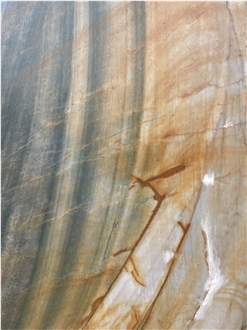
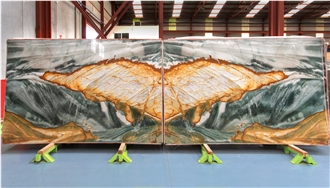
Polaris Quartzite is a highly distinctive and visually dramatic natural stone quarried in Brazil, featuring a soft muted grey, off-white, to pale beige base that provides a calm and neutral foundation. Its most striking characteristic is its bold, flowing veining in deep forest green, sage green, and charcoal grey tones, often accented with subtle hints of dark brown and black. The veining typically appears in vertical, cascading formations resembling waterfalls, tree trunks, or natural forest movement, creating a strong sense of height, rhythm, and structure. In many slabs, the veins converge toward the center, forming a cathedral-like or arched pattern highly prized for bookmatched feature walls and statement installations.

Texture & Structure

Polaris Quartzite has a dense, crystalline structure composed of tightly interlocking quartz grains, giving it exceptional hardness and durability. The texture is fine to medium-grained with a smooth, refined surface when polished, enhancing the depth and contrast of its dramatic veining. Its pattern is highly fluid and organic, with strong directional movement that creates visual depth and dimensional layering. The stone’s geological structure ensures excellent resistance to wear, heat, and scratching, making it suitable for both decorative and high-performance architectural applications.

Technical Test Results

  • Water Absorption: 0.10% – 0.25%
  • Abrasion Resistance: High durability (low wear loss)
  • Modulus of Rupture: 15–17 MPa
  • Compressive Strength: 170–190 MPa
  • Flexural Strength: 14–16 MPa
  • Density: 2,680–2,720 kg/m³
  • Mohs Hardness: 6.5–7

Mineral Composition (% by Weight)

  • Quartz: 85–95%
  • Feldspar: 3–7%
  • Mica: 1–3%
  • Accessory minerals: <2%

Chemical Composition (% by Weight)

  • SiO₂ (Silicon Dioxide): 88–95%
  • Al₂O₃ (Aluminum Oxide): 2–6%
  • Fe₂O₃ (Iron Oxide): 0.5–2%
  • K₂O + Na₂O: 0.5–3%
  • CaO: <1%
  • MgO: <1%
  • Trace elements: <1%

Usage

  • Luxury kitchen countertops and islands
  • Feature walls and bookmatched panels
  • Hotel lobbies and reception areas
  • Bathroom vanities and shower walls
  • Flooring in high-end residential and commercial spaces
  • Fireplace surrounds
  • Staircases and steps
  • Bar tops and custom furniture
  • Decorative architectural cladding
  • Backlit feature installations

Maintenance

  • Clean using pH-neutral stone cleaners
  • Avoid acidic or abrasive products
  • Seal periodically for long-term protection
  • Wipe spills immediately to prevent staining
  • Use protective pads under heavy objects

FAQ

Will a hot pot leave a mark on a Polaris Quartzite kitchen countertop?

Polaris Quartzite is known for its durability and heat resistance, which makes it generally a good choice for kitchen countertops. However, placing a very hot pot directly on any natural stone surface, including quartzite, can sometimes lead to thermal shock, which may cause discoloration or even cracking. To avoid the risk of leaving a mark or causing damage, it is advisable to use trivets or heat pads when placing hot pots on your Polaris Quartzite countertop. This will help protect the surface and maintain its appearance over time.

Is Polaris Quartzite durable enough for use as outdoor terrace pavers?

Polaris Quartzite is generally a durable natural stone, making it suitable for various applications, including outdoor terrace pavers. It is known for its strength, resistance to weathering, and low water absorption, which are important qualities for outdoor use. However, several factors should be considered to ensure its suitability for your specific project: 1. **Climate and Weather Conditions**: Ensure that the Polaris Quartzite chosen can withstand the local climate, especially if there are extreme temperature fluctuations or freeze-thaw cycles. 2. **Finish**: Opt for a non-slip finish for outdoor use to prevent accidents, especially in wet conditions. 3. **Thickness and Installation**: Ensure the stone is of appropriate thickness and properly installed to handle anticipated loads and stresses, such as foot traffic and furniture. 4. **Sealing**: Regular sealing may be required to protect the stone from stains and enhance its longevity. 5. **Maintenance**: Consider the maintenance requirements and ensure they align with your ability to maintain the terrace over time. Consulting with a stone professional or supplier can provide specific advice tailored to your region and intended use.

Does polished Polaris Quartzite kitchen countertop scratch easily?

Polished Polaris Quartzite is a popular choice for kitchen countertops due to its durability and aesthetic appeal. Quartzite is a natural stone that is harder than granite and highly resistant to scratching, making it a suitable surface for kitchen use. However, while it is resistant to scratches, it is not completely scratch-proof. Using cutting boards and avoiding dragging heavy or sharp objects across the surface can help maintain its polished finish. Additionally, using appropriate cleaning methods and sealing the countertop periodically can further protect against potential damage. Proper care and maintenance will help ensure that your polished Polaris Quartzite countertop remains in excellent condition.

Can 10mm thick Polaris Quartzite be used as a kitchen cutting board?

Using 10mm thick Polaris Quartzite as a kitchen cutting board is not recommended for several reasons, despite quartzite being a durable natural stone. Here are some considerations: 1. **Porosity**: Although quartzite is more resistant to moisture than some other natural stones, it can still be somewhat porous. This means it might absorb food juices, potentially leading to stains or bacterial growth unless properly sealed. 2. **Surface Damage**: Using quartzite as a cutting board might cause scratching or scoring on its surface over time, particularly with frequent use. Knives can leave marks, which might dull the appearance of the stone. 3. **Knife Damage**: Quartzite is hard, and cutting on its surface can quickly dull your knives. Regular sharpening would be necessary, which can be inconvenient. 4. **Weight and Handling**: A 10mm thick slab of quartzite can be heavy and cumbersome to handle. This might not be practical for regular kitchen use. 5. **Maintenance**: Natural stone cutting surfaces require regular maintenance to keep them sealed and sanitary, which might be more effort than most people want for a kitchen cutting board. For these reasons, it’s generally better to use cutting boards made of materials like wood or plastic, which are designed for this purpose and are better suited for both your knives and food safety.

If I use 1.2 cm thick Polaris Quartzite as a table top, will it be strong enough? Will it break easily?

Polaris Quartzite is a type of natural stone known for its durability and beauty, making it a popular choice for high-end countertops and table tops. However, when using a relatively thin slab, such as 1.2 cm (approximately 0.47 inches), there are a few considerations to keep in mind regarding strength and durability: 1. **Strength**: Quartzite is a very hard stone, typically harder than granite, which contributes to its strength and resistance to scratching. However, in thinner sections, strength is not just a factor of material hardness but also of support and structural integrity. 2. **Support**: A 1.2 cm thick slab will require adequate support to prevent flexing and potential cracking. Its crucial to have proper underlay or frame that can evenly distribute weight across the entire surface area. Without proper support, even a strong material like quartzite can become vulnerable to breaking, especially under heavy loads or impacts. 3. **Edge Treatment**: Thinner slabs can be more prone to edge chipping. Ensure that the edges are well-finished and possibly reinforced or laminated for added durability and aesthetics. 4. **Usage**: Consider how the table top will be used. If it’s expected to endure heavy use, frequent spills, or heavy objects, you might need to account for this in its maintenance and the strength of the underlying structure. 5. **Installation**: Professional installation is recommended to ensure that the stone is properly supported and that any stress points are adequately addressed. In summary, while 1.2 cm thick Polaris Quartzite can potentially be strong enough for a table top, it largely depends on the support structure provided and the intended use of the table. If there’s any doubt, consulting with a professional stone fabricator or installer would be wise to ensure a safe and durable installation.

Polaris Quartzite has its own natural veins. If I use it as stair steps, will it break along these veins?

Polaris Quartzite, like many natural stones, can have veins that are both a feature of its aesthetic appeal and a potential point of weakness. Whether or not it will break along these veins when used as stair steps depends on several factors: 1. **Quality of the Quartzite**: High-quality quartzite is generally very strong and resistant to breaking. Make sure you obtain your quartzite from a reputable supplier known for high-quality stones. 2. **Vein Direction**: The orientation of the veins in relation to the cuts for the stair steps can affect performance. Ideally, the veins should run perpendicular to the line of applied stress (i.e., weight as you step), which can minimize the risk of splitting. 3. **Thickness and Support**: The thickness of the quartzite slabs used for the stairs should be sufficient to support the expected load. Proper support and installation techniques can also help prevent breakage. 4. **Installation**: Professional installation is crucial. This includes making sure that the substrate is even and that the stones are properly spaced and supported. 5. **Environmental Conditions**: Consider the environment where the stair steps will be installed. Extreme temperature changes, excessive moisture, or heavy use can increase the likelihood of breakage over time. To mitigate risks, consult with a professional stone installer or structural engineer who can assess your specific situation and provide guidance on the appropriate use and installation of Polaris Quartzite for stair steps.

Products & Prices

View More

Hot Quartzite

New Quartzite

Post Your Request

The request includes:
  1. surface finished, size
  2. quantity required