Post Your Needs

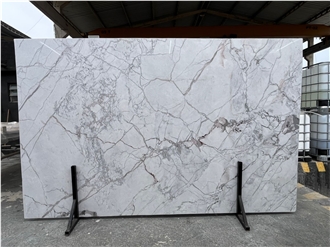
Salvatore Quartzite

White - Quartzite

Brazil

About

Item Details

Material Type:
Quartzite
Origin:
Brazil
Primary Color(s):
White
Recommended Usage:
Kitchen and bathroom countertops, wash basins, building stone, ornamental stone, stairs, interior, exterior wall and floor applications, mosaic, waterjet pattern, wall panels, table tops, balustrades, columns, wall and pool copings, pool pavers, fireplaces
Additional Names:
Bianco Salvatore Quartzite, White Salvatore Quartzite, Salvatore Quartzite
Finished Surface:
Polished,Bush Hammered,Tumbled,Brushed,Honed,Split,Machine Cut,Natural Surface,Sandblasted,Combed,Leathered,Water Jet,Filled,Chiseled,Pickling

Testing

Water Absorption:
0.1% - 0.25%
Density:
2690 - 2750 Kg/m³
Flexural Strength:
14-18 MPa
Compressive Strength:
110-140 MPa
Stone texture:
Dominant light gray background with interwoven dark gray to black veining; ​ Irregular, crack-like fissures that form a dramatic web-like or dendritic pattern, breaking the surface into varied geometric sections;

Description

Salvatore Quartzite, sourced from Brazil, is renowned for its dominant light gray background adorned with interwoven dark gray to black veining. This veining creates irregular crack-like fissures forming a dramatic web-like or dendritic pattern, partitioning the surface into unique geometric sections. The overall aesthetic offers a striking contrast with a sophisticated appearance, often compared to marble but with superior durability typical of quartzite.

Physical and Mechanical Properties:

  • Water Absorption:Typically low, around 0.1% to 0.25%, due to its dense structure.
  • Density:Approximately 2.69 - 2.75 g/cm³.
  • Flexural Strength:Generally between 14-18 MPa.
  • Compressive Strength:Ranges from 110-140 MPa, indicating resistance to crushing forces.
  • Hardness:Scores around 6.5-7 on the Mohs scale, highlighting its resistance to scratching.
  • Porosity:Low porosity, usually less than 1%, which contributes to its resistance to stains and water infiltration.
  • Slip Resistance:Varies based on finish; typically, honed and polished surfaces have lower slip resistance compared to flamed or leathered surfaces.

Chemical and Mineral Composition (% by weight):

  • Quartz: 90-99%
  • Feldspar: Up to 5%
  • Mica: 1-2%
  • Iron Oxides and Other Trace Minerals: < 1%

Usage:

  • Ideal for kitchen countertops, backsplashes, bathroom vanities, and flooring due to its aesthetic appeal and durability.
  • Suitable for both residential and commercial applications.
  • Recommended for use in areas with high traffic and exposure to moisture, like bathrooms and kitchens.

Maintenance:

  • Requires minimal maintenance due to its durability.
  • Clean with mild soap and water; avoid acidic or abrasive cleaners.
  • Regular sealing may be recommended to protect against stains, although its low porosity often diminishes the necessity for frequent sealing.

Cutting Sizes (cm):

  • Common slab sizes: 2cm and 3cm thicknesses.
  • Available in custom sizes, often cut to specific requirements, typically ranging from 120 x 60 cm upwards for larger applications.

Surface Finish Options:

Polished:

  • Offers a high-gloss finish that enhances color and veining.
  • Comparatively lower slip resistance but widely used for aesthetics.

Honed:

  • Smooth, matte finish that reduces glare and light reflection.
  • Better slip resistance than polished surfaces.

Leathered:

  • Textured finish that creates a unique tactile and visual appeal.
  • Good slip resistance, ideal for flooring.

Salvatore Quartzite embodies a blend of natural beauty and impressive strength, making it a highly sought-after material for design projects that demand both elegance and durability.

FAQ

Can Brazil's Salvatore Quartzite be used in a bathroom?

Yes, Brazils Salvatore Quartzite can be used in a bathroom. Quartzite is a natural stone that is known for its durability, hardness, and resistance to heat and moisture. These qualities make it a suitable material for use in bathrooms, where it will be exposed to water, humidity, and potential spills. Salvatore Quartzite can be used for bathroom countertops, vanity tops, shower walls or floors, or even as a backsplash. It is important to properly seal and maintain the quartzite to protect it from stains or discoloration caused by prolonged exposure to water and chemicals commonly found in bathrooms.

Can Brazil's Salvatore Quartzite be used exterior applications in very windy climates?

Salvatore Quartzite is a durable and versatile natural stone, known for its strength and resistance to weathering. It can be used in exterior applications, including in very windy climates. However, there are a few factors to consider when using Salvatore Quartzite in such conditions: 1. Wind load: Extremely high winds can exert pressure and create a force on any material installed on the exterior of a building. Consider the specific wind load requirements for your region and ensure that the Salvatore Quartzite can withstand such pressures. 2. Installation method: Proper installation is crucial for ensuring the durability of the stone in windy climates. Utilize appropriate adhesives, anchors, and fasteners that are specifically recommended for natural stone installation. 3. Thickness and size: Thicker slabs of Salvatore Quartzite will generally be more resistant to wind forces. Additionally, using smaller-sized stones or tiles can increase their resistance to wind pressure. 4. Regular maintenance: Regular maintenance and inspection of the stone fa?ade is essential to identify any signs of damage, such as loosening or cracking, caused by wind impact. Prompt repairs will help maintain the longevity of the stone in windy climates. By taking these factors into account and making sure to follow proper installation and maintenance procedures, Salvatore Quartzite can be successfully used in exterior applications even in very windy climates.

What is the coefficient of friction of Water Jet Cut Brazil's Salvatore Quartzite tiles?

It is not possible to provide the coefficient of friction of a specific type of tile without conducting specific friction tests. The coefficient of friction can vary depending on many factors such as the surface finish of the tiles, the presence of any coatings or treatments, and even the specific conditions of the tile installation. It is recommended to contact the manufacturer or supplier of the Water Jet Cut Brazils Salvatore Quartzite tiles for information on their coefficient of friction.

Can Brazil's Salvatore Quartzite be used in heavy use areas?

Yes, Brazils Salvatore Quartzite can be used in heavy use areas. Quartzite is a natural stone that is highly durable and resistant to heat, scratches, and stains. It is commonly used in high-traffic areas such as kitchen countertops, bathroom vanities, flooring, and wall cladding. However, it is always recommended to consult with a professional stone supplier or installer to ensure that the specific variety of Salvatore Quartzite from Brazil is suitable for heavy use depending on its composition and characteristics.

What grade is Brazil's Salvatore Quartzite?

Salvatore Quartzite is not typically assigned a specific grade in Brazil. The term grade usually refers to the quality and characteristics of a particular material, such as its color, veining pattern, and overall appearance. Salvatore Quartzite is a high-quality natural stone with a stunning combination of white, gray, and gold tones, which is highly sought after in the construction and design industry. However, it is always recommended to assess the specific batch or slab of Salvatore Quartzite in person to determine its quality and suitability for a particular application.

What is the average flexural strength of Brazil's Salvatore Quartzite?

There is limited information available regarding the average flexural strength specifically for Brazils Salvatore Quartzite. Flexural strength can vary depending on the specific quarry, block, and slab of quartzite. Its best to contact a quarry or supplier directly for the most accurate and up-to-date information about the flexural strength of Salvatore Quartzite.

Are there color variations of Brazil's Salvatore Quartzite?

Yes, there are color variations of Brazils Salvatore Quartzite. Salvatore Quartzite typically features a mix of gray, beige, and cream tones with subtle veining patterns. However, as with any natural stone, each slab can have variations in color, veining, and intensity. Some Salvatore Quartzite slabs may have more pronounced veining, while others may have lighter or darker shades of gray and beige. It is always recommended to view multiple slabs and obtain samples to see the actual color variations before making a selection.

How thick is Brazil's Salvatore Quartzite slabs?

The thickness of Brazils Salvatore Quartzite slabs can vary depending on the supplier and specific order. However, in general, the standard thickness for quartzite slabs tends to be around 2 centimeters (0.79 inches) or 3 centimeters (1.18 inches).

Is Brazil's Salvatore Quartzite an expensive stone?

I do not have up-to-date information about the current market price of Salvatore Quartzite in Brazil, as the prices can vary depending on various factors such as availability, demand, location, and quality of the stone. However, in general, Quartzite is considered one of the more expensive natural stones due to its hardness, durability, complexity of quarrying, and unique patterns. Therefore, Salvatore Quartzite may be pricier than other natural stones, but to determine the exact cost, its best to consult a local supplier or dealer.

Products & Prices

Hot White Quartzite

New Quartzite

Post Your Request

The request includes:
  1. surface finished, size
  2. quantity required