Post Your Needs

Santorini Sunset Granite

Granite

Brazil

About

Item Details

Material Type:
Granite
Origin:
Brazil
Recommended Usage:
Kitchen and bathroom countertops, wash basins, building stone, ornamental stone, stairs, interior, exterior wall and floor applications, mosaic, waterjet pattern, wall panels, table tops, balustrades, columns, wall and pool copings, pool pavers, fireplaces
Additional Names:
Santorini Granite, Santorini Gold Granite, Santorini Giallo Granite
Finished Surface:
Polished,Bush Hammered,Tumbled,Brushed,Honed,Split,Machine Cut,Natural Surface,Sandblasted,Combed,Leathered,Water Jet,Filled,Chiseled,Pickling

Testing

Water Absorption:
≤ 0.4% by weight
Density:
2650–2750 Kg/m³
Flexural Strength:
12–16 MPa
Compressive Strength:
130–160 MPa

Description

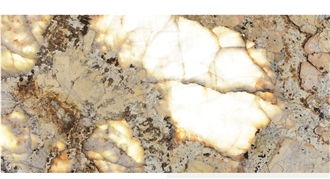
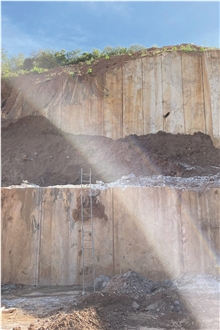
Santorini Sunset is a rare and luxurious pegmatite granite quarried in Brazil, prized for its golden beige, light cream, and white quartz tones, interspersed with striking translucent crystals and semi-precious green and black tourmalines. This exotic stone is an exceptional decorative surface material, used in high-end interiors and specialty design applications.

Visual Characteristics

Texture: Coarse-grained and crystalline with large, visible mineral grains. Some translucent zones glow when backlit, highlighting the gem-like inclusions.

Pattern: Irregular yet balanced, with waves of cream and golden tones interrupted by pockets of quartz, feldspar, and colorful tourmaline. Natural veining gives a sense of movement.

Color Range: Golden beige, light cream, white, hints of amber and ivory; dark specks and green/black tourmalines appear as accents.

Mineralogical Composition (% by weight)

  • Quartz (crystalline and translucent): 35–40%
  • Feldspar (orthoclase and microcline): 25–30%
  • Mica (biotite, muscovite): 10–12%
  • Tourmalines (green and black): 3–5%
  • Other silicates and trace semi-precious elements: 5–7%
  • Iron oxides and accessories: <1%

Chemical Composition (% by weight)

  • SiO₂ (Silicon Dioxide): 70–75%
  • Al₂O₃ (Aluminum Oxide): 12–15%
  • K₂O (Potassium Oxide): 4–6%
  • Na₂O (Sodium Oxide): 3–5%
  • Fe₂O₃ (Iron Oxide): 0.5–1.5%
  • CaO, MgO, TiO₂ and trace elements: balance

Technical Properties

  • Compressive Strength: 130–160 MPa
  • Flexural Strength: 12–16 MPa
  • Water Absorption: ≤ 0.4%
  • Abrasion Resistance: Excellent
  • Mohs Hardness: 6.5–7
  • Density: Approx. 2.65–2.75 g/cm³
  • Porosity: Low
  • UV Resistance: Excellent (suitable for both indoor and indirect outdoor use)

Usage Applications

  • Luxury kitchen countertops
  • High-end bathroom vanities
  • Feature walls & backlit panels
  • Table tops and bar counters
  • Flooring and wall cladding
  • Decorative inlays and furniture accents

Cutting Sizes (Typical Availability)

  • Slabs: 200–320 cm (length) × 120–200 cm (height)
  • Thickness: 2 cm / 3 cm
  • Tiles: 60×60 cm, 60×120 cm, 80×80 cm, 100×100 cm, custom sizes
  • Thickness: 1.5–2 cm for tiles, up to 5 cm for custom cut pieces

Surface Finish Options

  • Polished: Glossy surface enhances color and crystal reflections
  • Honed: Smooth matte finish for a more muted, elegant look
  • Leathered: Textured, tactile finish emphasizing mineral structure
  • Satin: Soft sheen with a velvet-like touch
  • Brushed: Subtle aged texture for rustic appeal

Maintenance

  • Sealing recommended annually due to microcrystalline structure
  • Use pH-neutral stone cleaners only
  • Avoid strong acids or abrasives
  • Wipe spills quickly to prevent staining in high-use areas

This stunning material transforms spaces into refined, opulent settings and is ideal for architects and designers seeking a combination of natural beauty, semi-precious appeal, and long-term durability.

FAQ

Is Santorini Sunset Granite suitable to use for sculpturing?

Santorini Sunset Granite can be suitable for sculpturing, but there are several factors to consider before deciding if its the right material for your project. Here are some points to keep in mind: 1. **Hardness and Durability**: Granite is a very hard and durable stone, which can make it challenging to work with compared to softer stones like marble or limestone. However, its durability makes it ideal for sculptures that need to withstand the elements or physical stress. 2. **Tools and Expertise**: Working with granite requires specialized tools, such as diamond-tipped saws and chisels, because of its hardness. It also demands a higher level of expertise and experience in stone carving. 3. **Aesthetics**: The visual appearance of Santorini Sunset Granite, such as its color and pattern, will play a crucial role in your sculptures final look. Consider whether its appearance aligns with your artistic vision. 4. **Weight and Size**: Granite is a very dense and heavy material. Ensure that your workspace can accommodate the weight and that you have the means to transport and install the finished piece. 5. **Cost**: Granite can be more expensive than other sculpting stones. Evaluate your budget to see if it’s a feasible choice for your project. If these considerations are manageable within your projects scope and you’re equipped to handle the challenges of working with granite, Santorini Sunset Granite can be a suitable and visually striking material for sculpturing.

Does coffee stain the surface of Santorini Sunset Granite table top?

Santorini Sunset Granite is a type of natural stone that is generally durable and resistant to staining. However, like all natural stones, it is not completely impervious to stains, especially if the surface is not properly sealed. Coffee, being acidic, can potentially stain granite if it is allowed to sit on the surface for an extended period of time without being cleaned up. To prevent staining, it is important to ensure that the granite is properly sealed and to wipe up any spills as soon as they occur. Regular maintenance, such as resealing the granite as needed, will also help protect the surface from staining.

How can I repair the scratched surface of the Santorini Sunset Granite countertop?

Repairing scratches on a Santorini Sunset Granite countertop can be a manageable DIY task, depending on the severity of the scratches. Heres how you can try to repair it: 1. **Clean the Surface**: - Start by cleaning the countertop thoroughly with warm soapy water to remove any dirt or debris. Use a soft cloth or sponge to avoid further scratches. - Dry the surface completely with a clean towel. 2. **Assess the Damage**: - Determine the depth and extent of the scratches. Light surface scratches can usually be repaired more easily than deep ones. 3. **Polish the Scratch**: - For light scratches, apply a small amount of granite polish or stone polishing powder onto the scratched area. - Use a soft cloth or a buffing pad attached to an electric polisher to gently rub the polish into the scratch in a circular motion. - Follow the instructions on the polishing product closely. 4. **Using Fine Grit Sandpaper**: - For deeper scratches, gently sand the scratched area with very fine grit sandpaper (e.g., 600 grit). Always sand in a circular motion and be gentle to prevent further damage. - Gradually move to higher grit sandpaper (e.g., 800, 1000) to smooth out the area further. - Be sure to keep the area damp while sanding to prevent dust, and take frequent breaks to assess progress. 5. **Apply Stone Sealer**: - Once the scratch is less noticeable or removed, clean the area again. - Apply a stone sealer to protect the surface and restore its shine. Follow the sealer instructions carefully to achieve the best results. 6. **Buffing and Polishing**: - After the sealer has been applied and is dry, buff the surface with a soft, clean cloth to restore the original shine of the granite. 7. **Professional Help**: - If the scratches are deep or if these methods don’t achieve the desired results, consider hiring a professional stone restoration service. They have specialized tools and compounds for more significant repairs. Remember to always test any product or method in a small, inconspicuous area first to ensure it does not adversely affect the appearance of the granite. Additionally, regular cleaning and maintenance, as well as using cutting boards and trivets, can help protect your granite countertops from future scratches.

Does red wine stain the surface of a Santorini Sunset Granite kitchen countertop?

Yes, red wine can stain the surface of a Santorini Sunset Granite countertop. Granite is a natural stone and while it is relatively resistant to staining, it is still porous to some degree, which means it can absorb liquids like red wine if spills are not cleaned up promptly. To prevent staining, its important to clean up any spills as soon as they occur. Additionally, applying a high-quality sealant specifically designed for granite can help protect the countertop by reducing its porosity. Regular resealing, usually annually or per the sealant manufacturers recommendations, can further safeguard the countertop from potential stains and damage. If a stain does occur, using specialized granite cleaning products or a poultice may help to remove it.

Is Santorini Sunset Granite polished flooring slippery for bathroom use?

Santorini Sunset Granite, like other polished granite surfaces, can indeed be slippery when wet. This is particularly important to consider for bathroom flooring, where water and moisture are common. If you are planning to use polished granite in a bathroom, it might be a good idea to consider using rugs or bath mats to provide traction and minimize the risk of slips and falls. Alternatively, you could opt for a honed or textured finish on the granite, which can provide better grip underfoot compared to a highly polished surface. Additionally, using non-slip treatments or coatings on the polished granite can help enhance its traction.

How can I give Santorini Sunset Granite tiles an antique look?

Giving Santorini Sunset Granite tiles an antique look involves several steps that focus on altering their finish and appearance to resemble aged stone. Here’s a guide to achieve that vintage charm: 1. **Select the Right Finish**: - Consider honing the granite to reduce its natural gloss and give it a more matte finish. Honing can dull the appearance and mimic an antique look. 2. **Apply an Aging Solution**: - You can use an etching solution (like those used for marble) to slightly etch the surface of the granite, making it look weathered. Be cautious, as this can alter the stone permanently. Test in a small, inconspicuous area first. 3. **Use Antiquing Stain**: - Apply a stone stain or aging glaze. Choose a color that complements the natural tones in the Santorini Sunset Granite, such as earthy browns or soft greys. Use a cloth or sponge to apply the stain, creating an uneven finish for more authenticity. 4. **Beveling or Chiseling the Edges**: - Use tools to manually chip or chisel the tile edges for a worn look. This will make the tiles appear as if they have naturally aged over time. 5. **Tumbling**: - If possible, consider putting the tiles in a tumbling machine with small stones or abrasives. This will wear down the edges and surface, creating a naturally weathered effect. 6. **Wax or Polish**: - Apply a natural stone wax. Opt for a darker tone to add depth and an aging effect to the tiles. Buff the surface after waxing to a subtle sheen rather than a high gloss. 7. **Grout Considerations**: - Choose a grout color that contrasts with the granite to make it appear aged. Darker grouts often work best and can be applied unevenly for effect. 8. **Maintain and Clean for Aging**: - Clean the tiles with mild detergents and avoid using sealants that enhance shine. Over time, natural wear will continue to add to the antique look. **Note**: Always remember that some methods of achieving an antique look can be permanent and alterations might affect the granite’s performance. It’s advisable to consult with a professional stone worker or fabricator before beginning, especially with valuable stone like granite. Additionally, test any process on a spare or hidden piece first to ensure satisfaction with the results.

How can I restore the appearance of Santorini Sunset Granite floors to make them look new again?

Restoring the appearance of Santorini Sunset Granite floors involves cleaning, polishing, and sealing. Here are some steps to make them look new again: 1. **Initial Cleaning:** - Sweep or vacuum the floor to remove dust and loose debris. - Mop the floor using a pH-neutral stone cleaner and warm water. Avoid using acidic or abrasive cleaners, as they can damage the granite. 2. **Deep Cleaning:** - For stubborn stains or dirt, use a soft brush or a non-abrasive pad with the stone cleaner. Gently scrub the affected areas. - Rinse the floor thoroughly with clean water to remove any cleaner residues. 3. **Polishing:** - Use a granite polishing compound or a diamond polishing pad to restore the shine. Follow the product’s instructions carefully. - Work in small sections and use a buffing machine if available, or polish by hand with a microfiber cloth. - Buff the floor until it reaches the desired shine. 4. **Sealing:** - Ensure the floor is completely dry before applying a sealant. - Use a high-quality granite sealer and apply it as per the manufacturer’s instructions. This typically involves spreading the sealer evenly over the floor and letting it sit for the recommended time. - Wipe off any excess sealer with a clean cloth to prevent streaking or haziness. 5. **Regular Maintenance:** - Maintain the floor’s appearance by regularly sweeping and mopping with pH-neutral cleaners. - Place mats or rugs in high traffic areas to reduce wear. - Avoid using waxes or oils which can cause a build-up on granite. 6. **Professional Help:** - If the floor has deep scratches, etches, or severe dull spots, consider hiring a professional stone restoration service. They have the tools and expertise for grinding and honing the surface if necessary. By following these steps, you can restore and maintain the natural beauty of your Santorini Sunset Granite floors, ensuring they look like new for years to come.

Can Santorini Sunset Granite be used for stair steps?

Yes, Santorini Sunset Granite can be used for stair steps. Granite is a popular choice for stairs due to its durability, strength, and aesthetic appeal. It can withstand heavy foot traffic and is resistant to scratches and stains. Additionally, Santorini Sunset Granite, with its unique color variations and patterns, can add an elegant and distinctive look to both indoor and outdoor staircases. However, it is essential to ensure that the granite surface has an anti-slip finish, especially for outdoor steps, to prevent slipping hazards.

Customer reviews

Customer reviews

Write a Review
Daw**** United States

Do you. have a picture of the entire slab? What is the price?

Helpful (0) 0Reply

Products & Prices

Hot Granite

New Granite

Post Your Request

The request includes:
  1. surface finished, size
  2. quantity required