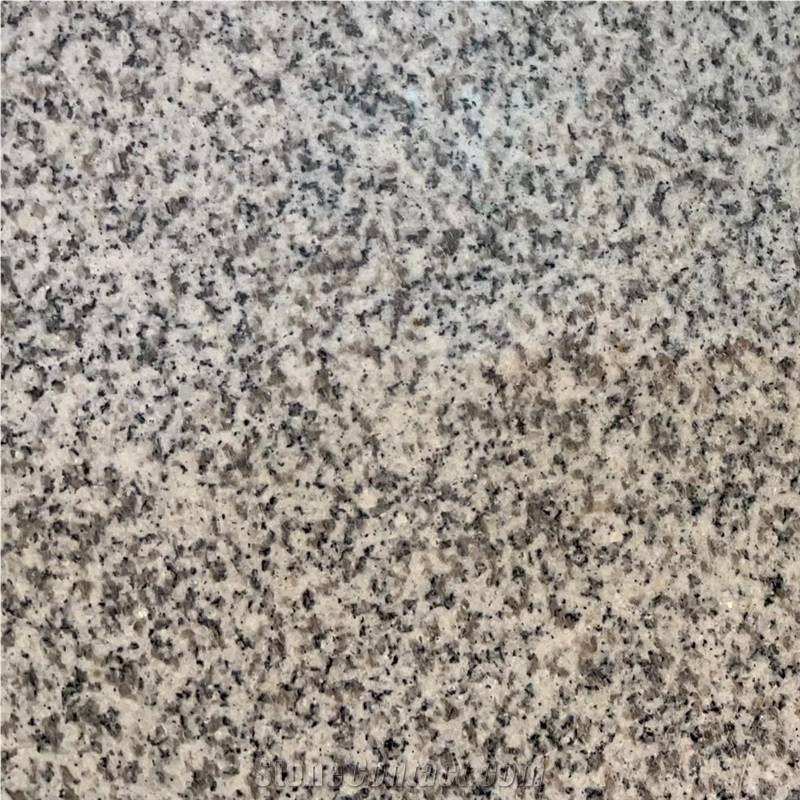
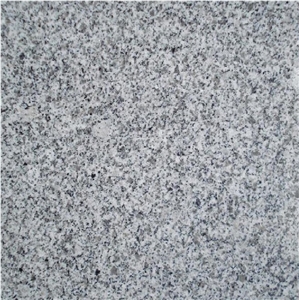
Serizzo Antigorio Chiaro Granite is an intrusive orthogneiss with a phaneritic, granular crystalline texture. Its main components are quartz, feldspar, and darker minerals like biotite and mica, forming a dense interlocking mineral matrix. The stone features a light grey to grey-white background with scattered dark grey, black, and occasional brown mineral specks. This creates a balanced, naturally mottled appearance that may show slight bluish or warm beige tonal variations depending on the quarry section and block.
Quarry Location:
- Crodo, Val Antigorio
- Provincia di Verbano-Cusio-Ossola, Piemonte, Italy
Colors:
Physical and Mechanical Properties:
- Water Absorption: 0.38% by weight
- Density: 2655 kg/m³
- Flexural Strength: 16.5 MPa
- Compressive Strength: 168.0 MPa
- Hardness: High (exact Mohs scale rating can vary, typically around 6-7)
- Porosity: Low
- Slip Resistance: Generally good, but can vary with finish
Chemical and Mineral Composition (% by weight):
- Quartz: Typically around 20-40%
- Feldspar (Orthoclase, Microcline): 30-60%
- Mica (Biotite, Muscovite): 5-15%
- Accessory Minerals (e.g., Hornblende, Magnetite): Varies
Usage:
- Suitable for both interior and exterior applications
- Commonly used in flooring, wall cladding, kitchen countertops, vanity tops, and monuments
- Suitable for high-traffic areas given its durability
Maintenance:
- Regular cleaning with pH-balanced cleaners is recommended
- Sealants can be applied to reduce porosity and protect against stains
- Avoid acidic cleaners to prevent damage
Cutting Sizes (cm):
- Varies depending on the project requirements, typically available in standard slab sizes such as:
- Slabs: Up to 250 x 150 cm
- Tiles: 30 x 30, 60 x 30, 60 x 60, etc.
Common Surface Finish Options:
- Polished: Provides a glossy surface to enhance the stone's colors and patterns
- Honed: Offers a smooth, matte finish
- Flamed: Creates a textured, slip-resistant surface
- Bush-Hammered: Rough, heavily textured finish
- Brushed: Slightly textured, softer appearance
This granite, with its robust physical properties and aesthetic appeal, is a versatile material choice for architectural and decorative purposes.
Test Result:
- Petrographic Definition: Orthogneiss
- Mass Unit Volume: 2655 kg/m³
- Water Absorption: 0.38 %
- Compressive Strength (Simple Breaking Load): 168 MPa
- Compressive Strength After Freezing: 168 MPa
- Indirect Tensile Strength (Flexural): 16.5 MPa
- Relative Abrasion Coefficient (referenced to Granite St. Fedelino): 0.81
- Impact Resistance (Minimum Fall Height): 79 cm
- Linear Thermal Expansion Coefficient: 5.8 × 10⁻⁵ °C⁻¹
- Knoop Microhardness: 4209 MPa
- Hardness Non-Uniformity Index: 1.91
- Source: Università di Pisa – Politecnico di Torino


 Italy


 Germany


 Czech Republic


 China
 India


 United States

 Spain


