


G603 Granite
 China


 India
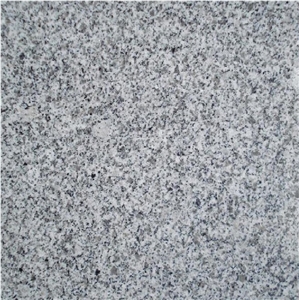
Uno Grey Granite features a deep charcoal grey to dark grey background, strongly contrasted by prominent off-white, cream, and light grey mineral speckles. Subtle dark green and black undertones are visible within the matrix, creating a bold, naturally textured appearance. Its overall aesthetic is robust, balanced, and contemporary.
Coarse-grained crystalline granular texture with a dense, compact, and interlocking mineral structure. The surface consists of clearly visible angular mineral grains, forming a distinctive salt-and-pepper appearance. Its coarse crystal distribution gives the stone a strong natural character and visual depth.
Characterized by a relatively uniform distribution of contrasting light-colored mineral crystals across a dark grey background. Irregular clusters of white, cream, and grey grains create a pronounced speckled pattern rather than continuous linear veining. Natural variations in grain size, density, and mineral distribution may occur between slabs and blocks.
Indicative reference values for comparable Indian grey granites. Actual test results depend on the quarry and production batch.
|
Property |
Indicative Value |
|---|---|
|
Water absorption |
0.20–0.30% |
|
Apparent porosity |
0.2–1.0% |
|
Bulk density |
2,690–2,720 kg/m³ |
|
Compressive strength |
150–180 MPa |
|
Flexural strength |
13–15 MPa |
|
Abrasion resistance |
15–25 mm |
|
Mohs hardness |
6–7 |
Indicative mineralogical composition by weight:
|
Mineral |
Approx. Content |
|---|---|
|
Quartz |
25–35% |
|
Plagioclase Feldspar |
25–35% |
|
Potassium Feldspar |
15–25% |
|
Biotite |
5–10% |
|
Amphibole |
2–8% |
|
Other accessory minerals |
1–5% |
Indicative chemical composition by weight:
|
Chemical Component |
Approx. Content |
|---|---|
|
SiO₂ |
65–72% |
|
Al₂O₃ |
13–16% |
|
K₂O |
3–5% |
|
Na₂O |
3–5% |
|
CaO |
1–4% |
|
Fe₂O₃ |
1–4% |
|
MgO |
0.5–2% |
|
TiO₂ |
0.1–1% |
|
Other oxides |
0.1–2% |
Suitable for kitchen countertops, bathroom vanity tops, flooring, wall cladding, staircases, window sills, fireplace surrounds, exterior paving, building facades, landscaping, and commercial architectural applications. Its dark grey background and contrasting crystalline speckles make it particularly suitable for modern residential and commercial projects.
Clean regularly using a pH-neutral stone cleaner and a soft cloth or mop. Avoid acidic cleaners, abrasive chemicals, and harsh detergents. Apply a suitable penetrating stone sealer to help reduce staining and moisture absorption. Wipe spills promptly, especially oils and strongly colored liquids. For outdoor installations, periodic inspection of joints and surface conditions is recommended.
China
India

India

 United States

 Spain

 Italy

India

 Brazil

 Australia

India

China

China