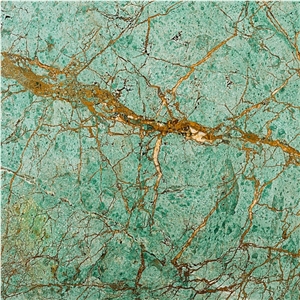
Urmiah Green Granite

About
Item Details
- Material Type:
- Granite
- Origin:
Iran (Isfahan) - Primary Color(s):
- Green
- Recommended Usage:
- kitchen and bathroom countertops, wash basins, building stone, ornamental stone, stairs, interior, exterior wall and floor applications, mosaic, waterjet pattern, wall panels, table tops, balustrades, columns, wall and pool copings, pool pavers, sculptures, fireplaces, window sills
- Additional Names:
- Nari Orumiyeh Granite, Green Esfahan Granite, Isfahan Green Granite, Urmia Dark Green Granite, Verde Intenso Granite, Urmiah Green Granite
- Finished Surface:
- Polished,Bush Hammered,Tumbled,Brushed,Honed,Split,Machine Cut,Natural Surface,Sandblasted,Acid Washing,Combed,Leathered,Water Jet,Filled,Chiseled,Pickling
Testing
- Water Absorption:
- 0.12 %
- Density:
- 2770 kg/m³
- Compressive Strength:
- 127.3 MPa
- Stone texture:
- Medium- to coarse-grained crystalline structure with a dense and compact formation; a rich green granite characterized by deep green tones combined with black, gray, and occasional white mineral speckles diorite-granite
Description
Urmiah Green Granite is a notable variety of granite quarried in Isfahan, Iran. Known for its aesthetic appeal, it features a medium- to coarse-grained crystalline structure with deep, rich green tones intermingled with black, gray, and occasional white mineral speckles. This granite is a type of diorite-granite, celebrated for its dense and compact formation.
Physical and Mechanical Properties
- Water Absorption: 0.12%
- Density: 2770 kg/m³
- Flexural Strength: Typically ranges around 12-15 MPa (subject to specific quarry tests)
- Compressive Strength: 127.3 MPa
- Hardness: Mohs scale around 6-7
- Porosity: Generally low, enhancing durability
- Slip Resistance: Moderate to high, depending on the finish (high for flamed, lower for polished surfaces)
Chemical and Mineral Composition (% by weight)
- Quartz: 25-30%
- Feldspar (Plagioclase and Orthoclase): 50-60%
- Biotite and Hornblende: 10-15%
- Accessory Minerals (e.g., Magnetite, Apatite): <5%
Usage
Interior Applications:
- Countertops
- Flooring
- Wall Cladding
- Fireplace Surrounds
Exterior Applications:
- Facades
- Paving
- Outdoor Kitchen Benchtops and Islands
Decorative Elements:
- Sculptures
- Monuments
- Fountains
Maintenance
- Routine Cleaning: Use mild soap and water; avoid acidic cleaners.
- Sealing: Recommended every 1-2 years to resist staining.
- Repair: Chips and cracks can be repaired by professional stone restoration services.
Cutting Sizes (in cm)
- Commonly available in slabs and tiles with varied dimensions such as:
- Slabs: Typically 240 x 120 cm, thickness varying between 2-3 cm
- Tiles: Available in standard sizes such as 30 x 30 cm, 60 x 60 cm, and custom sizes upon request
Surface Finish Options
- Polished: Shiny and smooth, enhances the depth of color and pattern
- Honed: Smooth but non-reflective, providing slip resistance
- Flamed: Rough texture, excellent for slip resistance in outdoor settings
- Bush-Hammered: Textured and non-slip, suitable for high-traffic areas
- Leathered: Soft sheen and slightly textured surface, offering a contemporary look
Urmiah Green Granite is a versatile and durable material that combines aesthetic elegance with robust physical properties, making it ideal for a wide array of architectural and design applications. Proper care and maintenance will ensure its longevity and preserve its natural beauty over time.
FAQ
Yes, Urmiah Green Granite can be used for a kitchen countertop. Granite is a popular choice for countertops due to its durability, resistance to heat, scratches, and stains, and its aesthetic appeal. Urmiah Green Granite, like other granite types, would likely possess these qualities, making it suitable for kitchen countertops. However, its important to ensure it is properly sealed to prevent staining and to maintain its appearance over time. Additionally, consider the overall kitchen design to ensure the color and pattern complement the rest of the kitchen decor.
How can I remove mold from Urmiah Green Granite wall tiles?
To safely and effectively remove mold from Urmiah Green Granite wall tiles, follow these steps:
1. **Gather Materials**:
- Mild dish soap or a granite-specific cleaner
- Warm water
- Soft-bristle brush or sponge
- Microfiber cloths
- Protective gear (gloves, mask, and goggles)
- Isopropyl alcohol (70% or higher) for stubborn mold
2. **Prepare the Area**:
- Ensure the area is well-ventilated by opening windows or using fans.
- Wear protective gear to avoid inhaling mold spores or coming into contact with them.
3. **Initial Cleaning**:
- Mix a few drops of mild dish soap with warm water in a spray bottle.
- Spray the solution generously onto the affected tiles.
- Let it sit for about 5-10 minutes to loosen the mold.
4. **Scrubbing**:
- Gently scrub the tiles with a soft-bristle brush or sponge to avoid scratching the granite.
- Work in small sections, rinsing the brush or sponge frequently in warmth, clean water.
5. **Rinsing**:
- Wipe down the tiles with a clean, damp microfiber cloth to remove any soap residue and remaining mold.
- Rinse the cloth frequently in clean water.
6. **Tackling Stubborn Mold**:
- If stubborn mold remains, dampen a microfiber cloth with isopropyl alcohol.
- Gently rub the affected area until the mold is removed.
7. **Final Rinse and Drying**:
- Wipe the tiles with a clean, damp microfiber cloth to remove any alcohol or soap residues.
- Use a dry microfiber cloth to thoroughly dry the tiles, as leftover moisture can lead to mold regrowth.
8. **Prevention**:
- Ensure proper ventilation in the area to discourage mold growth.
- Regularly clean the tiles with a granite-specific cleaner to maintain their condition and prevent mold recurrence.
- Address any moisture issues, such as leaks, to prevent future mold problems.
Remember to always spot-test any cleaning solution in an inconspicuous area of your tiles to make sure it does not damage the granite.
Will a hot pot leave a mark on a Urmiah Green Granite kitchen countertop?
Placing a hot pot directly on any granite countertop, including one made of Urmiah Green Granite, can potentially leave a mark. Granite is heat-resistant to a certain extent, but not heat-proof. Rapid or extreme temperature changes can cause thermal shock, and some sealants used on granite surfaces can be damaged by intense heat, leading to discoloration or dulling. To protect your countertop, its advisable to use trivets or hot pads when placing hot pots and pans on it.
If lemonade spills on a Urmiah Green Granite kitchen countertop, will it damage the surface?
Urmiah Green Granite is a natural stone that is relatively durable and resistant to many types of damage. However, being a natural stone, it is still porous to some extent and can be susceptible to staining and etching from acidic substances like lemonade.
If lemonade spills on the countertop, its important to clean it up promptly to minimize any potential damage. Wipe the spill with a soft, damp cloth and then clean the area with a mild pH-balanced cleaner or a mixture of dish soap and water. Rinse the area well and dry it thoroughly to prevent any residue from remaining on the surface.
To protect your granite countertop from such incidents, consider sealing it regularly with a high-quality granite sealer. This makes the stone less porous and better able to resist stains and etches from acidic substances like citrus juices. Always follow the manufacturers instructions for sealing and maintenance to ensure the longevity of your granite countertop.
Can I use bleach when cleaning a Urmiah Green Granite kitchen countertop?
Its generally not recommended to use bleach on natural stone surfaces, including Urmiah Green Granite. Granite is susceptible to damage from harsh chemicals and acidic substances, and using bleach can lead to discoloration, dullness, and surface degradation over time.
For cleaning granite countertops, its best to use a mild dish soap or a cleaner specifically formulated for natural stone. Here’s a basic cleaning process you can follow:
1. **Use a soft cloth or sponge:** Dampen it with water and add a small amount of mild dish soap.
2. **Gently wipe the surface:** Clean the countertop with the soapy sponge, being careful not to scrub too harshly.
3. **Rinse with water:** Use a clean, damp cloth to wipe away any soap residue.
4. **Dry thoroughly:** Buff the surface with a soft, dry towel to avoid water spots.
In addition to regular cleaning, consider sealing your granite countertops every 1-2 years to help protect them from stains and maintain their luster. Always avoid acidic or abrasive cleaners, and if youre ever in doubt, check with the manufacturer or a professional stone care expert for advice specific to your granite type.
If I cut meat directly on my Urmiah Green Granite kitchen countertop, will it damage the surface?
Cutting meat directly on your Urmiah Green Granite kitchen countertop is not recommended. Granite is a durable and relatively scratch-resistant material, but its not impervious to damage. Here are a few reasons why you should avoid cutting directly on the granite surface:
1. **Scratches:** While granite is hard, its still possible for sharp knives to leave scratches or dull spots over time.
2. **Knife Damage:** Cutting on granite can also dull your knives faster than using a cutting board.
3. **Bacteria:** Using a cutting board is more hygienic, as it can be cleaned more thoroughly. Cutting directly on the countertop may allow bacteria to linger in any small scratches or pores in the stone.
4. **Etching and Stains:** Although not common with granite, exposing the countertop to meat juices and other acidic substances might lead to staining or etching if not cleaned promptly.
To protect both your countertop and your knives, its best to use a cutting board when preparing food.
Can Iran's Urmiah Green Granite be used exterior applications in cold climates?
Yes, Irans Urmiah Green Granite can be used for exterior applications in cold climates. Granite is a dense and durable natural stone that can withstand various weather conditions, including freezing temperatures and frost. It is resistant to moisture and has a low water absorption rate, which reduces the risk of cracking or damage caused by freeze-thaw cycles. However, it is always recommended to consult with a professional or supplier to ensure that the specific type and quality of Urmiah Green Granite is suitable for your particular climate and application.
Can Iran's Urmiah Green Granite be used in wall coverings?
Yes, Irans Urmiah Green Granite can be used in wall coverings. Urmiah Green Granite is a type of granite that is known for its greenish color and unique veining patterns. It is a durable and strong material, which makes it suitable for use as a wall covering. Many designers and architects choose Urmiah Green Granite for its aesthetic appeal and ability to add a natural and sophisticated look to interior and exterior walls. It can be used in various applications, including but not limited to accent walls, fireplace surrounds, backsplashes, and bathroom walls.
What is the coefficient of friction of Combed Iran's Urmiah Green Granite tiles?
The coefficient of friction of Combed Irans Urmiah Green Granite tiles can vary based on various factors such as the surface finish, texture, and conditions. It is recommended to refer to the manufacturers specifications or conduct specific friction testing to determine the coefficient of friction for these tiles.
What grade is Iran's Urmiah Green Granite?
Irans Urmiah Green Granite is typically classified as a commercial grade granite.