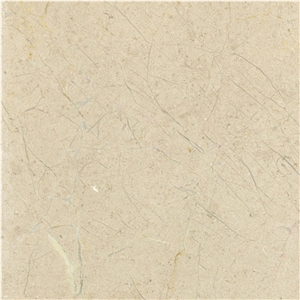
Bursa Cream Marble is a natural Turkish marble characterized by a relatively uniform cream to light beige background, complemented by delicate light brown veins, subtle white calcite streaks, and soft cloudy formations. Its warm, neutral color palette creates an elegant and understated appearance, making it suitable for both classical and contemporary architectural designs. Natural variations in tonal intensity and mineral distribution add depth while maintaining an overall consistent look.
Texture & Structure
Features a fine to medium-grained crystalline structure with a compact calcite-rich composition. The surface generally appears smooth and homogeneous, with occasional white crystalline streaks and subtle mineral inclusions. Its relatively uniform texture allows for consistent processing, polishing, and fabrication into different architectural formats.
Pattern
The pattern is predominantly uniform and cloud-like, featuring delicate light brown veins, irregular white calcite streaks, and faint beige tonal transitions. The veining is generally soft rather than pronounced, creating a restrained natural pattern. Individual blocks and slabs may exhibit variations in vein density, direction, and background coloration.
Technical Characteristics
-
-
Unit Volume Weight (Density): 2.71 g/cm³
-
Water Absorption at Boiling (by Weight): 0.20%
-
Water Absorption at Boiling (by Volume): 0.60%
-
-
Compressive Strength After Freezing: 518 kgf/cm² (50.8 MPa)
-
Impact Resistance (Strength to Blow): 15 kgf/cm² (1.47 MPa)
-
Modulus of Elasticity: 6.84 × 10⁴ kgf/cm² (6.71 GPa)
-
-
-
Average Abrasion Resistance: 25 cm³/50 cm²
-
Average Tensile Strength: 64 kgf/cm² (6.28 MPa)
Chemical & Mineralogical Composition
Chemical Composition (% by Weight)
-
Silicon Dioxide (SiO₂): 0.21%
-
Iron Oxide (Fe₂O₃): 0.06%
-
Calcium Oxide (CaO): 49.20%
-
Magnesium Oxide (MgO): 2.30%
Mineralogical Composition (Indicative)
-
Calcite: Predominant mineral
-
Dolomite: Minor to moderate content
-
Quartz and other silicate minerals: Trace amounts
-
Iron-bearing minerals: Minor traces
The chemical composition indicates a calcium-rich carbonate stone with a minor magnesium component. Exact mineralogical percentages require X-ray diffraction (XRD) analysis.
Usage
Bursa Cream Marble is suitable for a wide range of interior and selected exterior architectural applications, including:
-
Residential and commercial flooring
-
Interior wall cladding and decorative panels
-
Bathroom flooring and wall coverings
-
Kitchen backsplashes and vanity tops
-
Staircases, steps, and risers
-
Hotel lobbies and reception areas
-
-
Window sills and door surrounds
-
Columns, mouldings, and architectural details
-
Decorative furniture and custom stonework
-
Large-format polished and honed marble slabs
Maintenance
Bursa Cream Marble should be treated with a suitable penetrating stone sealer to reduce the risk of staining, particularly in kitchens, bathrooms, and high-traffic areas. Clean regularly using a pH-neutral stone cleaner and a soft cloth or mop. Avoid acidic products, including vinegar, lemon juice, and harsh chemical cleaners, as they can damage the calcite surface and cause etching. Spills should be wiped up promptly. Periodic resealing and professional polishing when necessary will help maintain its natural cream coloration and surface finish.
Note: The listed technical values are based on the supplied test data. Actual performance may vary depending on the quarry block, processing, and surface finish.


 Turkey

 United States


 9YR

 China


 Spain


 Italy

 Oman

 Egypt


 India


 Greece