Post Your Needs

Carmel Gold Granite

Yellow - Granite

Brazil

About

Item Details

Material Type:
Granite
Origin:
Brazil
Primary Color(s):
Yellow
Recommended Usage:
kitchen and bathroom countertops, wash basins, building stone, ornamental stone, stairs, interior, exterior wall and floor applications, mosaic, waterjet pattern, wall panels, table tops, balustrades, columns, wall and pool copings, pool pavers, fireplaces, window sills
Additional Names:
Carmel Golden Granite, Carmel Giallo Granite, Gold Carmel Granite, Carmel Gold Granite
Finished Surface:
Polished,Bush Hammered,Tumbled,Brushed,Honed,Split,Machine Cut,Natural Surface,Sandblasted,Acid Washing,Combed,Leathered,Water Jet,Filled,Chiseled,Pickling

Testing

Water Absorption:
0.15 - 0.34%
Density:
2660 - 2710 kg/m³
Flexural Strength:
11 - 15 MPa
Compressive Strength:
170 - 180 MPa
Stone texture:
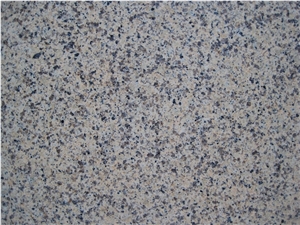
a warm golden-beige to honey-yellow base color enriched with soft brown, cream, and occasional grey-black mineral specks, creating a naturally elegant and slightly variegated appearance with gentle movement across the surface. Its texture is medium to coarse-grained with an interlocking crystalline structure typical of granite, composed mainly of quartz and feldspar, giving it a dense, durable body that takes a strong polish and highlights its warm, luminous tones

Description

Carmel Gold Granite is a stunning natural stone that blends warm golden-beige and honey-yellow tones with soft brown, cream, and occasional grey-black mineral specks. This granite, quarried in Brazil, features a gently variegated appearance and a medium to coarse-grained texture with an interlocking crystalline structure. Below is a detailed description of its physical and mechanical properties, chemical and mineral compositions, typical uses, maintenance recommendations, common cutting sizes, and available surface finishes.

Physical and Mechanical Properties

  • Water Absorption:Typically 0.15% to 0.34%. Indicates low porosity, providing good resistance to moisture.
  • Density:Approximately 2,660 to 2,710 kg/m³. Denotes a dense material, contributing to its durability and strength.
  • Flexural Strength:11 to 15 MPa. Suggests the stone's capacity to resist bending and withstand weight without breaking.
  • Compressive Strength:170 to 180 MPa. Reflects the stone's ability to bear loads and its overall structural solidity.
  • Hardness:Mohs scale rating of 6 to 7. Implies a robust surface that can resist scratches from most household items.
  • Porosity:Low. Ensures reduced staining and liquid absorption, maintaining its aesthetic appeal.
  • Slip Resistance:Depends on finish; honed surfaces offer greater slip resistance. Important for flooring applications to ensure safety.

Chemical and Mineral Compositions

  • Quartz: 20% to 30%. Contributes to the granite's hardness and resistance to weathering.
  • Feldspar:50% to 60%. Primarily responsible for its color, providing durability and chemical resistance.
  • Biotite and Mica:5% to 10%. Provides the darker mineral specks, enhancing visual interest.
  • Other Minerals:5% to 10%. Includes trace minerals like amphiboles, contributing to the stone's unique appearance.

Usage

Interior Applications:

  • Countertops
  • Flooring
  • Wall cladding
  • Fireplaces

Exterior Applications:

  • Paving
  • Facades
  • Outdoor kitchen countertops

Decorative Elements:

  • Tabletops
  • Vanity tops

Maintenance

  • Cleaning:Use a pH-neutral cleaner and a soft cloth or sponge. Avoid acidic or abrasive cleaners.
  • Sealing:Recommend sealing every 1-2 years to maintain resistance to stains and enhance longevity.
  • General Care:Wipe spills promptly to avoid staining or dulling the surface. Use coasters or trivets under hot cookware to prevent thermal shock.

Cutting Sizes

  • Typical slab thickness ranges from 2 cm to 3 cm.
  • Custom sizes can be cut but standard slabs are usually available in:
  • 240 cm x 120 cm
  • 300 cm x 150 cm

Surface Finish Options

  • Polished:Provides a glossy and reflective surface that enhances the stone's color and pattern.
  • Honed:Offers a matte finish that reduces shine but maintains the stone's natural beauty.
  • Brushed/Leathered:Adds texture while maintaining a soft sheen.
  • Flamed:Creates a rougher, more slip-resistant surface ideal for exterior use.

Carmel Gold Granite's luxurious appearance, combined with its durable properties, makes it a versatile choice for a variety of architectural and design applications. Its maintenance is straightforward, ensuring lasting beauty and functionality in both residential and commercial spaces.

FAQ

Can Brazil's Carmel Gold Granite be used exterior applications in hot climates?

Yes, Brazils Carmel Gold Granite can be used in exterior applications in hot climates. Granite is known for its durability and heat resistance, making it suitable for outdoor use. However, it is always recommended to consult with a professional stone supplier or installer to ensure proper installation and maintenance in specific climate conditions.

What is the coefficient of friction of Water Jet Cut Brazil's Carmel Gold Granite tiles?

The coefficient of friction of Water Jet Cut Brazils Carmel Gold Granite tiles would depend on various factors such as the surface finish of the tiles, the level of polishing, and the presence of any additional coatings or sealants. Without specific information about these factors, it is difficult to determine the exact coefficient of friction. However, granite tiles are generally considered to have a higher coefficient of friction compared to materials like polished marble or ceramic tiles, which makes them relatively slip-resistant. It is recommended to consult the manufacturer or supplier for more specific information regarding the coefficient of friction of the particular tiles in question.

How thick is Brazil's Carmel Gold Granite slabs?

I cannot access specific information on the thickness of Brazils Carmel Gold Granite slabs as it may vary depending on the supplier and the type of cut. However, typically granite slabs range from 2cm to 3cm thick.

Can Brazil's Carmel Gold Granite be used in landscaping?

Yes, Brazils Carmel Gold Granite can be used in landscaping. It is a durable and dense stone that can withstand weather conditions and has a natural beauty that can enhance outdoor spaces. It can be used for pathways, borders, edging, boulders, water features, and more. The warm golden tones of the granite make it a popular choice for landscaping projects.

Are there color variations of Brazil's Carmel Gold Granite?

Yes, there can be slight color variations in Brazils Carmel Gold Granite due to natural variations in the stone. The base color is typically a rich golden brown with occasional black and beige veining throughout. Some variations may have more prominent black or beige areas, but overall the color is fairly consistent.

Can Brazil's Carmel Gold Granite be used in a bathroom?

Yes, Brazils Carmel Gold Granite can be used in a bathroom as it is a highly durable and low maintenance material. It is resistant to water, heat, and scratches, making it ideal for use in a bathroom. Additionally, its unique color and pattern can add sophistication and elegance to any bathroom design.

What grade is Brazil's Carmel Gold Granite?

I do not have access to specific information about the grades of granite in Brazil. However, grades of granite can vary depending on the region and the quarry, so it is best to inquire with a specific supplier or quarry.

Is Brazil's Carmel Gold Granite an expensive stone?

I dont have specific information about the current price of Carmel Gold granite, but typically, the price of granite depends on several factors such as the quality, availability, location, and demand. However, some high-end or rare granites can be expensive. Its best to check with local suppliers and compare prices to get an idea of the cost of Carmel Gold granite.

Products & Prices

Hot Yellow Granite

New Granite

Post Your Request

The request includes:
  1. surface finished, size
  2. quantity required