Carniglia Sandstone, also recognized as Bedonia Sandstone or Pietra Bedonia, is a distinctive natural stone prized for its smoky gray hue and fine-grain texture. This sandstone is quarried in the Carniglia area, situated in Bedonia, within the Provincia di Parma, in the Emilia-Romagna region of Italy. It boasts several noteworthy characteristics that make it a sought-after material for architectural and design applications.
Key features of Carniglia Sandstone:
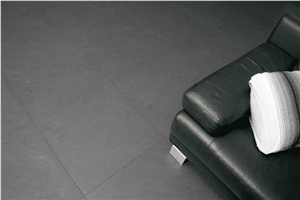
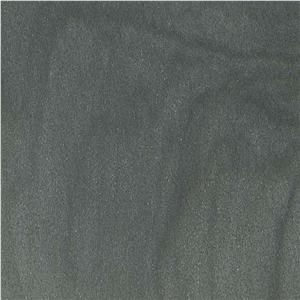
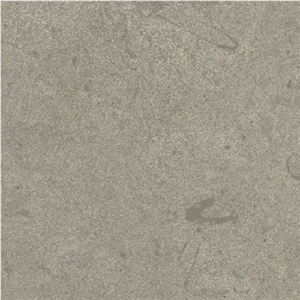
- Smoky Gray Color: Carniglia Sandstone exhibits a captivating smoky gray coloration that gives it a refined and versatile appearance. This gray hue is muted and sophisticated, making it suitable for both contemporary and traditional design schemes.
- Fine-Grain Texture: The stone is characterized by its fine-grain texture, which imparts a smooth and consistent surface. This fine-grain structure enhances the stone's aesthetic appeal and lends itself well to detailed carving and intricate designs.
- Durability: Carniglia Sandstone is renowned for its durability and resilience. It is capable of withstanding exposure to the elements and the test of time, making it suitable for both indoor and outdoor applications.
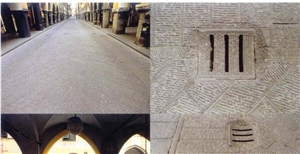
- Versatility: Thanks to its appealing aesthetics and robust properties, Carniglia Sandstone finds use in a variety of architectural and design applications. It is commonly employed for cladding building facades, creating decorative elements, crafting sculptures, and paving outdoor spaces.
- Local Heritage: Carniglia Sandstone is closely associated with the local heritage of the Bedonia region in Italy. Its quarries have a long history, and the stone has been used in various historical and architectural landmarks throughout the region.
- Customization: Due to its fine-grain texture and durability, Carniglia Sandstone can be custom-cut and shaped to suit specific design requirements. This makes it a favored choice among architects and designers seeking unique and tailor-made solutions.
- Natural Beauty: The smoky gray coloration of Carniglia Sandstone, combined with its fine-grain texture, exudes a sense of understated elegance and natural beauty. It complements a range of design styles and can be used to create captivating visual contrasts.
Carniglia Sandstone, with its appealing aesthetics and robust qualities, has found favor in various architectural and artistic endeavors. Its connection to the rich heritage of the Bedonia region adds to its allure, making it a notable choice for projects that require a touch of timeless elegance and Italian craftsmanship.
Petrographic definition: sandstone
Massa Unit Volume: 2650 -2700 kg / m3
Water Absorption: 0.59 %
Breaking Load Compression Simple: 232 MPa
Compression breaking load after freezing: 220 MPa
Elastic Modulus Tangent: 44,600 MPa
Elastic Modulus Secant: 34.200 MPa
Tensile indirect through Flex: 30-33 MPa
Coefficient relative Abrasion (referred to Granite St. Fedelino): 0.63
Impact resistance: minimum fall height: 106 cm
Coefficient of linear thermal expansion: 10.1 x 10⁻⁵ 0C-1
Knoop microhardness: 4983 MPa
Index of non-uniformity of hardness: 3.51
Source: Università di Parma


 Italy


 China


 United Kingdom

 India

 Spain


