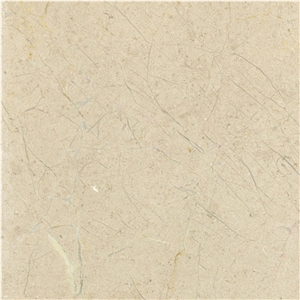
Chiampo Paglierino Marble, often referred to in the stone industry as marble, is geologically a limestone. It originates from the region around Arzignano, Chiampo, Cornedo Vicentino, Nogarole, Piovene, Valdagno, Provincia di Vicenza, in Veneto, Italy. Recognized for its luxurious yet understated appearance, this stone features a soft creamy-beige base color with subtle golden and honey veins.
Physical and Mechanical Properties:
- Water Absorption: 0.64%
- Density: 2650 kg/m³
- Flexural Strength: 16.9 MPa
- Compressive Strength: 207.0 - 218.0 MPa
- Hardness: Typically rated on the Mohs Scale, limestone often falls around 3-4 (specific value for this stone may not be documented but can be similar).
- Porosity: Moderate, contributing to its ability to absorb water.
- Slip Resistance: Generally rated with a coefficient of friction; specific ratings can be DCOF > 0.42 for honed surfaces.
Chemical and Mineral Compositions:
- Calcium Carbonate (CaCO3): Typically predominant in limestone, often over 90%.
- Other Minerals: May include minor amounts of dolomite, clay minerals, and sometimes silicates.
Usage:
- Interior Applications: Excellent for flooring, wall cladding, bathroom vanities, and kitchen countertops due to its aesthetic appeal.
- Exterior Applications: Suitable for facades and other vertical surfaces; should be sealed to prevent weathering.
- Decorative Uses: Frequently used in sculptures and bespoke decorative pieces.
Maintenance:
- Sealing: Regular sealing recommended to prevent staining and moisture absorption.
- Cleaning: Use a pH-neutral cleaner to avoid damaging the surface. Avoid acidic or abrasive cleaners.
- Polishing: Gentle polishing may restore luster, especially in high-traffic areas.
Surface Finish Options:
- Polished: Creates a glossy, reflective surface, enhancing the stone's color and vein patterns.
- Honed: Provides a smooth, matte finish, reducing glare and making it less slippery.
- Brushed or Antiqued: Offers a textured surface, increasing slip resistance and providing a rustic look.
- Tumbled: Provides a weathered, aged appearance, often used for decorative purposes.
- Sandblasted: Involves creating a rough texture, enhancing slip resistance for external applications.
In summary, Chiampo Paglierino Marble is a desirable choice for a variety of applications due to its aesthetic qualities and robust mechanical properties. Proper care and maintenance can extend its beauty and functionality, making it an ideal choice for both residential and commercial environments.
Petrographic Definition: Limestone
Physical and Mechanical Properties
- Bulk Density: 2,650 kg/m³
- Water Absorption: 0.64 %
- Compressive Strength (Uniaxial): 218 MPa
- Compressive Strength after Freeze–Thaw Cycles: 207 MPa
- Indirect Tensile Strength (Flexural): 16.9 MPa
- Abrasion Coefficient (referenced to Granite St. Fedelino): 0.67
- Impact Resistance (Minimum Fall Height): 40 cm
- Coefficient of Linear Thermal Expansion: 4.3 × 10⁻⁵ °C⁻¹
- Knoop Microhardness: 1,844 MPa
- Hardness Non-Uniformity Index: 1.16
* Source: Università di Pisa – Politecnico di Torino


 Italy


 China


 Spain

 Turkey


 Oman

 Egypt


