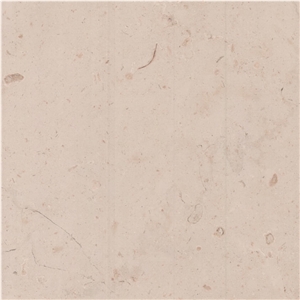
Crema Moralejo is a distinct limestone quarried in Gilena, Sevilla, Spain. Known for its consistent, uniform warm golden beige tone, this stone exhibits a fine sedimentary texture typical of limestone. It features subtle natural patterning and character, enhanced by small oolites and fossil traces.
Physical and Mechanical Properties
-
Water Absorption: 3.3%. This relatively high absorption rate indicates the stone's porosity and should be considered when determining its use in environments that may expose it to water.
-
Density: 2321 kg/m³. The density reflects its moderately substantial weight and stability, suitable for construction and various design applications.
-
Flexural Strength: 12.4 MPa. Indicates the stone's capability to withstand bending forces, making it useful for flooring and wall cladding.
-
Compressive Strength: 97.0 MPa. Suggests strong resistance under compressive loads, suitable for structural use, including as part of load-bearing structures.
-
Hardness: While not specifically listed, limestone generally has medium hardness, which is sufficient for most interior and exterior applications but can get scratched or worn over time with heavy traffic.
-
Porosity: Typically high due to its natural formation, contributing to its distinctive texture and suitability for decorative purposes.
-
Slip Resistance: Dependent on the finish applied to the limestone. A honed or rough finish generally provides better slip resistance compared to a polished finish.
Chemical and Mineral Composition
- Calcium Carbonate (CaCO₃): Predominant component, typical of limestone, usually around 90-95% by weight.
- Magnesium Carbonate (MgCO₃): Minor presence contributes to the stone’s hardness and durability.
- Quartz, Clays, and Other Minerals: These elements contribute to the color and variation, as well as physical properties like tensile strength.
- Trace Elements: Includes oxides of iron, which can impact color and stain susceptibility.
Usage and Applications
- Interior Flooring: Ideal for spaces seeking warm, natural aesthetics.
- Wall Cladding: Suitable for both interior and exterior applications, adding texture and design interest.
- Countertops and Vanities: Provide a sophisticated look for bathrooms and kitchens but require sealing due to porosity.
- Staircases: Can be used in both residential and commercial projects due to its durability.
Maintenance
- Regular sealing recommended to prevent staining and water ingress.
- Clean with pH-neutral cleaners to maintain surface integrity.
- Avoid abrasives that might scratch the limestone.
Available Surface Finishes
- Honed: Smooth and matte surface, enhancing slip resistance.
-
Polished: High-gloss finish, exposing the stone's natural beauty at the cost of slip resistance.
-
Brushed: Adds texture for a rustic appearance.
-
Tumbled: Gives an aged appearance with a textured surface.
This comprehensive guide provides a thorough understanding of Crema Moralejo Limestone, making it easier for architects, builders, and designers to make informed decisions concerning its application in various projects.
Recognition (Visual): Rock of creamy white color, containing numerous oolites, some porosity, with conchoidal to irregular fractures. Highly effervescent when exposed to cold HCl.
Microscopic Study:
Major Minerals: Calcite
Accessory Minerals: Opaque minerals
Texture: Numerous allochems (oolites and some fossils) cemented by sparite calcite
Comments: This is a sedimentary carbonate rock of marine origin, composed of over 70% allochems (oolites and some fossils) cemented by sparitic calcite (grain size between 0.040 and 0.090 mm). The allochems (oolites and fossils) are composed of micritic calcite (grain size less than 5 microns). The recrystallization texture can be classified as medium crystalline, combining the grain sizes of both the allochems and the sparitic calcite cement.


 Spain

 Saudi Arabia

 Germany


 Portugal


 Norway

 Croatia

 Bulgaria

 China

 France
