


Riyadh Stone
 Saudi Arabia


 Iran
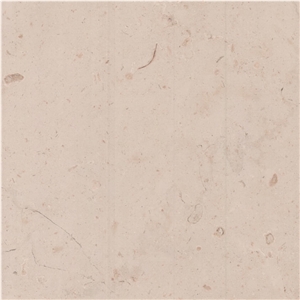
Forsted Limestone, commercially known in the Chinese stone market as 白沙米黄 (Bái Shā Mǐ Huáng – White Sand Beige), is an elegant natural limestone quarried in Iran. It features a soft creamy beige to pale ivory background with subtle sandy undertones, scattered tiny fossil-like markings, and delicate greyish-beige mineral speckles. Its fine-grained texture, relatively homogeneous appearance, and understated natural pattern make it particularly suitable for minimalist, contemporary, classical, and Mediterranean architectural designs.
Base Color: Light creamy beige to pale ivory.
Secondary Colors: Soft sand, warm off-white, and light greyish-beige.
Pattern: Relatively uniform background with finely distributed fossil-like markings and small mineral speckles.
Veining: Minimal or nearly absent prominent veining.
Color Variation: Low to moderate, with subtle natural tonal transitions.
Overall Appearance: Bright, refined, understated, and elegant.
Grain Size: Fine-grained.
Texture: Visually compact, homogeneous, and finely granular carbonate structure.
Structure: Sedimentary carbonate rock with possible small fossil fragments and bioclastic inclusions.
Surface Characteristics: Delicate sandy texture with scattered microscopic to small visible inclusions.
Polishing Ability: The photographed slab displays a smooth, reflective polished surface.
Surface Finish Options: Polished, honed, brushed, sandblasted, bush-hammered, tumbled, antique, and sawn cut, subject to material suitability.
Typical indicative reference ranges for comparable compact beige limestones:
|
Technical Property |
Reference Value |
|---|---|
|
Water Absorption |
0.5–3.0% by weight |
|
Density |
2480–2620 kg/m³ |
|
Flexural Strength |
7–10 MPa |
|
Compressive Strength |
70–100 MPa |
|
Mohs Hardness |
Approximately 3–4 |
|
Porosity |
Variable |
|
Abrasion Resistance |
Moderate |
|
Acid Resistance |
Low |
|
Frost Resistance |
Requires laboratory testing |
These values are general limestone reference ranges, not certified Forsted Limestone test results.
Forsted Limestone is expected to consist predominantly of calcium carbonate, with minor quantities of other carbonate minerals and sedimentary impurities.
Potential Mineralogical Constituents:
Calcite (CaCO₃): Principal mineral constituent.
Dolomite (CaMg(CO₃)₂): Possible secondary carbonate mineral.
Quartz (SiO₂): Potential minor accessory mineral.
Clay minerals: Possible fine-grained sedimentary constituents.
Iron oxides: Potential contributors to warm beige and sandy undertones.
Bioclastic material: Possible fossilized shell and marine organism fragments.
Chemical Composition:
The principal chemical constituents expected in this type of limestone include:
Calcium Oxide (CaO)
Magnesium Oxide (MgO)
Silicon Dioxide (SiO₂)
Aluminum Oxide (Al₂O₃)
Iron Oxide (Fe₂O₃)
Carbon Dioxide (CO₂), released from carbonate minerals during heating.
Pure calcium carbonate theoretically consists of approximately 56.03% CaO and 43.97% CO₂ by weight. Actual stone-specific chemical and mineralogical percentages require laboratory analysis.
Country of Origin: Iran
Commercial Name: Forsted Limestone
Chinese Commercial Name: 白沙米黄 (Bái Shā Mǐ Huáng)
Literal English Translation: White Sand Beige
Material Type: Limestone
Geological Classification: Sedimentary carbonate rock
Primary Color: Beige
Secondary Colors: Ivory, cream, and light sand
Exact Quarry Location: Not confirmed
Forsted Limestone is suitable for a wide range of architectural and decorative applications, including:
Interior flooring and wall cladding
Exterior building facades
Large-format architectural wall panels
Bathroom vanity tops and wall coverings
Staircases, steps, and risers
Window sills and door surrounds
Fireplace surrounds and mantels
Reception desks and decorative furniture
Columns, balustrades, and architectural moldings
Mosaics and decorative stonework
Sculptures and ornamental carvings
Patios, terraces, and garden pathways
Swimming pool coping and surrounds
Landscaping and exterior paving
Residential, commercial, hotel, and hospitality projects
Its relatively uniform coloration and subtle natural pattern make Forsted Limestone particularly attractive for large-scale architectural cladding and continuous flooring installations where visual consistency is important.
Exterior applications should be evaluated according to water absorption, frost resistance, mechanical strength, and local climatic conditions.
Clean regularly using a soft cloth and pH-neutral natural stone cleaner.
Apply a suitable penetrating limestone sealer periodically to minimize moisture absorption and staining.
Avoid acidic cleaning products, vinegar, lemon juice, and aggressive chemicals.
Remove spills promptly, particularly coffee, wine, oils, and colored liquids.
Avoid abrasive cleaning pads that may scratch polished surfaces.
Use coasters, cutting boards, and protective pads on tabletops and countertops.
Select textured, slip-resistant finishes for outdoor flooring and wet-area applications.
Ensure proper drainage and suitable installation methods for exterior applications.
Professional honing or repolishing can restore the original surface appearance when necessary.
Saudi Arabia

 Germany

 Spain

 Portugal

Portugal

Spain

 Norway

 Croatia

 Bulgaria

 China

 France

France