Post Your Needs

K Black Granite

Black - Granite

South Africa

About

Item Details

Material Type:
Granite
Origin:
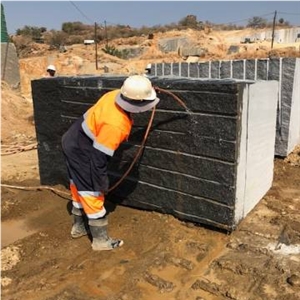
South Africa (Sonop, Brits District.)
Primary Color(s):
Black
Recommended Usage:
kitchen and bathroom countertops, stairs, building stone, ornamental stone, interior, exterior wall and floor applications, mosaic, waterjet pattern
Additional Names:
Africa Impala Granite, Africa Nero Impala Granite, African Impala Granite, Afrika Schwarz Granit, Black Impala Granite, Diorit Impala Granite, Eagle Black Granite, Gabbro Impala, Impala Black Granite, Impala Gabbro, Impala Km Granite, Impala Negro Granite, Impala Nero Granite, Jasberg Granite, Maricana Granite, Marikana Black Granite, Negro Impala Granite, Negro Rustemburg Granite, Negro Sudafrica Granite, Nero Africa Granite, Nero Africa Impala Granite, Nero Afrika Granite, Nero Afrika Impala Granite, Nero Impala Granite, K Black Granite
Finished Surface:
Polished,Flamed,Bush Hammered,Tumbled,Brushed,Honed,Split,Machine Cut,Natural Surface,Sandblasted,Acid Washing,Combed,Leathered,Water Jet,Filled,Chiseled,Pickling

Testing

Water Absorption:
0.1 %
Density:
2950 kg/m³
Flexural Strength:
22 MPa
Compressive Strength:
240 MPa

Description

MODULUS OF RUPTURE ...Mpa 26

ABRASION RESISTANCE... mm 1,48

CO-EFFICIENT OF THERMAL EXPANSION Mm per °C...9.07 x 10-6

POROSITY ...% per mm 0,34

COMPRESSIVE STRENGTH...Mpa 240

FLEXURAL STRENGTH...Mpa 22

FAQ

How often do I need to seal K Black Granite floor?

The frequency of resealing K Black Granite floors can vary depending on several factors such as the level of foot traffic, exposure to liquids and stains, and quality of the initial sealing. Generally, it is recommended to initially seal a granite floor with a high-quality sealer, and then reseal it every 1-3 years. However, if your floor experiences heavy foot traffic or is regularly exposed to spillage of liquids or potentially staining substances, it may be necessary to seal it more frequently, possibly every 6-12 months. To determine the exact frequency for resealing, it is best to consult the manufacturers recommendations or seek advice from a stone care professional to assess the specific conditions and requirements of your K Black Granite floor.
Is K Black Granite gravestone hard to maintain?

Yes, K Black Granite gravestones can be relatively difficult to maintain compared to other types of gravestones. K Black Granite is known for its dark color and polished finish, which can make it prone to showing dirt, fingerprints, and other stains. Additionally, the dark color can make it more difficult to see any chipping, cracking, or other damage to the stone. Regular cleaning and maintenance is required to keep K Black Granite gravestones looking their best.

Do K Black Granite headstones fade?

It is possible for K Black Granite headstones to fade over time due to various environmental factors such as exposure to sunlight, rain, and pollution. However, K Black Granite is known for its durability and resistance to fading compared to other types of granite. With proper care and maintenance, including regular cleaning and applying sealer, the fading process can be slowed down or minimized.

What is a pencil edge on a K Black Granite countertop?

A pencil edge on a K Black Granite countertop refers to a specific edge profile that is applied to the edges of the countertop. The pencil edge is a soft, rounded edge that creates a smooth and subtle finish. It is known for its elegant and timeless appearance, and is a popular choice for many kitchen countertops.

What edge makes K Black Granite countertop look thicker?

One edge that can make a K Black Granite countertop look thicker is the mitered edge. A mitered edge is created by adding an extra piece of stone material to the edge of the countertop, giving the illusion of a thicker slab. This additional stone piece is usually cut at a 45-degree angle and then fused to the edge of the countertop, creating a seamless and thicker appearance.

What is a laminated edge on K Black Granite countertop?

A laminated edge on K Black Granite countertop refers to a decorative edge treatment that is created by laminating or bonding two or more pieces of the countertop material together. In the case of K Black Granite, a thin strip or layer of the same granite material is typically added to the front and/or sides of the thicker slab to create a visually attractive and thicker edge profile. This process is done to give the impression of a solid and thicker countertop edge while reducing the cost of using a full-thickness slab throughout the entire countertop.

Can I change the edge of a K Black Granite countertop?

Yes, it is possible to change the edge of a K Black Granite countertop. However, this process requires professional assistance as it involves cutting and shaping the granite to create the desired edge profile. It is recommended to consult with a professional countertop fabricator or installer to ensure a proper and safe modification of the countertop edge.

How do I finish K Black Granite countertop edges?

To finish the edges of a K Black Granite countertop, you can follow these steps: 1. Clean the edges: Start by cleaning the edges of the countertop thoroughly. Remove any dirt, dust, or debris using a soft cloth and mild soap. Rinse it off with clean water and allow it to dry completely. 2. Sand the edges: Use a 120-grit diamond sanding pad to sand down the edges of the granite countertop. Start with rough sanding and gradually move to finer grits like 200, 400, and 800. This will help smoothen the edges and remove any roughness or imperfections. 3. Polish the edges: Once the edges are smooth, use a polishing pad or stone to polish them. Apply a small amount of polishing compound or powder to the edge and work it in a circular motion. Repeat the process with different grits of polishing pads until you achieve the desired level of shine. Rinse off any residue and wipe the edges clean. 4. Apply edge treatment: Depending on the desired look, you can apply an edge treatment to enhance the appearance of the edges. Some options include beveling, bullnose, ogee, or rounded edges. Use specialized tools like a router or grinding machine to shape the edges according to your preference. You can also hire a professional stone fabricator for more complex edge treatments. 5. Seal the edges: To protect the edges and enhance their longevity, apply a granite sealer. Follow the manufacturers instructions on the sealer packaging for the best results. Allow the sealer to dry completely before using the countertop. Remember, granite is a dense and durable material, so it is recommended to use appropriate tools and safety precautions when working with it. If youre unsure or uncomfortable performing any of these steps, it might be best to consult a professional stone fabricator for assistance.

Is K Black Granite good for bar countertops?

Yes, K Black Granite is a popular choice for bar countertops due to its durability, elegant appearance, and resistance to staining and scratching. It has a deep black color with some variations and can have a polished or honed finish, depending on the desired look.

Products & Prices

Hot Black Granite

New Granite

Post Your Request

The request includes:
  1. surface finished, size
  2. quantity required