Post Your Needs

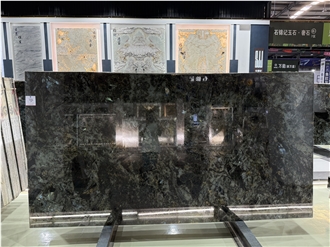
Labradorite Blue Australe Granite

Blue - Granite

Madagascar

About

Item Details

Material Type:
Granite
Origin:
Madagascar (Ihosy, Ihorombe Region, central south Madagascar)
Primary Color(s):
Blue
Recommended Usage:
Kitchen and bathroom countertops, monuments, building stone, ornamental stone, stairs, interior, exterior wall and floor applications, mosaic, waterjet pattern, balustrades, fireplaces, columns, wall panels
Additional Names:
Labradorite Blue Australe, Blue Austral Labradorite Granite, Blue Australe Granite, Bleue Lemur Granit, Blue Lemure Granite, Labrador Blue Austral Granite, Labradorita Blue Australe, Madagascar Blue Granite, Labradorite Blue Australe Granite
Finished Surface:
Polished,Bush Hammered,Tumbled,Brushed,Honed,Split,Machine Cut,Natural Surface,Sandblasted,Acid Washing,Combed,Leathered,Water Jet,Filled,Chiseled,Pickling

Testing

Water Absorption:
0.1 %
Density:
2723 kg/m³
Flexural Strength:
16.3 MPa
Compressive Strength:
138 MPa

Description

Labradorite Blue Australe Granite, also known as Labradorite Blue Austral Granite, is a unique and captivating natural stone that is quarried in Madagascar, an island country located off the southeastern coast of Africa. It is highly regarded for its stunning blue iridescence and the mesmerizing play of colors that it exhibits.

The dominant characteristic of Labradorite Blue Australe Granite is its remarkable blue background, which can range from deep navy blue to lighter shades of blue. What sets this granite apart is the presence of labradorite, a feldspar mineral known for its iridescent optical effects. Labradorite crystals in the stone create a mesmerizing play of colors that can include blues, greens, golds, and even occasional hints of purple or orange. This iridescent display gives the granite a dynamic and magical appearance, as the colors appear to shift and change when viewed from different angles or under varying lighting conditions.

Labradorite Blue Australe Granite is commonly used in interior and exterior applications. It is a favored choice for countertops, wall cladding, flooring, and decorative accents in both residential and commercial settings. The unique and vibrant colors of this granite add a touch of luxury and visual interest to any space, creating a focal point and enhancing the overall aesthetic.

In addition to its stunning appearance, Labradorite Blue Australe Granite is known for its durability and strength. Like other granite varieties, it is a dense and hard natural stone that is resistant to heat, scratches, and stains. With proper sealing and regular maintenance, it can withstand the rigors of daily use and retain its beauty for many years.

As with any natural stone, Labradorite Blue Australe Granite can exhibit variations in color, pattern, and veining from slab to slab. It is advisable to view and select the specific slabs to ensure they meet your desired preferences and project requirements.

In summary, Labradorite Blue Australe Granite is a mesmerizing natural stone quarried in Madagascar, featuring a dominant blue background with iridescent labradorite crystals. Its unique play of colors and luxurious appearance make it a favored choice for adding a touch of magic and elegance to various architectural and design projects.

FAQ

Are there color variations of Madagascar's Labradorite Blue Australe Granite?

There are no documented color variations specifically named Madagascars Labradorite Blue Australe Granite. Labradorite Blue Australe Granite is a granite variety that is known for its blue-hued labradorite crystals and is typically sourced from Madagascar. However, within the category of Labradorite Blue Australe Granite, there may be variations in the intensity and distribution of the blue labradorite crystals, which can result in slight differences in appearance. It is always recommended to view samples or images of the specific stone to assess the color and pattern variations.

Can a water jet cut Labradorite Blue Australe Granite?

Yes, a water jet can cut Labradorite Blue Australe Granite. A water jet cutting machine uses a high-pressure stream of water mixed with an abrasive substance such as garnet to cut through various materials, including granite. It provides a precise and clean cut without causing heat or damage to the surface of the material. Therefore, it can be effective for cutting granite, including Labradorite Blue Australe Granite.

How can I make a hole in a Labradorite Blue Australe Granite tabletop?

Making a hole in a Labradorite Blue Australe Granite tabletop requires careful planning and specialized tools. Here is a step-by-step guide on how you can do this: 1. Gather the necessary tools: You will need a diamond hole saw bit, a power drill (preferably with a variable speed setting), a center punch, masking tape, a water source (such as a spray bottle or a hose), safety goggles, and gloves. 2. Measure and mark the desired location for the hole on the tabletop using a measuring tape and a permanent marker. Double-check the measurements to ensure accuracy. 3. Place a small piece of masking tape over the mark to prevent the drill bit from slipping during the drilling process. 4. Put on safety goggles and gloves to protect your eyes and hands. Granite can be quite hard, and small chips or fragments could be ejected during the drilling process. 5. Start by using the center punch to create a small indentation on the masking tape. This will act as a guide for the drill bit and prevent it from wandering off target. 6. Insert the diamond hole saw bit into the power drill. Make sure it is securely fastened and positioned perpendicular to the tabletop surface. 7. If your drill has a variable speed setting, set it to a slow speed to prevent excessive heat buildup. Lubricate the hole saw bit with water intermittently during the drilling process to cool it down and minimize dust. 8. Gently position the drill bit onto the mark, aligning it with the center punch indentation. Start drilling slowly and apply light pressure. Let the drill bit do the work and avoid forcing it through the granite. 9. Maintain a steady speed and gradually increase the pressure until the hole saw bit penetrates the surface of the granite. As you reach the 1/4 inch mark, decrease the pressure and continue drilling at a slow and steady pace. 10. Keep the drill bit and the granite wet by spraying water onto the hole saw bit. This helps to reduce heat and dust, as well as prolongs the life of the drill bit. 11. Once the hole has been drilled completely through the countertop, reverse the drill to remove the hole saw bit from the granite and prevent any potential damage. 12. Carefully remove the masking tape from the countertop, and clean any remaining debris or residue around the hole. Always remember to work slowly, steadily, and with caution. If you are unsure or uncomfortable with this task, it may be best to consult a professional stone fabricator who has experience working with granite.

Can I cut Labradorite Blue Australe Granite with a tile saw?

Yes, you can cut Labradorite Blue Australe Granite with a tile saw. A tile saw with a diamond blade specifically designed for cutting granite should be able to handle the job. However, it is recommended to use a wet tile saw equipped with a continuous rim diamond blade to ensure smoother and cleaner cuts. Additionally, be sure to wear appropriate safety gear, such as goggles and gloves, while cutting granite to protect yourself from any potential hazards.

How do I smooth Labradorite Blue Australe Granite after cutting?

To smooth Labradorite Blue Australe Granite after cutting, you can follow these steps: 1. Safety Precautions: Always wear appropriate safety gear, including protective goggles, gloves, and a dust mask. Granite contains silica, which can be harmful when inhaled. 2. Choose the Right Tools: Youll need a set of diamond polishing pads with progressively finer grits (from coarse to fine), a variable speed polisher, water source, and a stone sealer. 3. Remove Any Rough Edges: Use a diamond blade or hand-held angle grinder with a diamond grinding cup wheel to smooth out any rough edges or uneven surfaces on the granite. Be cautious and take your time to ensure an even result. 4. Start with the Coarsest Grit: Attach the coarsest diamond polishing pad to the polisher. Wet the surface of the granite and the polishing pad. Then, with light pressure, move the polisher in circular or back-and-forth motions over the granite slab. Take care to cover the entire surface evenly. 5. Progressively Finer Grits: Continue the polishing process, changing to the next finer grit pad. Repeat the same circular or back-and-forth motions until youve used all the polishing pads, working your way up to the finest grit for a smooth finish. 6. Maintain an Adequate Water Supply: Throughout the polishing process, keep the granite and polishing pads wet to prevent overheating and to wash away debris. Add water as needed. 7. Clean the Surface: Once youre satisfied with the smoothness of the granite, clean off any residue and slurry using a soft cloth and water. Make sure all the polishing compounds are removed. 8. Apply Stone Sealer: To protect the smoothed granite surface and enhance its appearance, consider applying a stone sealer. Follow the manufacturers instructions for application and drying time. Remember, the process of smoothing granite requires patience, time, and precision. Take breaks as needed, keep the surface wet, and take care not to over-polish specific areas, as this can result in uneven finishes.

Will Labradorite Blue Australe Granite crack when cutting?

It is difficult to say with certainty if Labradorite Blue Australe Granite will crack when cutting, as it depends on various factors such as the quality of the stone, the cutting technique, and the tools used. However, Labradorite Blue Australe Granite is known for its durability and strength, so it is less likely to crack compared to some other types of stones. It is always recommended to use appropriate tools and techniques, and work with professionals who have experience in cutting granite to minimize the risk of cracking.

Can I use a Labradorite Blue Australe Granite slab as a cutting board?

It is not recommended to use a Labradorite Blue Australe Granite slab as a cutting board. While granite is a durable and hard material, using it as a cutting surface can dull and damage your knives over time. Additionally, granite slabs are typically polished and sealed, which may not be food-safe. It is better to use a dedicated cutting board made from food-safe materials such as wood, bamboo, or plastic, which are designed to protect your knives and provide a hygienic surface for food preparation.

What is the best tool to cut Labradorite Blue Australe Granite tile with?

The best tool to cut Labradorite Blue Australe Granite tile would be a diamond wet saw. This type of saw is specifically designed for cutting hard materials like granite and uses water to cool the blade and reduce dust. It is essential to use a diamond blade as it will provide clean and precise cuts without causing damage to the stone.

How thin can a Labradorite Blue Australe Granite countertop be?

The thickness of a Labradorite Blue Australe Granite countertop can vary depending on the specific manufacturer and their fabrication process. However, the typical thickness for a granite countertop is around 1.25 to 1.5 inches (3.18 to 3.81 cm). It is important to note that thinner countertops may be more prone to cracking or damage, so it is advisable to consult with a professional installer or manufacturer to determine the recommended thickness for your specific needs.

What is the max Labradorite Blue Australe Granite countertop thickness?

The maximum thickness of Labradorite Blue Australe Granite countertop typically ranges between 2 centimeters (3/4 inch) to 3 centimeters (1 1/4 inch). However, it is always best to consult with a professional granite supplier or fabricator to determine the maximum thickness available for this specific type of granite.

Products & Prices

View More

Hot Blue Granite

New Granite

Post Your Request

The request includes:
  1. surface finished, size
  2. quantity required