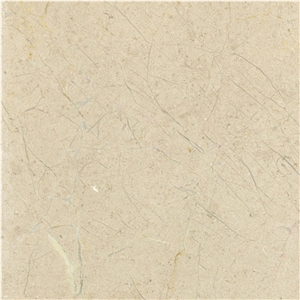
Orosei Perlato Marble

About
Item Details
- Material Type:
- Marble
- Origin:
Italy (Orosei, Provincia di Nuoro, Sardegna) - Primary Color(s):
- Beige
- Recommended Usage:
- Kitchen and bathroom countertops, wash basins, building stone, ornamental stone, stairs, interior, exterior wall and floor applications, mosaic, waterjet pattern, wall panels, table tops, balustrades, columns, wall and pool copings, pool pavers, fireplaces
- Additional Names:
- Breccia Olympo Marble, Breccia Sarda Daino Marble, Breccia Sarda Olimpia Marble, Breccia Sarda Olympia Marble, Breccia Sardo Daino Marble, Brechia Sarda Marble, Marmor Brechia Sarde, Marmor Brechia Sardo, Brescia Sarda Marble, Daino Imperiale Marble, Daino Reale Marble, Daino Tirreno Marble, Daino Venato Marble, Diana Scorpio Marble, Diana Skorpio Marble, Diane Reale Marble, Diano Reale Marble, Dino Reale Marble, Marmo di Orosei, Napoleon Perlato Daino Marble, Olimpia Beige Marble, Marmo Orosei, Perlato Daino Limestone, Orosei Perlato, Orosei Perlato Marble
- Finished Surface:
- Polished,Bush Hammered,Tumbled,Brushed,Honed,Split,Machine Cut,Natural Surface,Sandblasted,Combed,Leathered,Water Jet,Filled,Chiseled,Pickling
Testing
- Water Absorption:
- 0.41 - 0.45 By weight%
- Density:
- 2673 kg/m3
- Flexural Strength:
- 12.0 - 14.9 MPa
- Compressive Strength:
- 188.0 - 193.0 MPa
Description
Orosei Perlato Marble (also known as Perlato Olympo Marble or Breccia Sarda Marble) is a premium Italian marble known for its elegant appearance and exceptional qualities. It is quarried in Orosei, in the Provincia di Nuoro on the island of Sardinia, Italy. The marble features a sophisticated color palette, primarily in beige tones, and showcases a natural aesthetic richness that makes it highly sought after in architecture and design.
Physical and Mechanical Properties
- Water Absorption: Approximately 0.41 - 0.45% by weight.
- Density: 2673 kg/m³.
- Flexural Strength: 12.0 - 14.9 MPa.
- Compressive Strength: 188.0 - 193.0 MPa.
- Hardness: Medium; suitable for various interior applications, but may require care in high-traffic areas.
- Porosity: Low porosity level, contributing to its durability.
- Slip Resistance: May need additional treatment for slip resistance, especially when polished for floor applications.
Chemical and Mineral Composition (% by weight)
- Calcium Carbonate (CaCO₃): Primary component, as with most marbles.
- Silica (SiO₂): Minor traces that contribute to its texture.
- Iron Oxides: Impart some of the subtle color variations.
- Magnesium Oxide (MgO): Small presence of magnesium can be found.
- Other Trace Minerals: Include mica, feldspar, and quartz.
Usage
Orosei Perlato Marble is widely used in various applications due to its visual appeal and durability:
- Interior Flooring: Its elegant look makes it ideal for luxury flooring.
- Wall Cladding: Used in high-end residential and commercial spaces.
- Countertops and Vanities: Offers a unique and refined surface appearance.
- Fireplaces and Mantels: Adds an upscale aesthetic.
- Decorative Elements: Columns, staircases, and sculptures.
Maintenance
- Regular cleaning with a soft cloth and pH-balanced cleaner is recommended.
- Avoid acidic substances that could etch the surface.
- Periodic sealing may be required to maintain its appearance and prevent stains.
Cutting Sizes (cm)
- Custom sizes available upon request.
- Standard tiles: 30x30, 30x60, 60x60 cm.
- Slabs typically cut to larger dimensions, suitable for countertops and sizeable installations.
Common Surface Finish Options
- Polished: High gloss finish that highlights the beauty of the marble but may require more maintenance.
- Honed: Matte finish that reduces glare and is better suited for floors.
- Brushed: Provides a textured feel, enhancing slip resistance.
- Tumbled: Offers a rustic, aged appearance.
Orosei Perlato Marble represents a confluence of natural beauty and practicality, making it an exceptional choice for diverse architectural and design projects. Its unique blend of visual attributes and physical properties ensures it remains a popular option for those seeking timeless elegance in their spaces.
- Petrographic description (EN 12407:2000): BIOPELSPARITE / BIOPELMICRITE (Folk 1959, 1962)
- Flexural strength (EN 12372:1999): Rtf = 12.0 MPa, s = 1.7 MPa
- Flexural strength after 48 freeze-thaw cycles (EN 12371:2001): Rtf = 9.2 MPa, s = 2.6 MPa (Variation = -10%)
- Compressive strength (EN 1926:1999): Rm = 188 MPa, s = 39.0 MPa
- Compressive strength after 48 freeze-thaw cycles (EN 12371:2001): Rm = 193 MPa, s = 21.1 MPa (Variation = +3%)
- Water absorption under atmospheric pressure (EN 13755:2001): 0.4%
- Apparent bulk density (EN 1936:1999): pb = 2673 kg/m³
- Apparent porosity (EN 1936:1999): p0 = 1.2%
- Resistance to SO₂ in presence of humidity (EN 13919:2002): Solution m = -0.26%, Solution m = -0.05%
- Abrasion resistance (prEN 14157:2001): 17.2 mm
- Water absorption by capillarity (EN 1925:2000): C₂ = 1.411 g/(m²·s⁰·⁵)
- Resistance to thermal shock (EN 14066:2002): m = -0.01%


7YR