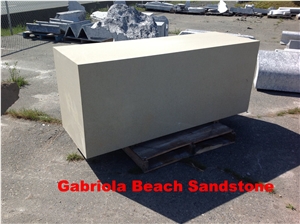
Pacific Blue Sandstone

About
Item Details
- Material Type:
- Sandstone
- Origin:
Canada (Vancouver Island, BC) - Primary Color(s):
- Grey
- Recommended Usage:
- Monuments, building stone, ornamental stone, stairs, interior, exterior wall and floor applications, mosaic, wall panels, reliefs, window sills, balustrades, columns, wall and pool copings, pool pavers, sculptures, fireplaces, cobbles, pavers, curbstone
- Additional Names:
- Pacific Grey Sandstone, Pacific Blue Sandstone
- Finished Surface:
- Bush Hammered,Tumbled,Brushed,Honed,Split,Machine Cut,Natural Surface,Sandblasted,Combed,Filled,Chiseled,Pickling
Testing
- Water Absorption:
- 1% - 2%
- Density:
- 2300 - 2500 Kg/m³
- Flexural Strength:
- 4 - 8 MPa
- Compressive Strength:
- 30 - 60 MPa
- Stone texture:
- a greyish-blue sandstone with an ash grey background and medium to fine black and white pebble-like grains
Description
Origin:Quarried in Vancouver Island, British Columbia, Canada.
Appearance:
- Color: Predominantly greyish-blue with an ash grey background.
- Texture: Medium to fine black and white pebble-like grains.
Physical and Mechanical Properties:
- Water Absorption:Typically ranges between 1% - 2%.
- Density:Approximately 2.3 - 2.5 grams per cubic centimeter (g/cm³).
- Flexural Strength:Ranges from 4 to 8 MPa.
- Compressive Strength:Between 30 and 60 MPa.
- Hardness:Mohs hardness scale rating is typically around 6 to 7.
- Porosity:Relatively low, usually ranging from 5% to 10%.
- Slip Resistance:Offers good slip resistance, suitable for both indoor and outdoor applications.
Chemical and Mineral Composition:
- Quartz: 60% - 70%
- Feldspar: 10% - 15%
- Mica: About 5% - 10%
- Iron Oxides: 2% - 5%
- Calcite: Minimal to moderate presence
- Trace minerals: Remaining percentage
Usage:
-
Interior Applications:
-
Flooring, wall cladding, countertops, decorative features.
-
Exterior Applications:
-
Paving, facades, garden landscaping, monuments.
Maintenance:
- Regular cleaning with mild soap and water.
- Periodical sealing to prevent staining and retain its appearance.
- Avoid usage of acidic cleaners which might damage the stone.
Cutting Sizes (cm):
- Standard sizes available:
- Tiles: 30x30, 40x40, 60x60
- Slabs: Can be custom-cut, commonly 2 cm or 3 cm thick.
Available Surface Finishes:
- Honed:Smooth, matte-like finish with low sheen.
- Polished:High-gloss finish that enhances the color and pattern.
- Bush Hammered:Textured finish providing good slip resistance.
- Sandblasted:Rough surface, enhancing the natural pebble texture.
- Natural Cleft:Uneven, rustic finish preserving the original stone texture.
Overall, Pacific Blue Sandstone is a versatile and durable material suitable for various applications, offering both aesthetic appeal and functional attributes. Regular maintenance and proper sealing enhance its longevity, making it a popular choice for both residential and commercial projects.
FAQ
Yes, Canadas Pacific Blue Sandstone can be used in exterior applications in rainy climates. Sandstone is known for its durability and ability to withstand various weather conditions, including rain. It is a natural stone that is resistant to water absorption, making it suitable for exterior use. However, proper installation and maintenance are still important factors to consider to ensure the longevity of the sandstone in rainy climates.
What is the coefficient of friction of Combed Canada's Pacific Blue Sandstone tiles?
I apologize, but I couldnt find any specific information regarding the coefficient of friction for Combed Canadas Pacific Blue Sandstone tiles. It is recommended to contact the manufacturer or supplier directly to obtain this information.
Can Canada's Pacific Blue Sandstone be used in landscaping?
Yes, Canadas Pacific Blue Sandstone can be used in landscaping. It is a highly durable and attractive stone that can be used for various purposes in outdoor spaces. Some common uses of Pacific Blue Sandstone in landscaping include patio pavers, walkways, garden pathways, retaining walls, decorative boulders, and water features. Its unique blue-gray hue and natural variation make it a popular choice for adding a touch of elegance and sophistication to outdoor designs. Additionally, the stones resistance to weathering and its non-slip surface make it suitable for high-traffic areas.
How thick is Canada's Pacific Blue Sandstone slabs?
The thickness of Canadas Pacific Blue Sandstone slabs can vary depending on the specific supplier and desired use. However, typical thicknesses range from 2 cm (3/4 inch) to 3 cm (1 1/4 inch).
What grade is Canada's Pacific Blue Sandstone?
There is no specific grading system for natural stones like sandstone in Canada. The grade of sandstone may vary depending on factors such as color, grain size, thickness, and overall quality. It is typically up to the supplier or manufacturer to determine the grade of sandstone based on their own standards and criteria.
Can Canada's Pacific Blue Sandstone be used in a bathroom?
Yes, Canadas Pacific Blue Sandstone can be used in a bathroom.
Can Canada's Pacific Blue Sandstone be used outdoors?
Yes, Canadas Pacific Blue Sandstone can be used outdoors. It is a durable and versatile natural stone that is suitable for various outdoor applications such as paving, cladding, landscaping, and more. Its unique blue-grey color and natural texture give a distinctive look to outdoor spaces, making it a popular choice for homeowners and landscape designers alike. However, like any natural stone, it requires proper installation and maintenance to ensure its longevity and beauty.
Are there color variations of Canada's Pacific Blue Sandstone?
I dont have the latest information for the variations in the color of Canadas Pacific Blue Sandstone. However, Pacific Blue Sandstone is a naturally occurring stone, so its color and pattern can vary from quarry to quarry, or even within a single block of stone. It can range in color from grey-blue to dark blue with occasional green and brown tones. Therefore, it is essential to get the sample of the specific stone before making a purchase to ensure that the color and pattern meet your requirements.
Is Canada's Pacific Blue Sandstone an expensive stone?
I dont have access to current market prices for Pacific Blue Sandstone in Canada, but generally speaking, natural stones are priced based on factors such as rarity, availability, quality, and extraction and transportation costs. Pacific Blue Sandstone is known to be a relatively rare and unique stone that is not commonly found in other parts of the world. As a result, it may be more expensive than other types of sandstone that are more widely available. However, the specific price of Pacific Blue Sandstone would depend on various factors and may vary from one supplier to another.


9YR