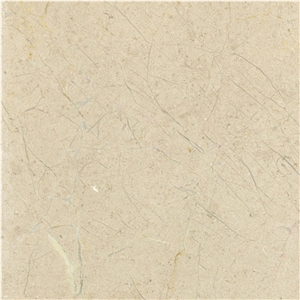
Perlatino di Oriente Marble is a sought-after stone commercially marketed as marble, quarried in the regions of Trani, Provincia di Barletta-Andria-Trani, Bari, and Puglia in Italy. This marble is known for its warm, light background color ranging from ivory to beige, featuring subtle, irregular brown or gray veins, with occasional small clear calcite inclusions and sometimes fossil shells. Its natural and earthy appearance makes it a versatile material for various design applications.
Physical and Mechanical Properties
- Water Absorption: 0.41% by weight
- Density: 2672 Kg/m³
- Flexural Strength: 11.07 MPa
- Compressive Strength: 149.99 MPa
- Hardness: Typically rated around 3-4 on the Mohs scale (comparable to typical limestone or marble)
- Porosity: Relatively low, contributing to good surface integrity
- Slip Resistance: Depends on the finish, but generally moderate; finishes like honed surfaces can improve slip resistance compared to polished ones
Chemical and Mineral Compositions (% by weight)
- Calcium Carbonate (CaCO3): Predominant component, similar to most marbles
- Minor Constituents: Silica (SiO2), Alumina (Al2O3), Iron Oxides (Fe2O3)
- Trace Minerals: May include dolomite, quartz, feldspar, and mica; the specific percentages can vary slightly by quarry location
Usage
- Interior Applications: Flooring, wall cladding, bathroom vanities, and fireplaces
- Exterior Applications: Some usage in facades but traditionally suited for indoor settings due to weathering
- Decorative Elements: Suitable for sculptures, countertops, and decorative tiles
Maintenance
- Regular Cleaning: Use a mild, pH-neutral cleaner; avoid acidic or abrasive cleaning agents that can damage the surface
- Sealing: Recommended every 1-2 years to protect against moisture and staining
- Polishing: Periodic polishing can help maintain its luster
- Repairs: Small surface scratches and etching can be repaired by professional refinishing
Cutting Sizes and Common Surface Finish Options
- Typical Slab Sizes: Customizable but commonly available in thicknesses of 2 cm and 3 cm
- Tile Sizes: Often manufactured in sizes like 30x30 cm, 60x30 cm, and 60x60 cm
- Surface Finish Options:
- Polished: For a glossy, reflective surface enhancing the stone's color
- Honed: For a smooth, matte finish with better slip resistance
- Brushed: For a textured appearance
- Antiqued: To give a timeless, aged look
This marble is appreciated not only for its aesthetic appeal but also for its durability, making it an excellent choice for various architectural and design projects. Proper installation and maintenance can ensure that Perlatino di Oriente maintains its beauty and functionality over time.


 Italy


 Spain

 Turkey


 Oman

 Egypt

 India

 Greece


 Iran


 Myanmar