Puligny Limestone

About
Item Details
- Material Type:
- Limestone
- Origin:
France (Puligny-Montrachet, Cote-d'Or, Bourgogne) - Primary Color(s):
- Beige
- Recommended Usage:
- planters, fountains, facade, urban street furnitures, building stone, ornamental stone, stairs, interior, exterior wall applications, mosaic, waterjet pattern, wall panels, table tops, balustrades, columns, wall and pool copings, pool pavers, fireplaces
- Additional Names:
- Pierre de Puligny-Montrachet, Puligny Shell Limestone, Pierre Puligny, Calcaire Puligny, Puligny, Puligny Limestone
- Finished Surface:
- Polished,Bush Hammered,Tumbled,Brushed,Honed,Split,Machine Cut,Natural Surface,Sandblasted,Combed,Leathered,Water Jet,Chiseled,Pickling
Testing
- Water Absorption:
- 2 - 4 %
- Density:
- 2480 - 2520 kg/m³
- Flexural Strength:
- 11 - 14 MPa
- Compressive Strength:
- 70 - 90 MPa
- Stone texture:
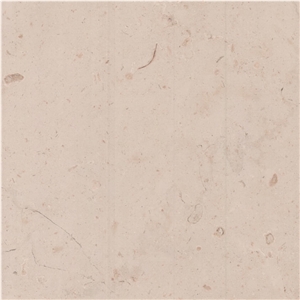
- a light beige or creamy base color fossilized sedimentary rock. Some pieces feature faint shades of gray, yellow, or pink depending on the quarry depth
Description
Puligny Limestone is a fossilized sedimentary rock known for its distinctive light beige or creamy base color. This limestone can feature subtle variations in color, including faint shades of gray, yellow, or pink, which depend on the depth from which it is quarried in Puligny-Montrachet, Côte-d'Or, Bourgogne, France.
Physical and Mechanical Properties
- Water Absorption: Typically low, ranging between 2-4%.
- Density: Approximately 2,480-2,520 kg/m³.
- Flexural Strength: Typically between 11-14 MPa.
- Compressive Strength: Ranges from around 70-90 MPa.
- Hardness: Generally has a Mohs hardness of 3-4.
- Porosity: Usually between 2-10%.
- Slip Resistance: Varies depending on the surface finish but generally offers moderate slip resistance when textured or honed.
Chemical and Mineral Compositions
- Calcium Carbonate (CaCO₃): 90-95%
- Clay Minerals: 2-4%
- Quartz (SiO₂): 1-3%
- Iron Oxides: 0.5-2%
- Other Minerals (including organic matter and impurities): 0.5-1%
Usage
- Exterior and Interior Cladding: Due to its aesthetic appeal and durability.
- Flooring: Suitable for low-traffic areas or polished indoor spaces.
- Monuments and Sculpture: Its ease of carving makes it popular for artistic applications.
- Countertops: Provides a unique and elegant surface, although a sealant may be required for protection.
Maintenance
- Regular Cleaning: Use a neutral pH cleaner to avoid etching or damaging the stone.
- Sealing: Recommended to prevent stains and protect against water intrusion, typically once a year.
- Avoid Abrasives: Use soft cloths for cleaning to maintain the surface finish.
Cutting Sizes
Standard sizes can vary according to specific requirements, but common dimensions include:
- Tiles: 30x30 cm, 30x60 cm, and 60x60 cm.
- Slabs: Custom sizes up to 2 meters in length.
Available Common Surface Finish Options
- Polished: Offers a shiny, reflective surface; best for low-traffic or decorative areas.
- Honed: Smooth but not shiny, for a more subtle appearance; suitable for floors.
- Bush-hammered: Provides a textured finish that enhances slip resistance.
- Brushed: Gently textured, offering a rustic look.
- Tumbled: Stone has soft, rounded edges for a weathered appearance.
Puligny Limestone offers both versatility and beauty, making it a favored choice for a variety of architectural and decorative applications. Proper care and maintenance are essential to preserve its appearance and functional characteristics over time.
FAQ
While Puligny limestone is often used for interior applications due to its elegant and soft appearance, it can also be used for limited exterior applications in certain conditions. However, using Puligny limestone in very rainy climates may not be ideal due to its relatively high water absorption rate.
Puligny limestone is a natural stone and therefore porous, which means it can absorb water. In very rainy climates with frequent heavy rainfall, this high water absorption rate can lead to moisture retention within the stone. Over time, this can result in deterioration and damage such as cracking, staining, and the growth of algae or moss.
If you still wish to use Puligny limestone for exterior applications in a rainy climate, it is essential to take certain precautions. These may include applying a specially formulated sealant to the stone to reduce water absorption and aid in protecting against moisture damage. Additionally, regular maintenance and cleaning should be conducted to remove any potential buildup of organic matter.
Overall, it is recommended to consult with professionals or local experts in stone and construction to determine the suitability of Puligny limestone for a specific exterior application in a very rainy climate. They will be able to provide more specific recommendations based on the climate conditions and the intended use of the stone.
What is the coefficient of friction of Combed France's Puligny Limestone tiles?
Without specific information regarding the specific product line or type of tiles within Combed Frances Puligny Limestone collection, it is not possible to provide the exact coefficient of friction for these tiles. The coefficient of friction can vary depending on factors such as the surface finish, texture, and treatment of the tiles. It is recommended to consult the manufacturer or supplier for the specific coefficient of friction for the desired product.
Can France's Puligny Limestone be used in landscaping?
Yes, Frances Puligny Limestone can be used in landscaping. Puligny Limestone is a type of natural stone that is often used in the construction industry for its durability and aesthetic appeal. In landscaping, it can be used for various purposes such as paving, walkways, retaining walls, garden edging, and decorative features like fountains or sculptures. Its neutral color and smooth texture make it versatile and suitable for both modern and traditional landscape designs. However, it is important to consider factors such as availability, cost, and maintenance requirements before using Puligny Limestone in landscaping projects.
Can France's Puligny Limestone be used in a bathroom?
Yes, Frances Puligny Limestone can be used in a bathroom. Limestone is a popular choice for bathroom tiles and countertops due to its natural beauty and durability. However, it is important to select the appropriate type of limestone for a bathroom application as some varieties may be more prone to etching or staining from water and bathroom products. It is also recommended to seal the limestone to protect it from moisture and maintain its appearance.
Is France's Puligny Limestone an expensive stone?
Yes, Frances Puligny Limestone is generally considered an expensive stone. It is known for its high quality and distinctive appearance, which contributes to its higher price compared to other types of limestone. Additionally, the limited availability of this stone further adds to its exclusivity and cost.
Can France's Puligny Limestone be used outdoors?
I do not have the expertise to determine if Frances Puligny Limestone can be used outdoors. However, in general, the use of limestone outdoors may depend on multiple factors such as its durability, weather resistance, and the specific application. It is always recommended to consult with a professional before using any stone or material outside.
How thick is France's Puligny Limestone slabs?
I do not have access to information about the exact thickness of Frances Puligny Limestone slabs. However, according to some sources, limestone slabs can vary in thickness from 2cm to 10cm depending on the application. Its possible that the thickness of Puligny Limestone slabs may vary as well depending on the intended use.
Are there color variations of France's Puligny Limestone?
Yes, there may be variations in color of Frances Puligny Limestone, depending on factors such as the location and depth of the quarry from which it is extracted. Generally, the stone is a light beige or creamy color, but some specimens may have slight shades of gray, yellow, or even pink. The final appearance can also be influenced by the finishing process, such as honing, polishing, or brushing.
What grade is France's Puligny Limestone?
I do not have the current information about the grade of Frances Puligny Limestone. However, if youre referring to the classification or quality of Puligny-Montrachet wine, it is considered to be one of the finest white wines in the world, made from Chardonnay grapes grown in the limestone-rich vineyards of Puligny-Montrachet in the Burgundy region of France.


