Richemont Blanc Limestone Overview:
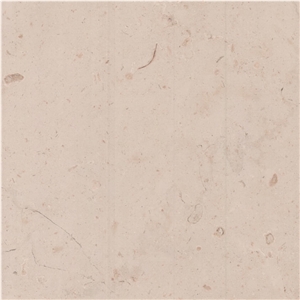
Richemont Blanc Limestone, quarried in the region of Poitou-Charentes in France, near Avy just 2 km south of Pons, is a fine-grained, aesthetically pleasing natural stone. Its coloration ranges from light ivory to earthy beige tones, with a delicate pattern featuring tiny fossil segments. This subtle pattern and neutral palette make the limestone a popular choice for both interior and exterior applications.
Physical and Mechanical Properties:
- Water Absorption:
- Typically low to moderate, which helps prevent excessive staining and water damage.
- Density:
- Generally ranges from 1800 to 2000 kg/m³, making it a medium-density limestone suitable for various applications.
- Flexural Strength:
- Less than 4 MPa, indicating that while it is reasonable for flooring and cladding, it requires care in high-pressure applications.
- Compressive Strength:
- Ranges from 15 to 25 MPa, allowing it adequate strength for many architectural and construction applications.
- Hardness:
- Moderate, meaning it's relatively easy to cut and shape, but care must be taken to avoid scratching.
- Porosity:
- Moderate porosity; typically requires sealing to protect against staining and water ingress.
- Slip Resistance:
- Depends on the surface finish but generally offers reasonable slip resistance, suitable for interior flooring when adequately finished.
Chemical and Mineral Composition (% by Weight):
- Calcium Carbonate (CaCO₃): Dominant component, typically around 90-95%.
- Silica (SiO₂), Alumina (Al₂O₃), and Iron Oxides (Fe₂O₃): Together comprise the remaining 5-10%, providing subtle variations in texture and color.
Uses:
- Interior Applications: Highly popular for flooring, bathrooms, and feature walls due to its elegant appearance.
- Exterior Applications: Suitable for facades, outdoor paving, and wall cladding.
- Architectural Elements: Used in columns, balustrades, and fireplaces.
Maintenance:
- Sealing: Regular sealing recommended to prevent staining and enhance longevity.
- Cleaning: Use pH-neutral cleaners; avoid acidic or abrasive substances.
- Regular Care: Periodic cleaning and resealing are suggested to maintain appearance and durability.
Cutting Sizes (cm):
- Typically available in a variety of standard sizes, such as:
- Tiles: 30x30, 30x60, 60x60
- Slabs: Custom sizes depending on the block sizes from the quarry.
Common Surface Finish Options:
- Polished: Offers a high-gloss appearance highlighting its natural patterns.
- Honed: Provides a smooth, matte finish for a more subdued look.
- Brushed: Gives a textured surface that emphasizes its natural characteristics and enhances slip resistance.
- Tumbled: Yields a rustic, aged appearance ideal for traditional settings.
- Sandblasted: Results in a coarser texture that enhances slip resistance and is often suitable for exterior applications.
Overall, Richemont Blanc Limestone is valued for its versatility, elegance, and subtlety, making it an excellent choice for a wide range of architectural and decorative uses. Proper maintenance ensures it remains a durable and beautiful material over time.
Volumetric weight: 1800-2000 kg/m3 (NF EN 1936)
Porosity: 20 to 30% (NF 1936)
Sound propagation speed: 3000 to 4000 m/s (NF B 10-505)
Compressive strength: 15 to 25 MPa (NF EN 1926)
Flexural strength (centered load): <4 MPa (NF EN 12372)
Capillarity C1: 12 to 14 g.cm-2.mn-0.5 (NF B 10-502)
Capillary C2: 1 g.cm-2.mn-0.5 (NF B 10-502)


 France
 And****

 United Kingdom


 Saudi Arabia

 Germany

 Spain

 Portugal


 Norway

 Croatia

 Bulgaria

 China

