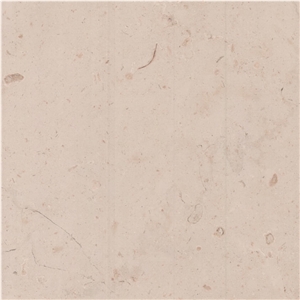
Roche Saint Nicolas Limestone is a distinctive natural stone quarried in Ravières, Yonne, in the Burgundy region of France. It is characterized by its soft white, cream, and warm beige colors, complemented by subtle veining. This limestone is sought after for its aesthetic appeal and versatility in various architectural and design applications.
Physical and Mechanical Properties:
- Water Absorption: 0.80-0.95% by weight
- Density: 2100 - 2200 kg/m³ (NF EN 1936)
- Porosity: 15-20% (NF EN 1936)
- Compression Strength: 35-45 MPa (NF B 10-509)
- Sound Propagation Speed: 3000 to 4000 m/s (NF B 10-505)
- Fasteners Resistance (3cm) TYPE IIa: 60 to 80 daN (NF B 10-514)
- Capillarity C1: 7-9 g.cm⁻².min⁻⁰.⁵ (NF B 10-502)
- Capillarity C2: 1 g.cm⁻².min⁻⁰.⁵ (NF B 10-502)
Chemical and Mineral Composition (% by weight):
Specific chemical and mineral compositions are typically assessed through detailed geological surveys and tests, which can vary slightly based on quarry sections. Typically, limestone is largely composed of:
- Calcium Carbonate (CaCO₃): Approx. 95%
- Other Minerals: May include very small amounts of clay, quartz, and organic material which can affect the stone's coloring and texture.
Usage:
Roche Saint Nicolas Limestone is used in various applications due to its aesthetic qualities and physical properties:
- Interior Applications: Flooring, wall cladding, countertops, and decorative features.
- Exterior Applications: Facades, paving, and landscaping elements.
- Architectural Elements: Columns, stairs, balustrades, and fireplaces.
Maintenance:
- Regular Cleaning: Use a mild, pH-neutral cleaner to preserve the stone’s pristine appearance.
- Sealing: Applying a suitable stone sealant can enhance resistance to staining and moisture.
- Avoid Abrasives: Prevent scratches or abrasions by avoiding harsh cleaning pads and chemicals.
Cutting Sizes (in cm):
Limestone can be cut and finished in various sizes depending on project specifications. Commonly, slabs are available in standard or custom dimensions as requested.
Common Surface Finish Options:
- Honed: Provides a smooth, matte surface ideal for indoor applications.
- Polished: Offers a shiny, reflective finish, enhancing the stone's natural color and veining.
- Brushed/Antique: Gives the stone an aged appearance with a slightly textured feel.
- Tumbled: Creates a rustic or weathered look, often used in decorative applications.
This limestone is a popular choice for both residential and commercial projects due to its beautiful appearance and strong physical properties. It blends well with various design schemes, offering both elegance and durability.


 France
 Saudi Arabia

 Germany

 Spain

 Portugal


 Norway

 Croatia

 Bulgaria

 China

