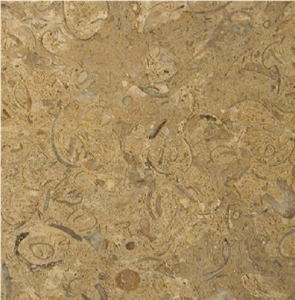
Rusty Manchu Caviar Limestone is a distinctive fine-grained, dense limestone with a deep brown base, featuring rusty light golden-brown veining patterns. It is quarried in the Shandong Province of China, known for its striking visual appeal and versatile applications in architectural and design projects.
Physical and Mechanical Properties
- Water Absorption: 0.27%
- Density: 2571 Kg/m³
- Flexural Strength: 9.99 - 13.20 MPa
- Compressive Strength: 83.98 - 94.98 MPa
- Hardness: Typically categorized on the Mohs scale; specific hardness value needs assessment based on specific batch tests.
- Porosity: Low porosity contributing to its density and strength, typically implying increased durability and stain resistance.
- Slip Resistance: Generally considered to have moderate slip resistance, but specific values can depend on the finishing applied.
Chemical and Mineral Compositions
- Calcium Carbonate (CaCO₃): The predominant component like most limestones, typically over 95% in pure form.
- Iron Oxides and Hydroxides: These contribute to the rusty veining patterns, present in minor percentages.
- Trace Minerals: May include silica, clay minerals, and other organic matter in small quantities affecting visual and mechanical characteristics.
Usage
Applications:
Advantages:
-
Aesthetically appealing with unique veining
-
Durable for high traffic areas
-
Resistant to weathering for outdoor installations
Challenges:
Maintenance
- Cleaning: Use neutral pH cleaners; avoid acidic or abrasive substances.
- Sealing: Periodic sealing recommended to enhance resistance to stains and weathering.
- Regular Maintenance: Regular sweeping and damp mopping to preserve the surface finish.
Cutting Sizes
Customizable to specific project needs; common slabs and tile sizes include:
- Slabs: Typically ranging from 2 cm to 3 cm thickness
- Tiles: Standard sizes such as 30x30 cm, 30x60 cm, 60x60 cm, etc.
Surface Finish Options
- Polished: Provides a glossy and reflective surface enhancing color vibrancy.
- Honed: Smooth, matte finish reducing visibility of scratches and wear.
- Brushed: Textured surface offering a more rustic, antiqued appearance.
- Bush-Hammered: Coarse texture for increased slip resistance, often used outdoor.
- Tumbled: Old-world, weathered look, commonly used for rustic designs.
This limestone's unique characteristics make it a favored choice for both modern and traditional design settings, combining aesthetic appeal with functional performance.


 China

 15YR


 Italy

 France

 Spain

 United Kingdom
 Portugal

 Lebanon

 Norway

 Croatia

 Bulgaria


