- Material Type:
- Limestone
- Origin:
 France (Saint-Maximin (Oise), 4km au nord de Chantilly)
- Primary Color(s):
- Beige
- Recommended Usage:
- wash basins, building stone, ornamental stone, stairs, interior, exterior wall and floor applications, mosaic, waterjet pattern, wall panels, table tops, balustrades, columns, wall and pool copings, pool pavers, sculptures, fireplaces, window sills
- Additional Names:
- Saint-Maximin Liais, St Maximin Liais, Saint Maximin Construction Limestone, Pierre de St. Maximim, Pierre St Maximin, St Maximin Limestone, St. Maximin Limestone, Saint Maximin Fine Dur Limestone, Liais de Saint Maximin Limestone, Roche Fine Banc de Saint Maximin, Saint Maximin Roche Construction, Saint Maximin Roche Dure Construction, Saint Maximin Limestone, Saint Maximin Liais, Saint Maximin Liais Limestone
- Finished Surface:
- Polished,Bush Hammered,Tumbled,Brushed,Honed,Split,Machine Cut,Natural Surface,Sandblasted,Acid Washing,Combed,Leathered,Water Jet,Filled,Chiseled,Pickling
Description
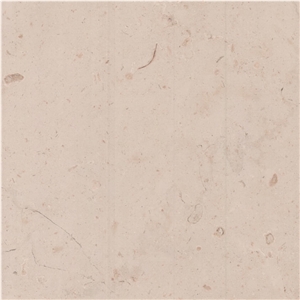
Saint Maximin Liais Limestone is a premium natural stone celebrated for its fine-grained and uniform texture, exhibiting a soft, creamy beige to warm beige hue. It is often subtly adorned with fossil patterns or delicate veining, offering a gentle texture while maintaining its elegance. This limestone's neutral, warm tones contribute to its timeless appeal, making it suitable for a variety of architectural applications ranging from classic to modern. It is primarily quarried in Saint-Maximin, Oise in France, just 4 km north of Chantilly.
Physical and Mechanical Properties
-
Water Absorption: Limestone, like many natural stones, can absorb some moisture. The specific water absorption rate would be around 3-5%, but it is essential to seal the stone to decrease permeability.
-
Density: 2200 - 2400 kg/m³ (as per NF EN 1936)
-
Flexural Strength: 11 - 16 MPa (according to NF EN 12372). This measures the stone's ability to withstand bending forces.
-
Compressive Strength: 100 - 120 MPa (following NF B 10-509). Indicates the stone's ability to withstand heavy loads.
-
Hardness: Limestone generally registers around 3-4 on the Mohs scale, making it moderately soft compared to other natural stones like granite.
-
Porosity: Limestone is relatively porous, which means it requires proper sealing and maintenance to enhance durability and reduce moisture absorption.
-
Slip Resistance: Depends on the finish applied. Textured finishes offer higher slip resistance, while polished surfaces may require additional treatment to enhance safety.
Chemical and Mineral Compositions
- Calcium Carbonate (CaCO₃): Dominates the stone, accounting for approximately 90-95% of its composition.
- Silica (SiO₂): Present in trace amounts, contributing to its hardness and structure.
- Iron Oxides: Small traces that can influence the stone's color variations.
- Clay Minerals: Minor constituents that may affect the stone's overall texture and aesthetics.
Applications and Usage
- Flooring: Ideal for interior spaces due to its warm tones and subtle texture.
- Wall Cladding: Provides a sophisticated and elegant facade.
- Stairs: Both functional and aesthetically pleasing for interior and exterior staircases.
- Decorative Elements: Used in fireplaces, columns, and other architectural details.
Cutting Sizes and Surface Finishes
- Cutting Sizes: Typically cut into tiles or slabs of various standard and custom dimensions. Common thicknesses include 2 cm and 3 cm.
- Available Surface Finishes:
- Honed: Smooth, matte finish that highlights the stone’s natural color and grain.
- Polished: Shiny finish that enhances the stone's color depth but may require additional slip resistance treatments.
- Antiqued: Textured finish that provides an aged appearance.
- Brushed: Soft, textured finish that offers increased slip resistance.
Maintenance
- Sealing: Regular sealing is essential to protect the stone from staining and moisture.
- Cleaning: Use pH-neutral stone cleaners to maintain its pristine condition, avoiding acidic or abrasive substances.
- Re-polishing: Occasional polishing may be necessary to restore luster in areas of high traffic or use.
Saint Maximin Liais Limestone's combination of beauty, versatility, and natural charm makes it a sought-after choice for architects and designers seeking a refined yet authentically natural material for a range of projects.
Test Result
- Volumetric Weight: 2200-2400 kg/m³ (NF EN 1936)
- Porosity: 6-10% (NF EN 1936)
- Sound Propagation Speed: 4500 to 5000 m/s (NF B 10-505)
- Fastener Resistance (3 cm) TYPE I: 80 to 110 daN (NF B 10-514)
- Compressive Strength: 100-120 MPa (NF B 10-509)
- Flexural Strength (Centered Load): 11 to 16 MPa (BS EN 12372)
- Wear on Metal Disk: 30 to 37 mm (NF B 10-508)
- Capillarity C1: <1 g·cm⁻²·min⁻⁰.⁵ (NF B 10-502)
- Capillarity C2: <1 g·cm⁻²·min⁻⁰.⁵ (NF B 10-502)


 12YR

 China


 Saudi Arabia

 Germany

 Spain

 Portugal


 Norway

 Croatia

 Bulgaria


