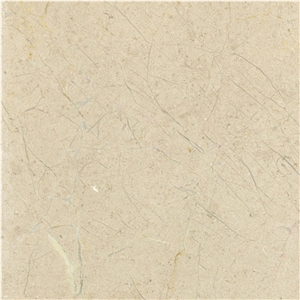
Serpeggiante Classico Scuro Marble features a warm olive-brown to golden-tan background, creating a rich, earthy appearance. Its natural coloration ranges from muted olive and bronze-brown to honey and golden-beige tones, often with subtle variations in shade.
Texture & Structure
This limestone has a compact, fine- to medium-grained structure with a naturally layered sedimentary texture. Its surface can display subtle mineral variations and fine parallel lines that emphasize its characteristic linear appearance.
Pattern & Veining
Its defining feature is distinct horizontal and gently undulating banding that strongly resembles natural wood grain. Alternating layers of olive-brown, golden-tan, and beige create a flowing, stratified pattern. The bands may vary in thickness, continuity, and color intensity from slab to slab, giving each piece a distinctive appearance.
Technical Characteristics & Test Results
|
Property
|
Test Result
|
|
Petrographic Classification
|
Limestone
|
|
Unit Volume / Apparent Density
|
2,690 kg/m³
|
|
Water Absorption
|
0.22%
|
|
Simple Compressive Strength
|
220 MPa
|
|
Compressive Strength After Freezing
|
219 MPa
|
|
Tangent Elastic Modulus
|
79,900 MPa
|
|
Indirect Tensile Strength (Flexural)
|
22.7 MPa
|
|
Abrasion Coefficient (Granite St. Fedelino Reference)
|
0.72
|
|
Impact Resistance (Minimum Drop Height)
|
17 cm
|
|
Linear Thermal Expansion Coefficient
|
4.0 × 10⁻⁵ °C⁻¹
|
|
Knoop Microhardness
|
1,776 MPa
|
|
Hardness Uniformity Index
|
1.16
|
Hardness
The reported Knoop microhardness is 1,776 MPa, with a hardness uniformity index of 1.16. These measurements indicate the tested material's resistance to localized indentation and provide an indication of hardness consistency. A Mohs hardness value has not been provided.
Mineralogical Composition
The stone is petrographically classified as limestone. Its mineralogical composition and individual mineral percentages by weight have not been provided. A detailed quantitative mineralogical analysis would be required to establish the proportions of calcite, dolomite, quartz, and other possible constituents.
Chemical Composition
Verified chemical composition percentages by weight are not available. Laboratory analysis would be required to determine the concentrations of CaO, MgO, SiO₂, Fe₂O₃, Al₂O₃, and other oxides.
Recommended Applications
Suitable for interior flooring, wall cladding, bathroom surfaces, vanity tops, decorative panels, fireplaces, staircases, and architectural detailing. Its distinctive wood-grain-like banding makes it particularly suitable for feature walls and projects where a warm, natural, layered appearance is desired.
Exterior applications should be evaluated according to local climate conditions, installation methods, and the stone's long-term exposure requirements.
Maintenance
Clean with a pH-neutral stone cleaner and a soft cloth or mop. Avoid acidic cleaners, vinegar, lemon-based products, and abrasive cleaning materials, as limestone is sensitive to acids. Applying a suitable penetrating sealer is recommended to help reduce staining and moisture absorption. Reseal periodically depending on usage and exposure.
Technical data provided from testing attributed to the University of Pisa and Politecnico di Torino. Chemical and mineralogical percentages and Mohs hardness have not been supplied and should not be inferred from the available test results.


 Italy


 China

 9YR


 Spain

 Turkey


 Oman

 Egypt


 India


 Greece


 Iran