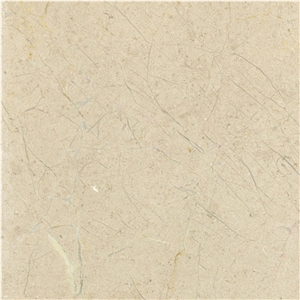
Sweet Cream Marble is a type of metamorphic rock that is primarily composed of calcite, a form of calcium carbonate. It has the following chemical properties:
1. Composition: The main chemical component of Sweet Cream Marble is calcium carbonate (CaCO?), which constitutes at least 50% of its composition. Minor impurities and trace elements may be present, which can give variations in color and appearance.
2. Hardness: Sweet Cream Marble has a hardness of 3-4 on the Mohs scale, making it relatively soft compared to other minerals. This characteristic allows it to be easily carved and polished.
3. Acid Reactivity: Marble, including Sweet Cream Marble, is susceptible to acid erosion due to its calcium carbonate composition. When exposed to acidic substances, such as vinegar or lemon juice, it can undergo a chemical reaction known as acid corrosion, resulting in etching and loss of shine.
4. Effervescence: When Sweet Cream Marble comes into contact with a weak acid, such as hydrochloric acid (HCl), it produces an effervescence or bubbling reaction. This effervescence is due to the release of carbon dioxide gas (CO?), a byproduct of the chemical reaction between the acid and the calcium carbonate in the marble.
5. Staining: Sweet Cream Marble is relatively porous, which means it can absorb liquids and may be prone to staining. Certain substances, such as acidic or deeply colored liquids, can penetrate the surface of the marble and cause discoloration or spots.
6. Thermal Reactivity: Marble, including Sweet Cream Marble, can exhibit some reactivity to heat. Sudden changes in temperature or exposure to high-temperature sources can potentially cause thermal shock, leading to cracks or fractures in the marble.
Overall, Sweet Cream Marbles chemical properties make it a beautiful and versatile material for various applications, such as flooring, countertops, and decorative elements. However, its susceptibility to acid erosion, staining, and thermal shock should be considered for proper care and maintenance.


 Turkey

 9YR

 China


 Ukraine


 Spain


 Italy

 Oman

 Egypt


