Targh Yellow Travertine
Origin: Targh, Isfahan, Iran
Stone Type: Travertine (sedimentary, calcium carbonate-based)
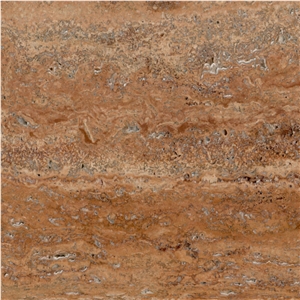
Appearance: Targh Yellow Travertine is recognized for its golden-yellow base, complemented by warm golden-beige tones and darker brown veins. Its naturally porous texture gives it a warm, organic look, often enhanced by filling or polishing. This combination of rich hues and unique vein movement makes it an appealing choice for both classic and modern designs.
Texture & Pattern
- Grain Size: Fine to medium crystalline
- Pattern: Linear or wavy brown veining over a golden-yellow base
- Lustre: Soft matte in honed finishes; reflective and rich when polished
- Porosity: Naturally porous, can be supplied filled or unfilled depending on the application
Physical & Mechanical Properties
(Typical values for Iranian travertine, as specific quarry tests may vary)
- Water Absorption: ~1.0–1.5% by weight
- Density: ~2500–2600 kg/m³
- Flexural Strength: ~9–12 MPa
- Compressive Strength: ~80–110 MPa
- Hardness (Mohs): ~3–4
Chemical Composition
(% by weight) (Typical for travertine)
- CaCO₃ (Calcium Carbonate): ~94–96%
- SiO₂ (Silica): ~1–2%
- MgCO₃ (Magnesium Carbonate): ~1–1.5%
- Fe₂O₃ (Iron Oxide): ~0.5–1% (responsible for yellow/brown coloration)
- Others & Trace Minerals: ~1%
Mineral Composition (% by weight)
- Calcite: ~95%
- Quartz: ~1–2%
- Iron-bearing minerals: ~1%
- Accessory minerals: ~1–2%
Common Uses
- Interior & exterior wall cladding
- Flooring (residential and light commercial)
- Countertops & vanity tops (filled and polished)
- Stairs and risers
- Garden and patio paving
- Decorative facades & columns
Maintenance
- Cleaning: Use a pH-neutral cleaner; avoid acids that can etch calcium carbonate
- Sealing: Recommended after installation and re-applied periodically to protect from stains
- Filling: Porous surface should be filled for high-traffic or water-exposed areas
- Polish Care: Re-polish when needed to restore surface luster
Cutting Sizes (cm)
- Slabs: 240–300 × 120–200 cm
- Tiles: Common sizes include 30 × 30, 30 × 60, 60 × 60 cm
- Custom sizes: Available upon request for projects
Surface Finish Options
- Polished: Glossy finish that intensifies colors and veining
- Honed: Smooth, matte surface for a modern look
- Brushed / Leathered: Textured finish for a rustic feel
- Antiqued / Tumbled: Soft, aged appearance for traditional designs
- Split-Face: Rough natural finish for exterior walls and decorative panels


 Iran


 China

 Spain

 Italy

 Morocco
 Turkey

 Peru


 Pakistan


 Afghanistan

 Thailand
