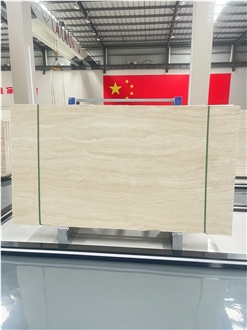
Travertino Classico Romano Laisa

About
Item Details
- Material Type:
- Travertine
- Origin:
Italy (Cave di Guidonia, Provincia di Roma, Lazio) - Primary Color(s):
- Beige
- Recommended Usage:
- Kitchen and bathroom countertops, wash basins, building stone, ornamental stone, stairs, interior, exterior wall and floor applications, mosaic, waterjet pattern, wall panels, table tops, balustrades, columns, wall and pool copings, pool pavers, fireplaces
- Additional Names:
- Travertino Laisa, Travertino Romano Laisa, Travertino Classico Laisa, Travertino Classico Romano, Travertino Romano, Travertino Classico Romano Laisa
- Finished Surface:
- Polished,Bush Hammered,Tumbled,Brushed,Honed,Split,Machine Cut,Natural Surface,Sandblasted,Combed,Leathered,Water Jet,Filled,Chiseled,Pickling
Testing
- Water Absorption:
- 0.80 %
- Density:
- 2473 kg/m3
- Flexural Strength:
- 7.5 - 14.0 MPa
- Compressive Strength:
- 107.42 - 110.9 MPa
Description
Travertino Classico Romano Laisa is a premium natural travertine stone quarried in the historic region of Rapolano Terme, Tuscany. With its light creamy beige background beautifully accented by earthy beige and ivory tones, this stone exudes a timeless warmth and character synonymous with Italian travertine. Particularly when vein-cut, it showcases sophisticated and harmonious veining patterns that make it ideal for projects demanding authentic, historical elegance paired with modern performance capabilities.
Physical and Mechanical Properties
- Water Absorption: 0.80%
- Density: 2473 kg/m³
- Flexural Strength: 7.5 - 14.0 MPa
- Compressive Strength: 107.42 - 110.9 MPa
- Hardness: Not specified, but typically moderate due to calcite content
- Porosity: Moderately porous, characteristic of travertine
- Slip Resistance: Variable, often enhanced through surface treatments
Chemical and Mineral Composition
- Calcium Carbonate (CaCO₃): Typically predominant in travertine, though specific percentage isn't provided
- Silica (SiO₂): Minor component
- Iron Oxides (Fe₂O₃): Trace amounts contributing to earthy tones
- Other Minerals: Small traces of specific minerals like clay
Typical Uses
- Interior Applications: Flooring, wall cladding, bathroom vanities, fireplaces
- Exterior Applications: Façades, terraces, garden pathways (sealed for weather resistance)
- Commercial and Residential Projects: Due to its luxurious appearance and durability
Maintenance
- Sealing: Sealing is recommended to reduce porosity and protect against stains and moisture.
- Cleaning: Use pH-neutral cleaners; avoid acidic or abrasive cleaning materials to preserve the stone’s finish.
- Regular Care: Routine dusting and mopping help maintain its natural beauty.
Cutting Sizes
- Standard Tile Sizes: Frequently available in tiles like 30x30 cm, 60x60 cm, and other custom sizes
- Slabs: Can be custom cut to tailored specifications for larger projects
Surface Finish Options
- Polished: For a glossy, reflective finish that enhances the stone's natural veining
- Honed: Smooth, matte finish that provides a more subtle, understated elegance
- Brushed: Offers a textured appearance, enhancing slip resistance
- Tumbled: A rustic, aged look suitable for a more traditional or antique aesthetic
Travertino Classico Romano Laisa, with its aesthetic versatility and robust physical properties, remains a preferred choice for those seeking to infuse projects with classic Italian elegance combined with modern durability.
- Flexural Strength: UNI EN 12372 – Rtf = 14.0 MPa
- Flexural Strength after Freeze-Thaw Cycles (48 cycles): UNI EN 12371 – Rtf = 7.5 MPa
- Slip Resistance: UNI EN 1341 – SRV (dry) = 64, SRV (wet) = 34
- Abrasion Resistance: UNI EN 1341 – 22.0 mm
FAQ
Yes, Italys Travertino Classico Romano Laisa Travertine can be used as a material for wall coverings. Travertine is a type of sedimentary rock that is commonly used in construction and interior design. Its natural beauty and durability make it a popular choice for wall coverings, including both interior and exterior walls. The Travertino Classico Romano Laisa Travertine is known for its classic and elegant appearance, making it suitable for various design styles.
Can Italy's Travertino Classico Romano Laisa Travertine be used exterior applications in very rainy climates?
Yes, Italys Travertino Classico Romano Laisa Travertine can be used for exterior applications in very rainy climates. Travertine is a durable and weather-resistant natural stone, making it suitable for outdoor use. However, it is important to note that proper installation and maintenance are crucial to ensure the longevity and performance of the stone in wet conditions. Adequate sealing and regular cleaning will help protect against potential water damage and staining.
How thick is Italy's Travertino Classico Romano Laisa Travertine slabs?
The thickness of Italys Travertino Classico Romano Laisa Travertine slabs can vary, but the most common thicknesses range from 2cm (0.787 inches) to 3cm (1.181 inches).
Can Italy's Travertino Classico Romano Laisa Travertine be used indoors?
Yes, Italys Travertino Classico Romano Laisa Travertine can be used indoors. It is a popular choice for indoor flooring, walls, countertops, and other interior applications. The warm earthy tones and unique patterns of travertine make it a versatile and attractive option for indoor spaces.
Are there color variations of Italy's Travertino Classico Romano Laisa Travertine?
No, there are no color variations of Italys Travertino Classico Romano Laisa Travertine. This type of travertine is known for its consistent and uniform light beige or cream color.
Can Italy's Travertino Classico Romano Laisa Travertine be used in a dining room?
Yes, Italys Travertino Classico Romano Laisa travertine can be used in a dining room. Travertine is a type of natural stone that is commonly used for flooring, countertops, and other interior surfaces. It is known for its durability, natural beauty, and versatility. The Travertino Classico Romano Laisa travertine specifically has a classic and timeless look, which can add elegance and sophistication to a dining room. Whether it is used as flooring or for other surfaces like countertops or even a dining table, it can create a warm and inviting atmosphere in the dining room.
What grade is Italy's Travertino Classico Romano Laisa Travertine?
The Travertino Classico Romano Laisa Travertine is not typically classified by a grading system as it is a type of natural stone. However, it is considered to be of high quality and is often used in architectural and design projects.
What is the coefficient of friction of Polished Italy's Travertino Classico Romano Laisa Travertine tiles?
I cannot access a specific information regarding the coefficient of friction of Polished Italys Travertino Classico Romano Laisa Travertine tiles as there could be many variations in terms of polishing, surface texture, and treatment. Its best to contact the manufacturer or supplier of the specific tiles to obtain this information.
Is Italy's Travertino Classico Romano Laisa Travertine an expensive stone?
I dont have access to the current market prices. However, Travertino Classico Romano Laisa Travertine is generally considered a premium building material and is priced accordingly. The variability of factors, such as grading, cut size, finish, et cetera, affect the final cost as well. Nevertheless, one can expect Travertino Classico Romano Laisa Travertine to be comparatively more expensive than other standard stone options.


2YR


-quarry1-1320s.jpg)