Post Your Needs

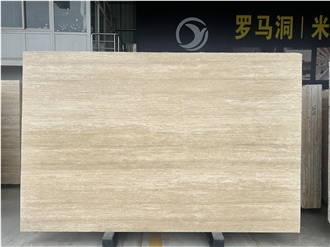
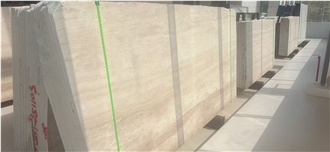
Travertino Romano Chiaro

Beige - Travertine

Italy

About

Item Details

Material Type:
Travertine
Origin:
Italy (Bagni di Tivoli, Provincia di Roma, Lazio)
Primary Color(s):
Beige
Recommended Usage:
Kitchen and bathroom countertops, wash basins, building stone, ornamental stone, stairs, interior, exterior wall and floor applications, mosaic, waterjet pattern, wall panels, table tops, balustrades, columns, wall and pool copings, pool pavers, sculptures, fireplaces
Additional Names:
Travertino Romano Chiaro Barco Fosse, Roman Light Travertine, Travertino Chiaro, Travertino Romano Light, Romano Light Travertine, Travertino Romano Chiaro
Finished Surface:
Polished,Bush Hammered,Tumbled,Brushed,Honed,Split,Machine Cut,Natural Surface,Sandblasted,Combed,Leathered,Water Jet,Filled,Chiseled,Pickling

Testing

Water Absorption:
0.88 %
Density:
2450 kg/m3
Flexural Strength:
13.8 MPa
Compressive Strength:
82.0 - 91.0 MPa

Description

Travertino Romano Chiaro is a distinguished natural stone known for its refined ivory light-beige coloration. It exudes a creamy, warm beige tone and is characterized by its unique clouded structure, coupled with natural porous voids. It is a type of travertine quarried in the region of Bagni di Tivoli, Provincia di Roma, Lazio, Italy. Its aesthetic elegance makes it a popular choice for various architectural and design applications.

Physical and Mechanical Properties:

  • Water Absorption: 0.88%
  • Density: 2450 kg/m³
  • Flexural Strength: 13.8 MPa
  • Compressive Strength: Ranges between 82.0 - 91.0 MPa
  • Hardness: This stone ranks on the lower side of the Mohs scale because travertine is generally softer than other natural stones.
  • Porosity: Travertino Romano Chiaro exhibits medium to high porosity due to its natural voids, which is a characteristic feature of travertine.
  • Slip Resistance: This stone's slip resistance can vary based on the finish. It can be moderately slip-resistant when finished with a cleft or honed surface.

Chemical and Mineral Compositions (% by Weight):

  • Calcium Carbonate (CaCO3): Predominantly comprises calcite, around 90-95%
  • Magnesium Carbonate (MgCO3): Approximately 1-2%
  • Silica (SiO2): Roughly 1-2%
  • Iron Oxides (Fe2O3) and other trace elements contribute to its hue and unique patterning.

Usage:

  • Interior Applications: Suitable for flooring, wall cladding, countertops, and decorative elements. Popular in bathrooms, kitchens, and living areas.
  • Exterior Applications: Used in facades and patios, except in areas with extreme weather conditions due to its porosity.
  • Architectural Elements: Columns, fireplaces, and staircases.

Maintenance:

  • Sealing: Regular sealing is recommended due to its porous nature to prevent staining and water absorption.
  • Cleaning: Use pH-neutral cleaners to avoid damage. Avoid acidic and abrasive cleaners.
  • Polishing: Regular polishing can maintain the stone's luster.

Cutting Sizes (cm):

  • Commonly available in standard tile sizes such as 30x30, 30x60, 60x60, and slabs of various sizes.
  • Custom sizes can often be ordered according to specific project requirements.

Available Common Surface Finish Options:

  • Polished: A glossy finish that enhances its color and pattern, best for interior uses.
  • Honed: A smooth, matte finish that is less reflective and ideal for areas requiring slip resistance.
  • Brushed: A textured finish that offers a rustic look.
  • Tumbled: A weathered finish that provides an antique appearance.
  • Sandblasted: A rough finish for slip resistance, often used for exterior and wet areas.

Travertino Romano Chiaro's unique aesthetic and versatile properties make it a favored choice for both classical and modern architectural projects. However, its maintenance requirements must be adhered to, preserving its natural beauty and durability over time.

Petrographic Definition: Vacuolar Limestone

Technical Properties:

  • Unit Volume (Density): 2450 Kg/m³
  • Water Absorption: 0.88 %
  • Compressive Strength (Simple): 91 MPa
  • Compressive Strength after Freezing: 82 MPa
  • Tangent Elastic Modulus: 61,400 MPa
  • Indirect Tensile Strength (by Bending): 13.8 MPa
  • Abrasion Coefficient (compared to Granite St. Fedelino): 0.25
  • Impact Resistance: Minimum fall height: 30 cm
  • Coefficient of Linear Thermal Expansion: 4.9 × 10⁻⁵ °C⁻¹

Source: Archivio Azienda Travertino Conversi Srl

FAQ

Can Italy's Travertino Romano Chiaro Travertine be used exterior applications in very humid climates?

Yes, Italys Travertino Romano Chiaro Travertine can be used for exterior applications in very humid climates. Travertine is a durable and natural stone that is known for its ability to withstand various weather conditions, including high humidity. It is frequently used in outdoor settings such as patios, pool decks, and walkways. However, it is always recommended to use a sealant or waterproofing treatment on the travertine to enhance its resistance to moisture and ensure its longevity in humid environments.

Can Italy's Travertino Romano Chiaro Travertine be used in landscaping?

Yes, Italys Travertino Romano Chiaro Travertine can be used in landscaping. Travertine is a popular choice for outdoor applications due to its durability and natural beauty. It can be used for various landscaping elements such as pathways, outdoor steps, patios, pool decks, retaining walls, and garden borders. It is known for its unique texture and neutral color palette, which can add a sophisticated and luxurious touch to any outdoor space. However, it is important to note that Travertine is a natural stone and requires proper maintenance to preserve its appearance and integrity over time.

What is the coefficient of friction of Filled Italy's Travertino Romano Chiaro Travertine tiles?

The coefficient of friction of Filled Italys Travertino Romano Chiaro Travertine tiles can vary depending on several factors such as the surface finish, texture, and any additional treatment applied. Generally, Travertine tiles have a coefficient of friction ranging between 0.6 to 0.8, which is considered to have good slip resistance. However, for a specific and accurate coefficient of friction value, it is recommended to consult the manufacturer or supplier of the specific product.

Can Italy's Travertino Romano Chiaro Travertine be used in a dining room?

Yes, Italys Travertino Romano Chiaro Travertine can be used in a dining room. Travertine is a type of natural stone that can be used for various purposes, including flooring, walls, and countertops. Its elegant and timeless appearance makes it a popular choice for interior design, and it can add a touch of sophistication to any space, including a dining room. The light-colored Chiaro Travertine variant of Travertino Romano can create a warm and inviting atmosphere in the dining area. It is also durable and resistant to heat, which makes it suitable for dining room floors where there may be spills or hot dishes.

Can Italy's Travertino Romano Chiaro Travertine be used outdoors?

Yes, Italys Travertino Romano Chiaro Travertine can be used outdoors. Travertine is a natural stone that is commonly used for outdoor applications such as patios, pathways, pool decks, and outdoor walls. It is a durable and weather-resistant material that can withstand outdoor elements and temperature changes. It is important to note that regular maintenance and sealing may be required to keep the stone in good condition over time.

Are there color variations of Italy's Travertino Romano Chiaro Travertine?

Yes, there are color variations of Italys Travertino Romano Chiaro Travertine. Travertino Romano Chiaro is generally known for its light beige or creamy color, but it can have variations in tone and texture. Some stones may have hints of yellow, brown, or grey. These natural variations occur due to the presence of impurities and mineral deposits during the formation process. Additionally, different quarry locations or specific blocks of the stone may exhibit slight differences in color and pattern. It is always recommended to see samples or pictures of the specific stone batch before making a purchase to ensure it meets your desired color expectations.

How thick is Italy's Travertino Romano Chiaro Travertine slabs?

The thickness of Italys Travertino Romano Chiaro Travertine slabs can vary depending on the specific product and the customers preferences. However, common thickness options for travertine slabs in general range from 1.5 cm (0.6 inches) to 3 cm (1.2 inches).

Is Italy's Travertino Romano Chiaro Travertine an expensive stone?

I do not have access to current market prices of Travertino Romano Chiaro Travertine, but generally speaking, travertine is considered a mid-range priced natural stone. The price may vary based on factors such as quality, size, and location of the material. Its always a good idea to compare prices from multiple suppliers before making a purchase decision.

Products & Prices

View More

Hot Beige Travertine

New Travertine

Post Your Request

The request includes:
  1. surface finished, size
  2. quantity required