Post Your Needs

Woodkirk Sandstone

Brown - Sandstone

United Kingdom

About

Item Details

Material Type:
Sandstone
Origin:
United Kingdom (Britannia Quarries, Leeds, West Yorkshire)
Primary Color(s):
Brown
Recommended Usage:
Monuments, building stone, ornamental stone, stairs, interior, exterior wall and floor applications, mosaic, wall panels, reliefs, window sills, balustrades, columns, wall and pool copings, pool pavers, sculptures, fireplaces, cobbles, pavers, curbstone
Additional Names:
Woodkirk Yorkstone, Woodkirk Stone, Woodkirk Sandstone
Finished Surface:
Bush Hammered,Tumbled,Brushed,Honed,Split,Machine Cut,Natural Surface,Sandblasted,Combed,Chiseled,Pickling

Testing

Water Absorption:
4 %
Density:
2460 Kg/m3
Flexural Strength:
10.66 MPa
Compressive Strength:
54.0 N/mm2
Stone texture:
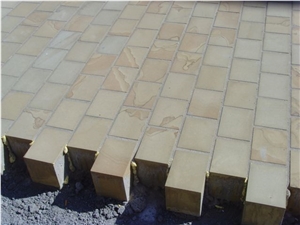
fine- to medium-grained texture, Carboniferous-aged grey/buff sandstone; When first quarried, the stone appears grey/buff. Over time and with exposure to the elements, it weathers to a richer buff/brown color. Some pieces may have brown, grey/buff, or grey/blue coloration, along with natural swirls and banding. Woodkirk Sandstone is a hard-wearing and durable material, acknowledged as a reliable building and paving stone. It has good freeze/thaw resistance and is suitable for high-traffic areas due to its abrasion resistance.

Description

Woodkirk Sandstone Overview:

Woodkirk Sandstone is a Carboniferous-aged sandstone known for its aesthetic appeal and durable nature, making it highly favored for construction and paving. It exhibits a fine- to medium-grained texture and is quarried from the Britannia Quarries in Leeds, West Yorkshire, United Kingdom. Initially appearing grey/buff when quarried, it develops a richer buff/brown hue upon weathering, with variations including brown, grey/buff, and grey/blue tones alongside natural swirls and banding.


Physical and Mechanical Properties:

  • Water Absorption: 4%
  • Density: 2460 Kg/m³
  • Flexural Strength: 10.66 MPa
  • Compressive Strength: 54.0 N/mm²
  • Hardness: Moderate (typically assessed through Mohs scale or equivalent tests)
  • Porosity: Moderate (in line with typical sandstone properties)
  • Slip Resistance: Good for both wet and dry conditions, making it suitable for outdoor and high-traffic areas

Chemical and Mineral Composition (% by Weight):

  • Silica (SiO₂): Typically high, as with most sandstone
  • Alumina (Al₂O₃): Present in minor proportions
  • Iron Oxides (FeO and Fe₂O₃): Responsible for buff/brown hues
  • Calcium Carbonate (CaCO₃): Minor constituent found in some sandstone varieties
  • Other trace minerals: Including feldspars, mica, and clay minerals

Note: Exact percentages may vary slightly depending on the specific quarry batch.


Usage:

  • Construction: Used extensively in building facades, cladding, and architectural detailing
  • Paving: Ideal for pathways, patios, and driveways due to its strength and weathering properties
  • Landscaping: Used for garden features, retaining walls, and decorative boulders
  • Interior Design: Can be used for feature walls and stone tile applications

Maintenance:

  • Cleaning: Regular sweeping and cleaning with a mild, pH-neutral cleaner
  • Sealing: Recommended to enhance its longevity and maintain appearance
  • Inspection: Regular checks for any damage or heavy wear, especially in high-traffic areas

Cutting Sizes (cm):

  • Available in standard slab sizes and custom dimensions according to project requirements
  • Common dimensions include 60x30, 60x60, and larger custom sizes as required

Surface Finish Options:

  • Honed: Smooth, matte finish
  • Polished: Glossy finish, more common indoors
  • Riven: Natural, split surface common in outdoor applications
  • Sandblasted: Provides a textured, slip-resistant finish
  • Bush-hammered: Rough surface, enhancing texture and visual interest

Woodkirk Sandstone's robustness and aesthetic versatility make it a popular choice in both historical restoration projects and new constructions, providing a visually appealing and long-lasting material solution.

FAQ

Can United Kingdom's Woodkirk Sandstone be used in a kitchen?

Yes, Woodkirk Sandstone can be used in a kitchen. It is a durable and hard-wearing stone that can withstand the demands of a kitchen environment. Sandstone is resistant to heat, moisture, and staining, making it suitable for use as kitchen countertops, backsplashes, or flooring. However, it is important to properly seal and maintain the Woodkirk Sandstone to ensure its longevity and resistance to daily wear and tear.

Can United Kingdom's Woodkirk Sandstone be used exterior applications in hot climates?

The Woodkirk Sandstone from the United Kingdom can generally be used for exterior applications in hot climates, but caution must be exercised. As a natural stone, Woodkirk Sandstone has certain characteristics that make it suitable for outdoor use. It is known for its durability and weather resistance, which means it can withstand exposure to various weather conditions including heat. However, it is advisable to consult with a professional or supplier with specific knowledge about the Woodkirk Sandstone variety you intend to use, as different types of sandstone may have varying levels of heat resistance. Additionally, the suitability of Woodkirk Sandstone for hot climates can depend on the specific conditions such as high humidity or intense sunlight. In excessively hot and arid climates, the stone may be subject to expansion and contraction due to extreme temperature changes, which could potentially lead to cracking or other forms of damage over time. To ensure the best performance of Woodkirk Sandstone in hot climates, it is important to consider factors such as proper installation techniques, regular maintenance, and appropriate sealing if required. Working with a professional who has experience with the specific conditions of hot climates will help ensure the stones successful use in exterior applications.

What is the coefficient of friction of Leathered United Kingdom's Woodkirk Sandstone tiles?

It is not possible to provide the coefficient of friction for a specific product without more specific information or testing. The coefficient of friction can vary depending on various factors such as the surface finish, texture, and any additional treatments applied to the tiles. It would be best to consult with the manufacturer or supplier of the Leathered United Kingdoms Woodkirk Sandstone tiles for the coefficient of friction information.

Can United Kingdom's Woodkirk Sandstone be used in landscaping?

Yes, United Kingdoms Woodkirk Sandstone can be used in landscaping. It is a durable and versatile material that is commonly used in paving, retaining walls, garden features, and other landscaping applications. Its natural beauty and warm color tones make it popular among homeowners and landscape designers.

How thick is United Kingdom's Woodkirk Sandstone slabs?

I do not have access to the most up-to-date geological information. However, based on my research, the thickness of Woodkirk Sandstone slabs in the United Kingdom varies depending on the specific quarry and location. Some sources note that slabs can range from 2-6 inches thick, while others state that they can be several feet thick. Ultimately, the thickness of the slabs will depend on the geological characteristics of the specific area where the stone is quarried.

Can United Kingdom's Woodkirk Sandstone be used outdoors?

I cannot give definite answers but as per my research, Woodkirk sandstone can be used outdoors. It is a durable and weather-resistant stone that can withstand harsh climatic conditions. It is commonly used for paving, wall cladding, garden features, and other landscape applications. However, it is important to note that proper installation and maintenance are necessary to ensure maximum durability and longevity of the stone.

What grade is United Kingdom's Woodkirk Sandstone?

I do not have up-to-date information on the grading system used for Woodkirk Sandstone in the United Kingdom. However, sandstone is typically classified based on several properties, such as porosity, compressive strength, and weathering resistance. Different grades or types of sandstone may be used for various applications, such as construction, paving, and carving. It is best to consult a geologist or a specialist in the field for accurate information on the classification of Woodkirk Sandstone or any other type of sandstone.

Are there color variations of United Kingdom's Woodkirk Sandstone?

Yes, there can be variations of color in Woodkirk Sandstone depending on the location where it is quarried. The most common colors are shades of brown, gray, and tan. Some variations may include pink, red, and even green tones. The colors can also vary depending on the depth of the quarry where the stone is extracted. The texture may also vary from fine to coarse, depending on the layer of the quarry.

Is United Kingdom's Woodkirk Sandstone an expensive stone?

I do not have access to information about current market prices and fluctuations of stone types like Woodkirk Sandstone. However, the price of a specific type of stone depends on several factors such as availability, demand, market fluctuations, and production costs, among others. It is best to consult a local supplier or stonemason to get the most accurate pricing information.

Products & Prices

Hot Brown Sandstone

New Sandstone

Post Your Request

The request includes:
  1. surface finished, size
  2. quantity required