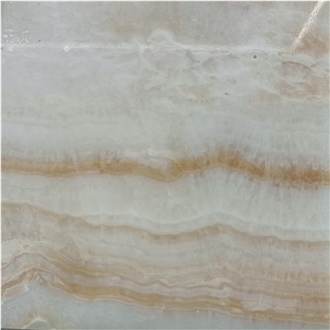
Iran White Onyx

About
Item Details
- Material Type:
- Onyx
- Origin:
Iran (Salmas, West Azerbaijan Province) - Primary Color(s):
- White
- Recommended Usage:
- Commercial tops, bar and bathroom countertops, ornamental stone, interior & exterior wall applications, mosaic, waterjet pattern, wall panels, table tops, fireplace surround, sculptures, balustrades, columns
- Additional Names:
- White Onyx Iran, Onice Bianco, Persian White Onyx, Iran Pure White Onyx, Persian White Jade, in China stone market:波斯白玉(Bōsī báiyù), Iran White Onyx
- Finished Surface:
- Polished,Tumbled,Brushed,Honed,Machine Cut,Natural Surface,Sandblasted,Combed,Leathered,Water Jet,Chiseled,Pickling
Testing
- Water Absorption:
- ~0.15 - 0.25% by weight
- Density:
- ~2600 Kg/m³
- Flexural Strength:
- ~7 - 10 MPa
- Compressive Strength:
- ~75 - 85 MPa
- Stone texture:
- a translucent ivory white color and intricate veining
Description
Iran White Onyx, quarried in Salmas, West Azerbaijan Province, is a remarkable natural stone known for its translucent characteristics and ivory white color. It features intricate veining that enhances its aesthetic appeal, making it a popular choice for luxurious interior applications.
Physical and Mechanical Properties
- Water Absorption: ~0.15 - 0.25% by weight
- Density: ~2600 Kg/m³
- Flexural Strength: ~7 - 10 MPa
- Compressive Strength: ~75 - 85 MPa
- Hardness: Typically measured on the Mohs scale, Onyx ranges around 3-4, similar to its mineral counterpart, calcite.
- Porosity: Low porosity, contributing to its translucency and suitability for interior applications.
- Slip Resistance: Not naturally slip-resistant; finishes such as honing or texturing may improve slip resistance for flooring applications.
Chemical and Mineral Composition
- Calcite (CaCO₃): Primary component, typically over 90% by weight.
- Impurities/Trace Elements: Can include iron oxide and other minerals, contributing to its unique veining and coloration.
- Silica (SiO₂): Trace amounts may also be present.
Uses and Applications
- Interior Decoration: Widely used for wall cladding, countertops, backsplashes, and fireplace surrounds.
- Decorative Elements: Due to its translucency, ideal for backlit applications, such as lamp bases or wall panels.
- Bathroom Surfaces: Suitable for vanity tops and decorative tiles, albeit with careful maintenance to avoid etching from acidic substances.
- Accent Pieces: Used for creating exquisite pieces like vases, statues, and other artistic items.
Maintenance
- Sealing: Periodic sealing recommended to protect against stains and etching.
- Cleaning: Use pH-neutral cleaners; avoid acidic or abrasive cleaners to prevent surface damage.
- Polishing: Can be re-polished to restore its original shine and remove minor surface scratches.
Cutting Sizes
Commonly available in slabs and tiles, dimensions can vary based on the specific quarry and cutting facility but typically include:
- Slabs: 2 cm and 3 cm thicknesses are common.
- Tiles: Available in sizes such as 30x30 cm, 60x60 cm, and 30x60 cm.
Surface Finish Options
- Polished: Provides a high-gloss finish, enhancing the stone's translucency and veining.
- Honed: Offers a matte appearance, reducing glare and surface reflectivity.
- Brushed: Gives a textured finish, providing a rustic appearance while enhancing grip.
- Leathered: Offers a soft, textured feel with reduced shine, suitable for countertops and surfaces where a luxurious feel is desired.
In summary, Iran White Onyx is a versatile and aesthetically pleasing stone with physical properties that make it suitable for various luxurious applications. However, its maintenance requirements, due to its softness and susceptibility to acids, should be carefully considered when selecting its use in interior settings.
FAQ
Iran White Onyx is a type of natural stone that is characterized by its translucent white color and intricate veining patterns. While it is commonly used for interior applications such as countertops, wall cladding, and decorative pieces, it is generally not recommended for exterior applications in very rainy climates.
One of the main reasons is that Iran White Onyx is a softer stone compared to other natural stones like granite or marble. It is more prone to scratching, staining, and weathering, especially when exposed to extreme weather conditions such as heavy rain, freezing temperatures, or prolonged exposure to sunlight.
Furthermore, the translucent nature of onyx can be marred by water infiltration, leading to potential discoloration or deterioration over time. In high rainfall areas, the constant exposure to moisture and water can accelerate the rate of damage to the stone, compromising its structural integrity and aesthetic appeal.
If you are looking for a stone suitable for exterior applications in very rainy climates, it is recommended to choose a more durable and weather-resistant material such as granite, limestone, or certain types of porcelain tiles. These materials are better equipped to withstand the harsh conditions, ensuring longevity and minimal maintenance.
Always consult with a professional stone supplier or installer for guidance on the appropriate material selection based on your specific climate and project requirements.
What is the coefficient of friction of Water Jet Cut Iran White Onyx tiles?
The coefficient of friction of Water Jet Cut Iran White Onyx tiles can vary depending on various factors such as the surface finish, texture, and the presence of any additional coating or treatment applied. It is recommended to consult with the manufacturer or supplier of the tiles for specific information regarding the coefficient of friction for the particular product in question.
Can Iran White Onyx be used in landscaping?
Yes, Iran White Onyx can be used in landscaping. It is a type of natural stone with a beautiful white and translucent appearance, which can add elegance and aesthetic appeal to outdoor spaces. It can be used for various landscaping features such as walkways, patios, garden edging, retaining walls, and outdoor sculptures. However, it is important to note that onyx is a softer stone compared to other types of natural stone like granite or marble, so it may require more maintenance and care to prevent scratching or damage.
Are there color variations of Iran White Onyx?
Yes, there can be slight color variations in Iran White Onyx. Onyx is a natural stone, and its color and veining patterns can vary due to variations in mineral composition and different geological conditions during its formation. Iran White Onyx typically has a creamy white base with gray or golden veins, but the exact color and intensity of the veins can vary from slab to slab. Some slabs may have more pronounced veining, while others may have a more subtle pattern. It is always recommended to view and select the specific slab or tile in person to ensure it meets your desired color preferences.
What grade is Iran White Onyx?
Iran White Onyx is typically considered a grade A stone due to its high quality and desirable characteristics.
How thick is Iran White Onyx slabs?
I dont have access to real-time information and specifications. However, according to some stone suppliers websites, Iran White Onyx slabs are available in various thicknesses, from 2cm to 5cm, depending on the customers preference or project requirement. It is always recommended that you contact your local stone supplier or manufacturer to get accurate information on the thickness of the Iran White Onyx slabs they have available.
Can Iran White Onyx be used in a dining room?
Yes, Iran White Onyx can be used in a dining room as a tabletop, wall cladding, or flooring. It will create a luxurious and sophisticated look and feel in the dining room. However, it is important to note that onyx is a soft and porous stone, and it requires regular cleaning and maintenance to prevent etching, staining, and scratching. It is also not recommended for high-traffic areas or areas prone to spills.
Is Iran White Onyx an expensive stone?
I do not have access to live market data. However, generally speaking, Iranian white onyx is considered a luxurious and expensive stone due to its rarity, unique pattern, and high-quality production. The price of Iranian white onyx varies depending on the size, grade, and market demand. It is always better to check the current market prices with a reliable seller or supplier.


1YR