Post Your Needs

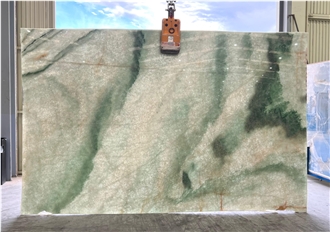
Murano Quartzite

Quartzite

Brazil

About

Item Details

Material Type:
Quartzite
Origin:
Brazil
Recommended Usage:
Kitchen and bathroom countertops, wash basins, building stone, ornamental stone, stairs, interior, exterior wall and floor applications, mosaic, waterjet pattern, wall panels, table tops, balustrades, columns, wall and pool copings, pool pavers, fireplaces
Additional Names:
Murano Gold Quartzite, Murano Giallo Quartzite
Finished Surface:
Polished,Bush Hammered,Tumbled,Brushed,Honed,Split,Machine Cut,Natural Surface,Sandblasted,Combed,Leathered,Water Jet,Filled,Chiseled,Pickling

Testing

Water Absorption:
0.08–0.20%
Density:
2650–2750 Kg/m³
Flexural Strength:
16–21 MPa
Compressive Strength:
190–240 MPa

Description

Murano Quartzite is an exotic natural stone quarried in Brazil, renowned for its ivory white base​ enriched with golden yellow shades​ and dramatic rusty golden brown veining. This quartzite combines warm, luxurious aesthetics with exceptional durability, making it a premium choice for high-end residential and commercial applications. 

Visual & Physical Characteristics

  • Base Color:​ Ivory white with warm golden-yellow undertones
  • Veining/Pattern:​ Bold, flowing veins in rusty golden brown, often with amber or ochre accents
  • Texture:​ Medium to coarse crystalline structure; takes a high polish and exhibits natural depth
  • Light Interaction:​ Warm tones enhance ambient light, creating a luminous, inviting atmosphere

Physical & Mechanical Properties

  • Water Absorption​  ASTM C97: 0.08–0.20%
  • Density​  ASTM C97: 2.65–2.75 g/cm³
  • Compressive Strength  ​ASTM C170: 190–240 MPa
  • Flexural Strength​  ASTM C880: 16–21 MPa
  • Abrasion Resistance​  ASTM C241: 22–28 Ha (high)
  • Hardness (Mohs Scale)​Mineral Test: 6–7
  • Frost Resistance  ​EN 12371Excellent (suitable for exterior use)

Chemical Composition​ (% by weight, approximate)

  • SiO₂ (Quartz)​: 90–95%
  • Fe₂O₃ (Iron Oxide)​: 2–6% (primary source of golden/rust tones)
  • Al₂O₃​: 1–3%
  • K₂O / Na₂O​: 0.5–2%
  • Other Oxides​: ≤1%

Mineral Composition​ (% by weight, approximate)

  • Quartz:​ 90–94%
  • Feldspar:​ 3–6%
  • Iron-bearing minerals (e.g., hematite, goethite):​ 2–5% (responsible for golden/rust veining)
  • Mica/Clay traces:​ ≤1%

Surface Finish Options

  • Polished​ – High-gloss, reflective finish (enhances color depth)
  • Honed​ – Smooth matte finish (soft, contemporary look)
  • Brushed/Leathered​ – Textured, low-sheen finish (hides fingerprints, adds tactility)
  • Sandblasted​ – Uniform matte texture

Applications

  • Interior:​ Feature walls, kitchen countertops, bathroom vanities, fireplace surrounds
  • Flooring:​ Residential and commercial high-traffic areas
  • Exterior:​ Cladding, pool coping, patio paving, landscape features
  • Commercial:​ Hotel lobbies, luxury retail, corporate offices

Maintenance Guidelines

  • Sealing:​ Recommended for honed/brushed finishes; optional for polished surfaces in low-traffic interiors
  • Cleaning:​ Use pH-neutral stone cleaners; avoid acidic or abrasive products
  • Protection:​ Use trivets and cutting boards; wipe spills promptly
  • Outdoor Care:​ Annual sealing recommended in harsh climates

Key Notes

  • Natural color and veining variations occur; slab selection is advised for large projects
  • High iron content contributes to warm hues but requires proper sealing in wet areas
  • Suitable for both interior and exterior applications due to low porosity and high durability

FAQ

Does the surface of Murano Quartzite scratch easily?

Murano Quartzite, like other quartzite stones, is known for its durability and resistance to scratching. Quartzite is a metamorphic rock that originates as sandstone and undergoes significant heat and pressure to form its dense, hard structure. This makes it one of the more durable natural stone options for countertops, similar in hardness to granite. While it is quite scratch-resistant, no surface is completely impervious. Its always advisable to use cutting boards or protective surfaces when dealing with sharp objects. However, under normal circumstances, Murano Quartzite should not scratch easily, making it a great choice for areas that experience regular use. Its also important to ensure that the quartzite is properly sealed, as this helps protect the surface from stains and damage.

Can Murano Quartzite be used for pool coping?

Yes, Murano Quartzite can be used for pool coping. It is a durable and dense natural stone that is resistant to heat, scratching, and water absorption, making it suitable for outdoor applications like pool coping. However, its essential to ensure that the stone is properly sealed to enhance its resistance to water and prevent staining. Additionally, the stone’s finish should be chosen carefully to ensure it is not too slippery when wet. Consulting with a professional installer or stone supplier before selection can ensure that it meets the specific requirements of your pool project.

Can Murano Quartzite be used as a kitchen countertop?

Yes, Murano Quartzite can be used as a kitchen countertop. Quartzite is a natural stone known for its durability, hardness, and resistance to heat, which makes it an excellent choice for kitchen countertops. However, like all natural stones, it needs to be properly sealed to protect against staining and etching from acidic substances. Regular maintenance is also important to keep it in good condition. Additionally, its always a good idea to consult with a professional fabricator to ensure that Murano Quartzite is the right fit for your specific kitchen needs and aesthetic preferences.

How can I maintain Murano Quartzite flooring?

Maintaining Murano Quartzite flooring involves regular cleaning and care to preserve its natural beauty and ensure its longevity. Here are some steps you can follow to properly maintain your Murano Quartzite flooring: 1. **Regular Cleaning**: - **Sweeping or Vacuuming**: Regularly sweep or vacuum the floor to remove dirt, dust, and debris. Make sure to use a soft-bristled broom or a vacuum cleaner designed for hard floors to prevent scratching. - **Mopping**: Use a damp mop with warm water and a mild, pH-neutral cleaner specifically designed for natural stone. Avoid using harsh chemicals or acidic cleaners, such as vinegar, which can damage the stone. 2. **Spill Management**: - Wipe up spills immediately to prevent staining. Use a soft cloth or paper towel to blot the spill rather than wiping it, as wiping can spread the liquid. 3. **Sealing**: - Ensure your quartzite flooring is properly sealed. Sealing makes the surface more resistant to stains and can enhance the natural color of the stone. - Depending on the amount of traffic the floor receives, you might need to reseal it every 1-2 years. To check if your flooring needs sealing, a simple water test can help: pour a small amount of water on the surface. If it soaks in immediately, its time to reseal. 4. **Avoid Scratches**: - Use felt pads under furniture legs to prevent scratching when moving furniture. - Encourage family members and guests to remove their shoes when entering the house to reduce the risk of scratching from dirt and grit. 5. **Protective Mats**: - Place mats and runners in high-traffic areas and entrance ways to collect dirt and moisture before it reaches the flooring. 6. **Furniture and Heavy Items**: - Lift furniture and heavy items when moving them instead of dragging them across the floor to avoid scratches and chips. 7. **Professional Cleaning**: - Consider having the floors professionally cleaned periodically, especially if they become heavily soiled or if stains are difficult to remove with regular cleaning. By following these steps consistently, you can keep your Murano Quartzite flooring looking beautiful for many years.

Is Murano Quartzite a suitable choice for facades in cold winter climates?

Murano Quartzite can be a suitable choice for facades in cold winter climates, but there are a few considerations to keep in mind: 1. **Durability**: Quartzite is generally a very hard and durable natural stone, which makes it resistant to scratches and weathering. This durability is beneficial for exterior applications, including facades. 2. **Water Absorption**: One of the critical factors in determining the suitability of any natural stone for cold climates is its water absorption rate. Stones with low water absorption are better at resisting freeze-thaw cycles. Quartzite tends to have a low absorption rate, but it’s essential to confirm the specific absorption characteristics of Murano Quartzite from your supplier. 3. **Thermal Behavior**: Quartzite retains heat, which can be an advantage or disadvantage depending on the specific climate and building needs. Proper design and installation can mitigate potential thermal stress. 4. **Maintenance**: All exterior materials will require maintenance to keep them looking their best and functioning well. For quartzite, this might include periodic sealing to enhance its resistance to moisture and staining. 5. **Installation**: The quality of installation is crucial. Proper anchorage, joint detailing, and allowance for thermal movement are essential factors in ensuring longevity and performance. 6. **Aesthetic Appeal**: Murano Quartzite offers a unique and visually appealing option for facades, with various colors and patterns that can complement architectural styles. Before making a decision, its advisable to consult with architects, builders, or material specialists familiar with the local climate conditions and the specific properties of Murano Quartzite. They can provide more tailored guidance on its suitability for a facade in your specific location.

Can 18mm thick Murano Quartzite be used for stair steps?

Yes, 18mm thick Murano Quartzite can potentially be used for stair steps, but there are several factors to consider to ensure its suitability and safety: 1. **Strength and Durability**: Murano Quartzite is known for its hardness and durability, which can make it suitable for stair applications. However, the thickness of 18mm is relatively thin for stair treads, so you must confirm its strength under foot traffic. 2. **Support Structure**: Adequate support is necessary when using a thinner stone. The substructure must be capable of supporting the stone to prevent cracking or breaking. Consider reinforcing the stone with a substrate like plywood or a metal frame. 3. **Finishing**: The surface of the quartzite should be finished appropriately to prevent slipping, especially in environments where the stairs may be exposed to moisture. 4. **Code Compliance**: Check local building codes and regulations to ensure that 18mm thick stair treads meet all safety and construction standards. Some codes may specify minimum thicknesses for materials used in stair construction. 5. **Installation Expertise**: Professional installation is highly recommended to ensure that the stone is properly supported and attached, and to prevent potential issues related to wear and tear over time. Before proceeding, it might be beneficial to consult with a structural engineer or a professional stone installer to evaluate the specific application and location where the quartzite will be used.

Do fruit juices stain the surface of Murano Quartzite countertop?

Murano Quartzite is a natural stone that is prized for its durability and aesthetic appeal, and it is generally more resistant to staining than some other types of natural stone, like marble. However, it is not completely impervious to stains, particularly from acidic substances like fruit juices. Fruit juices, which often contain citric acid and other substances, can potentially etch the surface or leave a stain if not wiped up promptly. To minimize the risk of staining, it is advisable to clean up spills immediately and to use a pH-neutral cleaner appropriate for natural stone. Additionally, sealing the quartzite countertop can provide an additional layer of protection against stains. Regular maintenance and prompt attention to spills will help keep your Murano Quartzite countertop looking its best.

Products & Prices

Hot Quartzite

New Quartzite

Post Your Request

The request includes:
  1. surface finished, size
  2. quantity required