Post Your Needs

Rhein Quartzite

Grey - Quartzite

Switzerland

About

Item Details

Material Type:
Quartzite
Origin:
Switzerland (Hinterrhein, Graubünden)
Primary Color(s):
Grey
Recommended Usage:
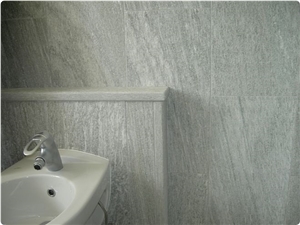
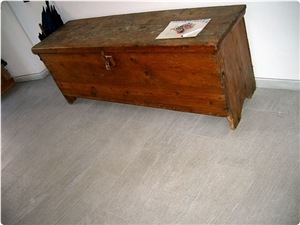
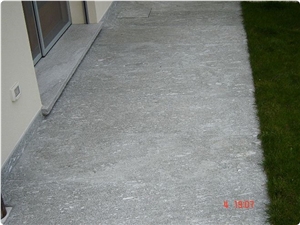
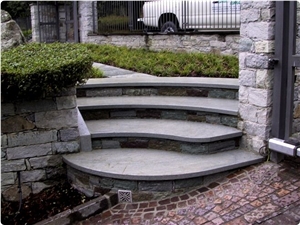
Kitchen and bathroom countertops, monuments, building stone, ornamental stone, stairs, interior, exterior wall and floor applications, mosaic, waterjet pattern, wall panels, table tops, window sills, balustrades, columns, wall and pool copings, pool pavers, sculptures, fireplaces, cobbles, pavers, curbstone
Additional Names:
Rhein Gra Quarzit, Rhein Grau Quarzit, Rhein Silver Quarzite, Rheinquarzit Grigioni, Bernhardin Quarzit, Hinterrhein Platten Quarzit, Hinterrhein Stein, Hinterrhein Quarzit, Hinterrheiner Quarzit, Hinterrhein Quarzit, Rheinquarzit, Rheinischer Quarzit, San Bernardino Silber Quarzite, San Bernardino Quarzite, Rhein Gray Quarzite, Rhein Quartzite
Finished Surface:
Polished,Flamed,Bush Hammered,Tumbled,Brushed,Honed,Split,Machine Cut,Natural Surface,Sandblasted,Acid Washing,Combed,Leathered,Water Jet,Filled,Chiseled,Pickling

Testing

Water Absorption:
0.3 %
Density:
2648 kg/m³
Flexural Strength:
19.9 - 20.4 MPa
Compressive Strength:
168 - 170 MPa

Description

Rhein Quartzite is a diverse greenish-gray gneiss characterized by moderate to strong foliation, fine to medium grain, mica-rich layers, and occasionally intersected by white veins and eyes. It is mined at the northern foot of the San Bernardino Pass. The old Brunst quarry, situated approximately 3 km west of Hinterrhein, was recently reactivated for mining operations. Rhein Quartzite originates from the same geological formation as Valser Quartzite and San Bernardino.

Its luminosity is attributed to the high quartz content, while the slightly greenish hue is due to the presence of the mica mineral phengite. Despite its substantial quartz content (approximately 75%), Rhein Quartzite is classified as a gneiss from a petrographic standpoint. According to the established definition, a rock is designated as quartzite only if it comprises more than 90% quartz. This variety of quartzite is quarried in Hinterrhein, Graubünden, Switzerland.

Physical / mechanical characteristics:(Average values)
Apparent density: 2650 Kg/mc
Open porosity (by volume): 0,8%
Water absorption (by mass): 0,3%
Flexural strength in natural conditions: 20,4 MPa
Flexural strength after frost test: 19,9 MPa
Compression strength in natural conditions: 170 MPa
Compression strength after frost test: 168 MPa
Abrasion resistance - groove length: 15,5 mm
Slip resistance value - sand blasted (dry): 69 (SRV)
Slip resistance value - sand blasted (wet): 66 (SRV-USRV)
Breaking load at dowel-hole: 2620 N
Breaking load at dowel-hole, maximum fracture distance: 48 mm
Petrographic definition: quartzitic paragneiss
 (POLITECNICO DI TORINO)

FAQ

Can Switzerland's Rhein Quarzit Quartzite be used exterior applications in hot climates?

Yes, Switzerlands Rhein Quarzit Quartzite can be used for exterior applications in hot climates. Quartzite is a natural stone that is known for its durability and resistance to heat, making it suitable for various outdoor projects. It has excellent thermal properties and can withstand high temperatures, making it ideal for hot climates. Additionally, quartzite is also resistant to UV rays, moisture, and fading, further enhancing its suitability for exterior applications.

Can Switzerland's Rhein Quarzit Quartzite be used in landscaping?

Yes, Switzerlands Rhein Quarzit Quartzite can be used in landscaping. Quartzite is a durable and hard material that is suitable for various outdoor applications, including landscaping. It is commonly used for pathways, patios, retaining walls, garden walls, and decorative stone features in landscaping projects. The natural beauty and unique patterns of Rhein Quarzit Quartzite can add a touch of elegance and sophistication to any outdoor space.

Can Switzerland's Rhein Quarzit Quartzite be used in a kitchen?

Yes, Switzerlands Rhein Quarzit Quartzite can be used in a kitchen. Quartzite is a natural stone that is extremely hard and durable, making it suitable for use in high traffic areas such as kitchen countertops and backsplashes. It is resistant to heat, scratches, and stains, which are common issues in a kitchen. However, it is always recommended to properly seal and maintain quartzite surfaces to ensure their longevity and prevent any potential damage.

Are there color variations of Switzerland's Rhein Quarzit Quartzite?

Yes, there are color variations of Switzerlands Rhein Quarzit Quartzite. The quartzite can come in a range of colors including shades of white, gray, beige, brown, and even green. The specific color variation can depend on factors such as mineral impurities present in the rock and geological conditions during its formation.

What grade is Switzerland's Rhein Quarzit Quartzite?

There is no specific grade for Switzerlands Rhein Quarzit Quartzite as grades can vary depending on the specific quarry and manufacturer. Generally, quartzite is graded based on factors such as color, durability, and appearance. It is recommended to contact the quarry or supplier directly to inquire about the specific grade of the specific quartzite product you are interested in.

How thick is Switzerland's Rhein Quarzit Quartzite slabs?

The thickness of Switzerlands Rhein Quarzit quartzite slabs can vary depending on the specific supplier and the requirements of the project. However, standard thicknesses of quartzite slabs typically range from 2 centimeters (0.8 inches) to 3 centimeters (1.2 inches).

Can Switzerland's Rhein Quarzit Quartzite be used outdoors?

Yes, Switzerlands Rhein Quarzit quartzite can be used outdoors. It is a highly durable and weather-resistant stone that is commonly used for outdoor applications such as paving, cladding, and landscaping. It is able to withstand extreme temperatures, heavy rainfall, and harsh UV rays, making it a popular choice for outdoor projects.

Is Switzerland's Rhein Quarzit Quartzite an expensive stone?

I do not have access to the current market value of Switzerlands Rhein Quarzit Quartzite. However, quartzite is generally considered to be a high-end and expensive stone due to its durability, natural beauty, and unique patterns. The cost of quartzite usually depends on the quality, color, thickness, and availability of the stone.

Products & Prices

View More

Hot Grey Quartzite

New Quartzite

Post Your Request

The request includes:
  1. surface finished, size
  2. quantity required