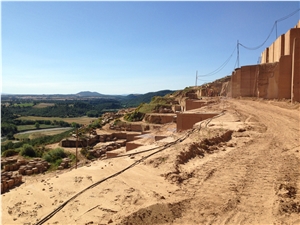
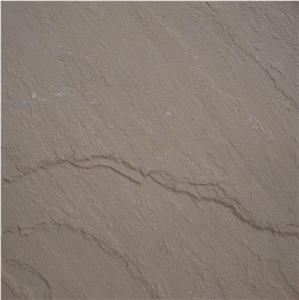
Santafiora Leopard Sandstone is a captivating natural stone native to Santa Fiora, in the province of Grosseto, Tuscany, Italy. Renowned for its warm, multi-tonal appearance, this sandstone features a creamy beige to light yellow base adorned with distinctive leopard-like patterns of darker brown, rust, ochre, along with occasional reddish or grey speckling. This variegated appearance makes it a popular choice for decorative and architectural applications.
Physical and Mechanical Properties:
- Petrographic definition: Sandstone
- Unit mass (bulk density): 2325 kg/m³
- Water absorption: 3.7%
- Compressive strength (unconfined): 50 MPa
- Compressive strength after freezing: 53 MPa
- Tangent elastic modulus: 20,900 MPa
- Flexural tensile strength (indirect bending): 6.8 MPa
- Abrasion coefficient (referenced to Granite St. Fedelino): 0.37
- Impact resistance (minimum fall height): 35 cm
- Linear thermal expansion coefficient: 6.8 × 10⁻⁵ °C⁻¹
- Hardness: Moderate, suitable for moderate wear applications
- Porosity: Slightly porous due to its sedimentary nature
- Slip Resistance: Generally good, inherent texture aids with grip
* Source: Università di Pisa
Chemical and Mineral Composition (% by weight):
- Silica (SiO2): Predominant mineral component, influencing hardness and durability
- Calcium Carbonate (CaCO3): Significant component, contributing to its creamy color
- Iron Oxides (Fe2O3): Responsible for the reddish and brown speckling
- Alumina (Al2O3), Potassium Oxide (K2O), and Sodium Oxide (Na2O): Trace elements contributing to structure and bonding
Usage:
- Exterior Cladding: Popular in building façades due to its striking appearance and durability
- Flooring: Ideal for both interior and exterior spaces, provided it's properly sealed
- Landscaping: Effective for creating visually striking garden paths and outdoor steps
- Interior Decor: Often used for countertops, feature walls, and decorative accents
Maintenance:
- Regular sealing is recommended to prevent moisture absorption and staining.
- Clean with mild, pH-neutral cleaners to avoid damaging the stone’s finish.
- Regular inspection for cracks or signs of wear, particularly in high-traffic areas.
Cutting Sizes (common dimensions in cm):
- Standard Tiles: 30x30, 30x60, 60x60
- Slabs: Customizable sizes ranging typically up to 120x240 for larger applications
Available Common Surface Finish Options:
- Honed: Smooth, matte finish that enhances color but maintains the natural texture
- Bush-Hammered: Rough, textured finish for excellent slip resistance
- Sawn: Basic finish, straight from the cutting process, showcasing the raw granular look
- Brushed: Soft, slightly textured finish that highlights the stone’s patterning
Santafiora Leopard Sandstone’s unique color and texture, combined with its impressive physical properties, make it a favored choice for architects and designers aiming to create spaces with warmth and distinction while maintaining the robustness needed in building materials.


 Italy


 United States


 India

 United Kingdom

 Spain


