Post Your Needs

Sienite Della Balma Granite

Brown - Granite

Italy

About

Item Details

Material Type:
Granite
Origin:
Italy (San Paolo Cervo, Val Cervo, Provincia di Biella, Piemonte)
Primary Color(s):
Brown
Recommended Usage:
Kitchen and bathroom countertops, monuments, building stone, ornamental stone, stairs, interior, exterior wall and floor applications, mosaic, waterjet pattern, wall panels, table tops, window sills, balustrades, columns, wall and pool copings, pool pavers, sculptures, fireplaces, pavers, cobbles, curbstone
Additional Names:
Granito Sienite della Balmas, Balma Granite, Sienite Balma Granite, Sienite Biella Granite, Granito Sienite di Balma, Granito Sienite Val Cervo, Granito Sienito Val Cervo, Siente Balma Granite, Val Cervo Granite, Sienite della Balma, Sienite Della Balma Granite
Finished Surface:
Polished,Flamed,Bush Hammered,Tumbled,Brushed,Honed,Split,Machine Cut,Natural Surface,Sandblasted,Acid Washing,Combed,Leathered,Water Jet,Filled,Chiseled,Pickling

Testing

Water Absorption:
1.1 By volume %; 0.30 By weight %
Density:
2695 - 2700 kg/m³
Flexural Strength:
15.7 MPa
Compressive Strength:
238.0 - 239.0 MPa

Description

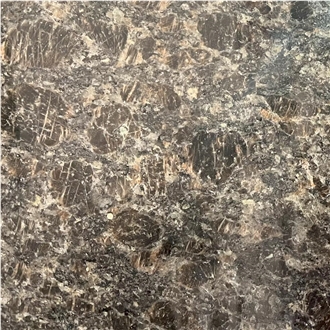
Sienite Della Balma Granite is a distinctive natural stone quarried in San Paolo Cervo, Val Cervo, Provincia di Biella, Piemonte, Italy. This stone is petrographically classified as a syenite or monzonitic intrusive rock, noted for its medium- to coarse-grained and crystalline structure. It is particularly valued for its dense, compact formation with low water absorption, high compressive strength, and its aesthetically pleasing brown to grey-brown base color with subtle violet or warm tonal nuances.

Physical and Mechanical Properties:

  • Water Absorption: By volume: 1.1%. By weight: 0.30%
  • Density: 2695 - 2700 kg/m³
  • Flexural Strength: 15.7 MPa
  • Compressive Strength: 238.0 - 239.0 MPa
  • Hardness: High (specific scale not provided, but typically granite is considered very hard)
  • Porosity: Low
  • Slip Resistance: Good, depending on the finish applied

Chemical and Mineral Compositions (% by weight):

  • Feldspar: Predominantly responsible for the stone's base color and subtle warm tones
  • Quartz:
  • Percentage varies; typically significant in enhancing hardness and durability
  • Hornblende and Biotite: Contribute to the darker mineral components interspersed within the stone
  • Other trace minerals: May include minor amounts of mica and other elements typical of syenitic compositions

Usage:

  • Suitable for large architectural applications due to its structural integrity and aesthetic appeal.
  • Commonly used in flooring, wall cladding, and exterior facades.
  • Also applicable for countertops, staircases, and decorative features.

Maintenance:

  • Requires minimal maintenance due to its low porosity and high durability.
  • Regular cleaning with non-acidic stone cleaners is recommended to maintain its appearance.
  • Sealing is recommended especially in high-traffic or moisture-prone areas to enhance resistance to staining.

Surface Finish Options:

  • Polished: Enhances the natural colors and patterns, providing a glossy, smooth surface.
  • Honed: Offers a matte finish that is less reflective, ideal for a more subdued appearance.
  • Textured: Provides additional slip resistance and a tactile surface, useful for outdoor applications.
  • Bush-hammered: Achieves a rough texture offering a rustic, natural appearance.

Notable Aesthetic Characteristics:

  • Brown to grey-brown tones with gentle mottling rather than strong veining.
  • Balanced distribution of light and dark mineral grains creates a cloud-like speckled appearance consistent across slabs.
  • High durability and visual consistency make it an ideal choice for a range of architectural and decorative projects.

Test Result

  • Petrographic Definition: Syenite
  • Mass per Unit Volume: 2695 kg/m³
  • Water Absorption: 0.30 %
  • Compressive Strength (simple): 239 MPa
  • Compressive Strength after Freezing: 238 MPa
  • Elastic Modulus (tangent): 54,500 MPa
  • Indirect Tensile Strength (by flexure): 15.7 MPa
  • Abrasion Coefficient (referenced to Granite St. Fedelino): 0.79
  • Impact Resistance (minimum fall height): 66 cm
  • Coefficient of Linear Thermal Expansion: 4.2 × 10⁻⁵ °C⁻¹
  • Knoop Microhardness: 4787 MPa
  • Non-uniformity Index of Hardness: 1.48

 * Source: Università di Pisa – Politecnico di Torino

FAQ

Can Italy's Sienite della Balma Granite be used in floor coverings?

Yes, Italys Sienite della Balma Granite can be used in floor coverings. Granite is a popular material for flooring due to its durability, strength, and aesthetic appeal. Sienite della Balma Granite, in particular, is known for its beautiful color variations, which can create a distinctive and elegant look when used as a floor covering. However, it is important to note that granite is a natural stone and may require proper sealing and maintenance to ensure its longevity and resistance to wear and tear.

Can Italy's Sienite della Balma Granite be used exterior applications in very rainy climates?

Italys Sienite della Balma Granite can be used for exterior applications in rainy climates. Granite is a durable and weather-resistant material that can withstand various environmental conditions, including rain. However, it is always recommended to ensure proper installation and maintenance to prevent any potential issues over time. Additionally, selecting a suitable sealer or finish can further enhance the granites ability to resist water absorption and prolong its lifespan in wet environments.

Can Italy's Sienite della Balma Granite be used in a office?

Yes, Italys Sienite della Balma Granite can be used in an office setting. Granite is a popular choice for office spaces due to its durability, low maintenance, and aesthetic appeal. Sienite della Balma Granite, being of Italian origin, is known for its high quality and unique patterns and colors which can add a touch of elegance and sophistication to an office environment. It can be used for countertops, desks, flooring, or any other applications where a durable and visually appealing surface is desired.

Can Italy's Sienite della Balma Granite be used outdoors?

Yes, Italys Sienite della Balma Granite can be used outdoors. Granite is a very durable and long-lasting natural stone, making it an ideal choice for outdoor applications. It is highly resistant to weathering, UV radiation, moisture, and temperature fluctuations. Therefore, Sienite della Balma Granite can be used for various outdoor purposes such as outdoor countertops, flooring, cladding, paving, steps, and other architectural elements.

How thick is Italy's Sienite della Balma Granite slabs?

The thickness of Italys Sienite della Balma Granite slabs can vary depending on the specific manufacturer or supplier. However, the standard thickness for granite slabs is typically around 20-30 millimeters (0.8-1.2 inches). It is advisable to contact the manufacturer or supplier directly for accurate information regarding the specific thickness of the Sienite della Balma Granite slabs they offer.

What grade is Italy's Sienite della Balma Granite?

There is no specific grade for Italys Sienite della Balma Granite as its classification may vary depending on various factors such as its composition, appearance, and intended use. It is important to consult with stone suppliers or experts to determine the specific grade of this granite.

Is Italy's Sienite della Balma Granite an expensive stone?

I do not have access to real-time pricing information. However, in general, Sienite della Balma Granite is considered a high-end and expensive stone due to its rareness and unique pattern. The final cost may vary based on factors such as availability, location, and demand.

Products & Prices

Hot Brown Granite

New Granite

Post Your Request

The request includes:
  1. surface finished, size
  2. quantity required