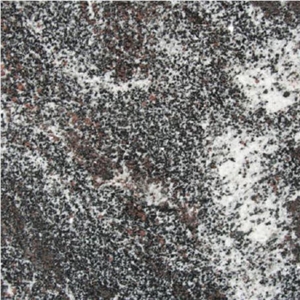
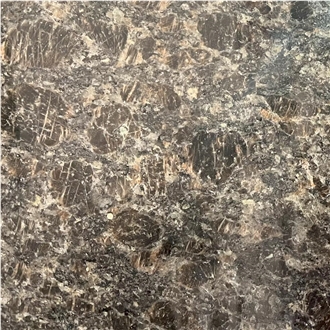
Tundra Granite is a distinctive natural stone known for its rich granitic texture and unique combination of veins and black-reddish brown amphibolite speckles. This granite is classified as Amfibolit Granite and is quarried in the Republic of Karelia, specifically in the Louhi district, settlement of Chupa, which is located approximately 50 kilometers to the west of the railway station Art. Chupa in the Russian Federation.
The granitic texture of Tundra Granite adds depth and character to any space, while the veins and speckles provide an eye-catching contrast against its background. The black-reddish brown amphibolite speckles are particularly noteworthy, adding a touch of warmth and intrigue to the stone's overall appearance.
Tundra Granite is highly versatile and suitable for a wide range of applications, including countertops, flooring, wall cladding, and decorative accents. Its durability and unique aesthetic make it a popular choice among designers and homeowners seeking to incorporate the beauty of natural stone into their projects, while its origin from the Republic of Karelia adds a touch of authenticity and prestige.
The average density 3180 kg/m3
Water Absorption 0,22 %
Compressive Strength (dry) 216 MPa
Compressive strength in the saturated state 132 MPa
frost-resistance F150
0.10 % salt resistance
The mineral composition
Name of mineral units Figures
Hornblende (amphibole), 40%
Plagioclase 28%
Quartz 28%
Pomegranate 15%
Aegirine% 2


 Russian Federation
 8YR

 China



 Puerto Rico


 India

 Brazil

 Norway


 Australia


