Post Your Needs

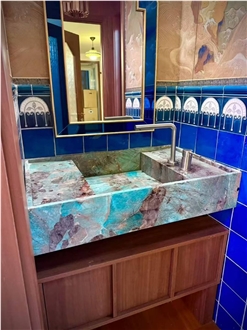
Amazonite Quartzite

Quartzite

Brazil

About

Item Details

Material Type:
Quartzite
Origin:
Brazil
Recommended Usage:
kitchen and bathroom countertops, wash basins, building stone, ornamental stone, stairs, interior wall and floor applications, mosaic, waterjet pattern, wall panels, table tops, high end furnitures
Additional Names:
Amazonite Blue Quartzite, Amazonite Green Quartzite, Amazonite Quartzite
Finished Surface:
Polished,Tumbled,Brushed,Honed,Split,Machine Cut,Natural Surface,Sandblasted,Combed,Leathered,Water Jet,Chiseled,Pickling

Testing

Water Absorption:
0.2 – 0.4% by weight
Density:
2650 - 2700 kg/m³
Flexural Strength:
18 - 22 MPa
Compressive Strength:
160 - 200 MPa

Description

Color & Appearance: Amazonite Quartzite is an exotic natural stone featuring striking shades ranging from deep turquoise and aqua-green to rich emerald green. The surface is characterized by brilliant aqua tones layered with natural grey, white, and occasional black veining and fine speckles, creating a vibrant, semi-translucent visual depth with a luxurious and highly decorative appeal. Each slab displays unique movement, often with flowing, wave-like patterns and crystalline highlights.

Texture & Structure: This quartzite has a medium- to coarse-grained crystalline structure composed of tightly interlocking minerals, giving it a dense, compact, and highly durable composition. The surface is typically smooth when polished, with a natural crystalline sparkle and occasional glassy translucency in lighter zones.

Pattern: Irregular, flowing, and dynamic veining with cloud-like formations, streaks, and patches. The pattern varies from soft linear movement to bold, dramatic contrasts, often suitable for book-matching applications.

Physical & Mechanical Properties (typical values):

  • Density: 2650–2700 kg/m³
  • Water Absorption: 0.2–0.4% (by weight)
  • Compressive Strength: 160–200 MPa
  • Flexural Strength: 18–22 MPa
  • Abrasion Resistance: High
  • Frost Resistance: Excellent
  • Hardness: Mohs Hardness: 6.5 – 7

Chemical Composition (% by weight):

  • SiO₂: 92–96%
  • Al₂O₃: 1–3%
  • Fe₂O₃: 0.5–1.5%
  • CaO: 0.5–1.5%
  • MgO: 0.2–1.0%
  • K₂O + Na₂O: 1–3%

Mineralogical Composition (% by weight):

  • Quartz: 85–95%
  • Feldspar (including microcline): 3–8%
  • Mica (biotite/muscovite): 1–3%
  • Accessory minerals (e.g., iron oxides): trace

Usage: Ideal for high-end interior and exterior applications, including countertops, kitchen islands, wall cladding, feature walls, flooring, staircases, vanity tops, and decorative elements. Its exotic appearance makes it especially suitable for luxury residential and commercial projects, as well as book-matched statement surfaces.

Maintenance: Requires periodic sealing to maintain stain resistance. Clean with pH-neutral stone cleaners and avoid acidic or abrasive substances. Regular maintenance preserves its polish and enhances longevity.

Surface Finish Options: Polished, Honed, Leathered, Brushed, Satin.

Amazonite Quartzite combines exceptional durability with a rare and vivid color palette, making it a premium choice for architectural and design applications.

FAQ

Can Amazonite Quartzite be used for kitchen countertop?

Yes, Amazonite Quartzite can be used for kitchen countertops. Quartzite is a natural stone that is prized for its durability, hardness, and resistance to heat and scratches, making it a suitable choice for countertops. Amazonite Quartzite is particularly valued for its unique and striking appearance, featuring shades of turquoise, green, and blue with intricate patterns. This stone can add an elegant and distinctive look to a kitchen. However, like all natural stones, it is important to properly seal and maintain Amazonite Quartzite to protect it from staining and etching, especially in an environment like a kitchen where it may come into contact with acidic substances or oils. Regular sealing and cleaning with appropriate products are recommended to keep the countertop looking its best. Always consult with a professional installer or supplier to ensure it meets the specific needs and conditions of your kitchen environment.

How can I repair the scratched surface of the Amazonite Quartzite steps?

Repairing scratches on Amazonite Quartzite steps involves a few careful steps to restore their natural beauty. Heres a general process you can follow: 1. **Clean the Surface:** - Start by thoroughly cleaning the steps to remove any dirt, dust, and debris. Use a gentle stone cleaner or a mix of warm water with a few drops of dish soap. Avoid acidic cleaners as they can damage the surface. - Dry the surface completely with a soft cloth. 2. **Assess the Damage:** - Examine the scratches to determine their depth. This will influence the method you use to repair them. 3. **Polish Minor Scratches:** - For light surface scratches, using a stone polish or a polishing powder designed for quartzite can help. First, dampen the surface with water. - Apply the polish with a soft cloth or a polishing pad, using circular motions to work it into the scratched area. - Wipe away any excess with a clean, damp cloth and then dry with a soft towel. 4. **Fill Deep Scratches:** - For deeper scratches, you might need to use an epoxy resin or a stone filler. Choose a product that matches the color and pattern of the Amazonite Quartzite. - Clean the area around the scratch again to ensure it is free of dust. - Mix the resin or filler according to the manufacturers instructions and apply it carefully to the scratch, ensuring it fills the gap. - Allow it to cure completely as per the product guidelines. 5. **Buff and Polish:** - Once the filler or resin has cured, gently sand the area with very fine grit sandpaper (such as 400-600 grit) until it is level with the surrounding surface. Be cautious not to damage the surrounding area. - Use a stone polish to restore the shine to the repaired area, applying it as you would for minor scratches. 6. **Seal the Surface:** - After repairs, it is a good idea to seal the quartzite to protect it from future damage. Use a penetrating sealer designed for natural stone. Apply according to the product instructions, typically letting it sit for the recommended time before wiping off excess. 7. **Regular Maintenance:** - To keep your steps looking their best, clean regularly with a non-abrasive stone cleaner, and consider resealing the surface periodically based on the product’s recommendations. If the scratches are extensive or youre unsure about performing the repairs yourself, consider consulting a professional stone restoration specialist for advice and service.

If I use Amazonite Quartzite as a bar countertop, will alcoholic drinks damage its surface over time?

Amazonite quartzite, like other types of quartzite, is a durable and dense natural stone, making it a good choice for bar countertops. However, it is essential to note that, while quartzite is resistant to etching and scratching, it is not impervious to all kinds of damage. Heres what you should know about using it as a bar countertop and potential damage from alcoholic drinks: 1. **Porosity**: Quartzite is less porous than some natural stones, like marble, but it can still absorb liquids if it isnt sealed properly. Alcohol, particularly acidic types like wine or spirits with citrus, can seep into the stone and cause staining if left on the surface. To prevent this, ensure that the quartzite is properly sealed during installation and resealed periodically as advised by the manufacturer or installer. 2. **Acid Sensitivity**: While quartzite is more resistant to acids compared to marble, prolonged exposure to acidic substances, such as certain mixers or garnishes like lemon or lime, might etch the surface over time if not cleaned promptly. 3. **Cleaning and Maintenance**: Immediate cleaning of spills and regular maintenance is crucial. Use a pH-balanced cleaner to clean the surface and avoid harsh chemical cleaners that could damage the sealant or the stone itself. 4. **Sealant**: Applying a high-quality sealant will help protect the stone from stains and etching. How often you need to reseal your countertop depends on usage and the sealant type, but generally, it should be done every one to two years. In summary, while Amazonite quartzite is a robust choice for a bar countertop due to its beauty and durability, it requires regular maintenance and care to protect against potential damage from alcoholic drinks and other substances.

Amazonite Quartzite has its own natural veins. If I use it as stair steps, will it break along these veins?

Amazonite Quartzite, like many natural stones, can have veins or patterns that are part of its aesthetic appeal. However, these veins may also be areas of potential weakness compared to the rest of the stone. When using Amazonite Quartzite for applications such as stair steps, its important to consider the stones structural integrity. While quartzite is generally a very hard and durable material, the presence of veins could make certain areas more susceptible to cracking or breaking under stress. Proper installation techniques and support are crucial to ensure durability and longevity. Here are a few considerations: 1. **Quality Selection:** Choose high-quality slabs with minimal flaws or defects and ensure that the veins are not too pronounced or widespread. 2. **Professional Installation:** Hire experienced professionals who can properly assess the stone and install it in a way that maximizes stability and minimizes the risk of breakage. 3. **Sealing and Maintenance:** Regularly seal the stone to protect it from moisture, which can exacerbate inherent weaknesses in the stone. 4. **Thickness Matters:** Opt for adequately thick slabs to provide additional support and resistance to pressure. 5. **Load Considerations:** Be mindful of the weight and traffic the stairs will regularly support, and design accordingly. By taking these steps, you can mitigate the risks of breakage along natural veins in Amazonite Quartzite when used for stair steps.

The hot pan left a mark on my Amazonite Quartzite kitchen countertop—how can I clean it?

Cleaning a heat mark from an Amazonite Quartzite countertop can be a delicate process, since quartzite is a natural stone and can be sensitive to certain chemicals and abrasive techniques. Here’s a step-by-step guide to help you try to remove the mark: 1. **Cool Down the Area**: Ensure that the countertop is completely cool before attempting any cleaning. 2. **Mild Soap and Water**: Begin with a mild soap and water solution. Gently clean the area with a soft cloth or sponge to remove any surface dirt or residue. 3. **Baking Soda Paste**: If the mark persists, make a paste by mixing a small amount of baking soda with water. Apply the paste to the affected area and gently rub it in a circular motion using a soft cloth. Let it sit for about 10 minutes before wiping it clean with a damp cloth. Be careful not to scrub too hard, as this may scratch or dull the surface. 4. **Poultice for Stubborn Stains**: For more stubborn marks, you can try creating a poultice. Mix baking soda with a small amount of hydrogen peroxide to create a thick paste. Apply it over the mark, cover it with plastic wrap, and tape down the edges to seal it. Leave it for 24 hours before removing it and cleaning the area with a damp cloth. 5. **Professional Stone Cleaner**: If the above methods do not work, consider using a cleaner specifically designed for natural stone. Follow the manufacturers instructions carefully. 6. **Sealing**: After cleaning, you may need to reseal the quartzite to protect it from future staining or heat marks. Use a good quality stone sealer and follow the application instructions. 7. **Consult a Professional**: If the mark still remains or if you are unsure about using any particular cleaning agent, it may be best to consult a professional stone care expert. They can provide advice suited to your specific countertop. Remember to always test any cleaning method in a small, inconspicuous area first to ensure it does not damage or discolor the stone. To prevent future marks, consider using trivets or hot pads under hot items.

Can I use bleach when cleaning a Amazonite Quartzite kitchen countertop?

Using bleach on an Amazonite Quartzite countertop is not recommended. Quartzite is a natural stone that can be sensitive to harsh chemicals like bleach, which can cause discoloration or damage to the surface over time. Instead, its best to use a mild pH-balanced cleaner specifically designed for natural stone, or simply a mixture of warm water and a gentle dish soap. Always ensure the surface is thoroughly rinsed with water after cleaning to remove any soap residues, and dry it with a soft cloth to maintain its shine and luster.

Products & Prices

View More

Hot Quartzite

New Quartzite

Post Your Request

The request includes:
  1. surface finished, size
  2. quantity required