Post Your Needs

Apollo White Quartzite

Quartzite

Brazil

About

Item Details

Material Type:
Quartzite
Origin:
Brazil
Recommended Usage:
kitchen and bathroom countertop, wash basins, building stone, ornamental stone, stairs, interior wall and floor applications, mosaic, water-jet pattern, wall panels, table tops, balustrades, columns, fireplaces, luxury furniture
Additional Names:
Apollon Quartzite, Apollon White Quartzite
Finished Surface:
Polished,Bush Hammered,Tumbled,Brushed,Honed,Split,Machine Cut,Natural Surface,Sandblasted,Combed,Leathered,Water Jet,Chiseled,Pickling

Testing

Water Absorption:
0.08 – 0.25%
Density:
2670 – 2720 kg/m
Flexural Strength:
17 – 23 MPa
Compressive Strength:
200 – 230 MPa

Description

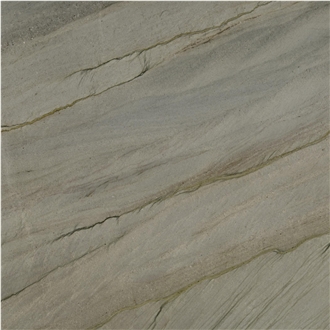
Apollo White Quartzite is a premium exotic natural stone quarried in Brazil, known for its elegant and luminous appearance. It features a soft creamy-white to ivory base enriched with delicate beige undertones, gently interwoven with fine gray veining and subtle light gold mineral streaks. The overall effect is refined and sophisticated, offering a calm yet luxurious aesthetic ideal for high-end architectural and interior design applications.

Color, Appearance & Pattern

Apollo White Quartzite presents a consistent light-toned background ranging from pure white to warm ivory and soft beige. The surface is enhanced by:

  • Fine linear gray veining
  • Soft golden mineral threads
  • Occasional cloudy or wave-like formations
  • Subtle crystalline sparkle under light
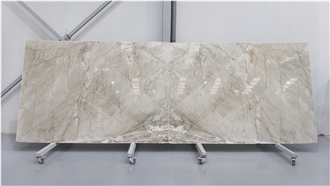
  • The pattern is generally gentle and flowing, making it suitable for both uniform installations and bookmatched applications.

Texture & Structure

This quartzite is formed through metamorphism of quartz-rich sandstone, resulting in a dense interlocking crystalline structure.

  • Medium-fine crystalline texture
  • High compactness and durability
  • Slight translucency in lighter zones
  • Smooth surface after polishing
  • Excellent structural integrity with low porosity

Physical & Mechanical Properties

  • Density: 2,670 – 2,720 kg/m³
  • Water Absorption: 0.08 – 0.25%
  • Porosity: 0.15 – 0.60%
  • Compressive Strength: 200 – 230 MPa
  • Flexural Strength: 17 – 23 MPa
  • Abrasion Resistance: Very High
  • Frost Resistance: Excellent
  • Mohs Hardness: 6.5 – 7.5

Chemical Composition (% by Weight)

  • SiO₂ (Silicon Dioxide): 93 – 97
  • Al₂O₃ (Aluminum Oxide): 1.0 – 3.0
  • Fe₂O₃ (Iron Oxide): 0.2 – 1.5
  • K₂O (Potassium Oxide): 0.2 – 1.2
  • Na₂O (Sodium Oxide): 0.1 – 1.0
  • CaO (Calcium Oxide): 0.1 – 0.8
  • MgO (Magnesium Oxide): 0.1 – 0.6
  • Trace Elements: <0.5

Mineral Composition (% by Weight)

  • Quartz: 90 – 96
  • Feldspar: 2 – 5
  • Mica (Muscovite/Biotite): 1 – 3
  • Iron Oxides: 0.5 – 2
  • Accessory Minerals: <1

Applications

  • Luxury countertops and kitchen islands
  • Bathroom vanities
  • Feature walls and TV walls
  • Flooring and staircases
  • Hotel lobbies and reception areas
  • Fireplace surrounds
  • Commercial interiors
  • Wall cladding and façades
  • Tabletops and furniture elements

Maintenance

  • Clean with pH-neutral stone cleaners only
  • Avoid acidic or abrasive chemicals
  • Seal periodically for stain resistance
  • Wipe spills immediately
  • Use protective pads on surfaces
  • Regular gentle cleaning preserves natural shine

FAQ

Can Apollo White Quartzite be used as a kitchen cutting board?

Using Apollo White Quartzite as a kitchen cutting board is not recommended. Quartzite is a natural stone that is very hard and durable, which makes it suitable for countertops, flooring, and other surfaces, but not ideal for cutting boards for a few reasons: 1. **Knife Damage**: Cutting directly on quartzite can dull or damage your knives over time because the stone is much harder than the knifes metal. 2. **Surface Damage**: While quartzite is scratch-resistant, it is not completely scratch-proof. Constant use as a cutting board could potentially result in scratches or surface damage. 3. **Sanitation**: A separate cutting board is usually more sanitary because it can be easily cleaned or sanitized after use. Quartzite surfaces need to be sealed periodically to prevent staining and bacterial absorption. 4. **Weight and Ergonomics**: Quartzite is heavy, making it impractical as a cutting board that needs to be moved or regularly cleaned. Using a dedicated cutting board made from materials like wood, bamboo, or plastic is a better choice. These materials are easier on blades and maintain sanitation more effectively.
If I use 1.2 cm thick Apollo White Quartzite as a table top, will it be strong enough? Will it break easily?

Using 1.2 cm thick Apollo White Quartzite as a tabletop can be feasible, but there are several factors to consider in assessing its strength and durability: 1. **Material Strength**: Quartzite is a naturally strong and durable stone, known for its resistance to scratching and heat. It is generally tougher than granite and very resilient, which makes it a good choice for tabletops. 2. **Thickness**: While 1.2 cm is somewhat on the thinner side for a stone tabletop, it may still suffice depending on the tables structural support system. Thicker slabs (such as 2 cm or 3 cm) are more commonly used due to their increased structural integrity, reducing the risk of breakage under weight. 3. **Support**: The support structure beneath the quartzite is crucial. To prevent bending and potential stress fractures, the tabletop should be adequately supported, especially over larger spans. This could include a solid substrate like plywood or appropriately spaced supports to prevent sagging. 4. **Usage**: Consider the intended usage of the tabletop. If it will bear heavy loads regularly or receive substantial impact, a thicker slab or reinforced support structure might be necessary. 5. **Edge Profiling and Installation**: Proper edge profiling can also enhance the strength and durability of the stone. Additionally, professional installation ensures that the quartzite is appropriately handled and mounted. In summary, while 1.2 cm thick Apollo White Quartzite can be used for a tabletop, ensure its well-supported and consider consulting with a professional for installation advice. If you have concerns about its strength, you might explore thicker options or reinforced support to provide additional durability and longevity.

The hot pan left a mark on my Apollo White Quartzite kitchen countertop—how can I clean it?

Apollo White Quartzite is a durable and heat-resistant material, but it can still get marked if exposed to high temperatures. Here’s how you can address the mark: 1. **Assess the Damage**: First, determine if the mark is a scorch mark (discoloration) or a residue mark (something melted onto the surface). 2. **Clean the Surface**: Start by cleaning the countertop with warm soapy water and a soft cloth to remove any dirt or residue. Avoid abrasive pads. 3. **Use a Poultice**: If discoloration remains, you can create a poultice to draw out the stain. Mix a paste using baking soda and water (or hydrogen peroxide for brighter stains). Apply it to the affected area, cover with plastic wrap, and let it sit for 24-48 hours before wiping it away with a damp cloth. 4. **Use Non-abrasive Cleaners**: For persistent stains, you can try a non-abrasive cleaner specific for natural stone. 5. **Buffing**: If the surface is dull after cleaning, gently polishing the area with a quartz/stone-specific polishing compound can help restore its sheen. 6. **Prevent Future Marks**: To prevent future marks, always use trivets or potholders under hot pots and pans. If the mark doesnt improve or if you are uncertain about handling it yourself, consider consulting with a professional stone care specialist.

If lemonade spills on a Apollo White Quartzite kitchen countertop, will it damage the surface?

Apollo White Quartzite is known for its durability and resistance to scratching and heat, making it a popular choice for kitchen countertops. However, like many natural stones, it is somewhat porous and can be susceptible to etching or staining from acidic substances like lemon juice. If lemonade spills on your quartzite countertop, its important to clean it up quickly to prevent any potential damage. Acidic substances can potentially etch the surface, leaving a dull spot. The best way to prevent this is by wiping up spills promptly and using a damp cloth with mild soap if necessary. Additionally, ensuring your quartzite is properly sealed can help protect against staining and etching. Regular sealing is recommended to maintain the countertop’s resistance to spills and ensure its longevity.

Can I use bleach when cleaning a Apollo White Quartzite kitchen countertop?

Using bleach on Apollo White Quartzite or any quartzite countertop is not recommended. Quartzite is a natural stone and can be damaged by harsh chemicals like bleach. Instead, you should use a pH-balanced, non-abrasive cleaner specifically designed for natural stone surfaces. Mild dish soap mixed with warm water is also a safe option. Always use a soft cloth or sponge to clean the surface and avoid steel wool or abrasive scrubbers as they can scratch and dull the finish. Regular sealing of the countertop can also help protect it from stains and damage. Always follow the manufacturers care and maintenance guidelines for the best results.

If I cut meat directly on my Apollo White Quartzite kitchen countertop, will it damage the surface?

Cutting meat directly on your Apollo White Quartzite countertop is not recommended as it can potentially damage the surface. Quartzite is a natural stone that is durable and resistant to heat and scratching, but it is not invulnerable. Using a sharp knife directly on the surface can create scratches or dull the finish over time. Additionally, raw meat can introduce bacteria to the surface. To protect your countertop, it is best to use a cutting board when preparing food. This will help preserve the beauty and longevity of the quartzite, as well as maintain hygiene in your kitchen.

Products & Prices

Hot Quartzite

New Quartzite

Post Your Request

The request includes:
  1. surface finished, size
  2. quantity required