Post Your Needs

Baikal Quartzite

Quartzite

Brazil

About

Item Details

Material Type:
Quartzite
Origin:
Brazil
Recommended Usage:
kitchen and bathroom countertop, wash basins, building stone, ornamental stone, stairs, interior wall and floor applications, mosaic, water-jet pattern, wall panels, table tops, balustrades, columns, fireplaces, luxury furniture
Additional Names:
Baykal Quartzite, Cristallo Baykal Quartzite, Baikal Crystal Quartzite, Baikal Quartzite
Finished Surface:
Polished,Bush Hammered,Tumbled,Brushed,Honed,Split,Machine Cut,Natural Surface,Sandblasted,Combed,Leathered,Water Jet,Chiseled,Pickling

Testing

Water Absorption:
0.08 – 0.20% by weight
Density:
2680 – 2730 kg/m³
Flexural Strength:
18 – 28 MPa
Compressive Strength:
180 – 240 MPa

Description

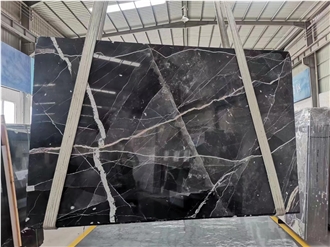
Baikal Quartzite is an exclusive Brazilian exotic quartzite renowned for its translucent white crystalline background accented by dramatic black and dark grey veining. Inspired by the appearance of frozen winter landscapes, this remarkable natural stone occasionally reveals subtle highlights of taupe, olive green, burgundy, and burnt orange minerals that enhance its artistic beauty. Its exceptional hardness, low porosity, and luxurious appearance make Baikal Quartzite an outstanding choice for prestigious residential, hospitality, and commercial architectural projects.

Color & Appearance

  • Translucent white crystalline background
  • Snow-white and icy grey tones
  • Bold black veins
  • Dark charcoal mineral streaks
  • Subtle taupe highlights
  • Olive green accents
  • Burgundy mineral traces
  • Occasional warm orange details
  • High natural luminosity
  • Elegant high-contrast appearance

Texture & Structure

  • Medium to coarse crystalline texture
  • Dense metamorphic structure
  • Compact interlocking quartz crystals
  • Naturally translucent mineral composition
  • Smooth, homogeneous surface
  • Excellent polish retention
  • High structural integrity

Pattern

  • Dramatic flowing veins
  • Frozen landscape appearance
  • Linear and branching black veining
  • Natural crystalline clouds
  • Layered mineral movement
  • Organic fractured patterns
  • Every slab is completely unique

Physical & Technical Properties

  • Bulk Density: 2,680–2,730 kg/m³
  • Apparent Porosity: 0.20–0.50%
  • Water Absorption by Weight: 0.08–0.20%
  • Mohs Hardness: 7.0
  • Compressive Strength: 180–240 MPa
  • Flexural Strength: 18–28 MPa
  • Abrasion Resistance: Excellent
  • Frost Resistance: Excellent
  • UV Resistance: Excellent
  • Weather Resistance: Excellent

Chemical Composition (% by Weight)

  • Silicon Dioxide (SiO₂): 96.2%
  • Aluminum Oxide (Al₂O₃): 1.2%
  • Iron Oxides (Fe₂O₃): 0.8%
  • Potassium Oxide (K₂O): 0.5%
  • Sodium Oxide (Na₂O): 0.3%
  • Calcium Oxide (CaO): 0.2%
  • Magnesium Oxide (MgO): 0.1%
  • Trace Elements: 0.7%

Mineral Composition (% by Weight)

  • Quartz: 94%
  • Feldspar: 2%
  • Muscovite: 1.5%
  • Biotite: 1.0%
  • Garnet: 0.5%
  • Tourmaline: 0.3%
  • Rutile: 0.2%
  • Zircon: 0.2%
  • Opaque Minerals: 0.3%

Applications

Interior

  • Luxury kitchen countertops- Kitchen islands
  • Bathroom vanity tops
  • Feature walls, Wall cladding
  • Premium flooring
  • Staircases
  • Fireplace surrounds
  • Reception counters
  • Dining tables
  • Bar tops
  • Hotel lobbies

Exterior

  • Building façades, Exterior wall cladding
  • Ventilated façade systems
  • Landscape walls
  • Outdoor kitchens
  • Pool surrounds
  • Commercial buildings

Maintenance

  • Clean regularly using pH-neutral natural stone cleaners.
  • Avoid acidic or abrasive cleaning products.
  • Wipe spills immediately to prevent staining.
  • Apply a premium penetrating sealer periodically for maximum protection.
  • Clean with microfiber cloths or soft mops.
  • Avoid steel wool or abrasive pads to preserve the finish.

Baikal Quartzite combines the strength of premium Brazilian quartzite with an elegant frozen-landscape aesthetic. Its translucent crystalline background, bold dark veining, and subtle multicolored mineral accents create a sophisticated and timeless appearance, making it one of the finest exotic natural stones for high-end architectural and interior design projects where durability, exclusivity, and visual impact are essential.

FAQ

Will a hot pot leave a mark on a Baikal Quartzite kitchen countertop?

Baikal Quartzite is known for its durability and resistance to heat, scratches, and stains. However, like most natural stone surfaces, it is not completely impervious to damage. Placing a very hot pot directly on the Baikal Quartzite countertop could potentially lead to discoloration or thermal shock, which might leave a mark or even cause cracking in extreme cases. To protect your countertop, its advisable to use trivets or hot pads under hot pots and pans. This not only helps prevent potential damage but also ensures the longevity of the countertops appearance and structure.

Can Baikal Quartzite be used as a kitchen cutting board?

Baikal Quartzite is a natural stone known for its durability and aesthetic appeal, often used in countertops and flooring. However, using it as a kitchen cutting board may not be ideal for several reasons: 1. **Hardness**: Quartzite is a very hard material, which can be detrimental to your knife blades, causing them to dull more quickly than when used on traditional cutting board materials like wood or plastic. 2. **Porosity**: Although quartzite is less porous than some other natural stones, it can still absorb liquids and potentially stain, especially if not properly sealed. This can be a concern in a kitchen environment where contact with acidic substances like lemon juice or vinegar is common. 3. **Weight**: Quartzite is heavy, making it impractical to move around the kitchen easily, unlike typical cutting boards. 4. **Cost**: Quartzite is generally more expensive than regular cutting board materials, which makes it an economical option only if youre already using quartzite in your kitchen for other purposes like countertops. 5. **Maintenance**: To maintain its appearance and prevent staining, quartzite surfaces require regular sealing. While you technically could use Baikal Quartzite as a cutting board, it may not be the most practical choice due to these factors. Its typically better to use materials specifically designed for cutting boards, which are optimized for ease of use, maintenance, and knife care.

Can scratches on Baikal Quartzite countertop be fixed?

Yes, scratches on a Baikal Quartzite countertop can often be fixed, though the method of repair will depend on the depth and severity of the scratches: 1. **Minor Scratches:** - **Cleaning:** Start by cleaning the surface with a pH-balanced cleaner or warm soapy water and a soft cloth to remove any debris or residue. - **Buffing:** For light scratches, you can use a stone polish or a polishing powder specifically designed for quartzite. Apply the polish with a soft cloth or a buffing pad in a circular motion. - **Sealing:** Once the scratch is less visible, consider sealing the countertop to enhance the shine and provide some protection against future scratches. Use a sealer that is suitable for natural stone surfaces. 2. **Deeper Scratches:** - **Sanding:** For deeper scratches, you might need to use fine-grit sandpaper (such as 400-grit) and sand the area gently. Always keep the surface wet while sanding to avoid additional scratches and to minimize dust. - **Polishing:** After sanding, use a polishing compound to restore the shine. This usually requires a series of abrasive polishing pads, moving from coarser to finer grit. - **Professional Help:** If the scratch is particularly deep or if you’re unsure about attempting a repair yourself, its best to contact a professional stone restoration service. They have the equipment and expertise to repair the damage without causing further harm to the countertop. 3. **Regular Maintenance:** - Regularly clean and seal your quartzite countertops to help prevent scratches and maintain their appearance. Avoid harsh chemicals and abrasive cleaning pads that could damage the surface. If youre unsure about how to proceed with the repair, consulting with a professional is a good idea to ensure the best results without risking further damage.

What does vinegar do to Baikal Quartzite floor tiles?

Vinegar is acidic, and using it on Baikal Quartzite floor tiles may not be advisable. Quartzite is a natural stone, and while it is generally more resistant to scratches and etching than some other stones, acidic substances like vinegar can damage its surface over time. This could lead to dullness, etching, or discoloration of the tile. For cleaning, its recommended to use a pH-neutral cleaner specifically designed for natural stone to preserve the integrity and appearance of your quartzite tiles. If youre unsure about what products to use, consulting the tile manufacturer or a stone care professional can provide more specific guidance.

How can I remove rust stains from a Baikal Quartzite kitchen countertop?

Removing rust stains from a Baikal Quartzite kitchen countertop requires a gentle approach to avoid damaging the stone. Heres a step-by-step guide to help you get rid of those stains: 1. **Identify and Test**: Before starting, test the cleaning method on a small, inconspicuous area of the countertop to ensure it does not damage the surface. 2. **Gather Materials**: - Baking soda - Hydrogen peroxide - Soft cloths or sponge - Plastic wrap - Plastic scraper or spatula - Masking tape 3. **Create a Poultice**: - Mix baking soda with a small amount of hydrogen peroxide to form a thick paste. The consistency should be similar to peanut butter. 4. **Apply the Poultice**: - Spread the paste over the rust stain in a layer about 1/4 inch thick. - Cover the poultice with plastic wrap and seal the edges with masking tape to keep it in place and prevent evaporation. 5. **Let it Sit**: - Allow the poultice to sit on the stain for 24 to 48 hours. This will let the mixture pull the rust out of the stone. 6. **Remove the Poultice**: - After the waiting period, carefully remove the plastic wrap and poultice using a plastic scraper or spatula. Be gentle to avoid scratching the surface. 7. **Clean the Area**: - Wipe the area with a damp cloth to remove any residue. - If theres any remaining stain, repeat the process. 8. **Rinse and Dry**: - Rinse the area with clean water and dry it thoroughly with a soft cloth. 9. **Seal the Countertop**: - After removing the rust stains, consider sealing your Baikal Quartzite countertop if its not already sealed, as this can help prevent future stains. Follow the manufacturer’s recommendations for sealing. 10. **Regular Maintenance**: - Regularly clean the countertop with mild dish soap and water to prevent stains. Avoid harsh chemicals or acidic cleaners that can etch or damage the stone. If the stain persists after several attempts or youre unsure about doing it yourself, it may be best to consult a professional stone care specialist for advice or service.

Does Baikal Quartzite scratch easily?

Baikal Quartzite is generally known for its durability and hardness, making it resistant to scratching. Quartzite, in general, scores around 7 on the Mohs scale of mineral hardness, which is the same as pure quartz. This means it is quite hard and less prone to scratching compared to materials that are lower on the Mohs scale, such as marble or limestone. However, while it is resistant to many common household occurrences that might cause scratches, it is not entirely scratch-proof. Its always best to use cutting boards and avoid dragging heavy or sharp objects directly across its surface to maintain its appearance.

Products & Prices

Hot Quartzite

New Quartzite

Post Your Request

The request includes:
  1. surface finished, size
  2. quantity required