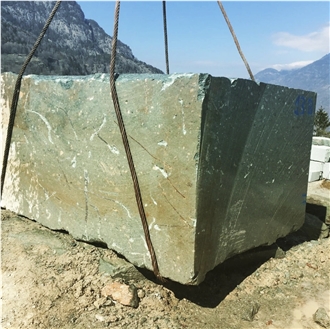
Verde Salvan, also known as Vert de Salvan or Vert des Glaciers, is a highly durable conglomerate stone quarried from the La Plane quarry, located in a remote, rugged area between the village of Salvan and the Gorges du Trient in Switzerland. This stone is renowned for its exceptional hardness and siliceous cement composition, which makes it particularly resistant to harsh environmental conditions such as frost and sunlight.
The quarry has a fascinating history. Although officially opened for exploitation in 1978 by a small marble masonry, historical artifacts indicate that the stone had been quarried for ornamental purposes long before then. In 2011, Capinat acquired the quarry rights and developed an innovative method for accessing the difficult terrain by constructing a tunnel.
Formed from detrital sedimentary rocks approximately 290 million years ago, Verde Salvan dates back to an era before the formation of the Alps. This ancient stone has been widely used in Swiss and German architecture due to its aesthetic appeal and remarkable resistance to weathering. Its deep green color with a coarse texture, typical of conglomerates, offers a distinctive look that has been utilized in the construction of numerous buildings.
Beyond architecture, Verde Salvan is a popular choice for outdoor installations such as fountains and artistic works. Its robust properties allow it to withstand varying climates and remain beautiful over time, making it a prized material for both functional and decorative purposes. Its historical significance, combined with its durability and striking appearance, ensures its continued demand in both traditional and modern applications.


 Switzerland

 4YR

 Belgium




 Italy


 Brazil

